
Why 'Hey Jude' Still Feels Like a Lifeline
The meaning of Hey Jude The Beatles comes down to one big idea: comfort that turns into courage. What begins as a private message to someone hurting slowly becomes a public anthem about surviving sadness without hardening the heart.
"Hey Jude" - The Beatles
Camel sunshine
Hey, hey, he-he-he-hey
Loading lyrics...
Unable to load lyrics
We're unable to display the lyrics at this time. Please try again later.
Factually, Paul McCartney wrote the song in 1968, and it was credited to Lennon-McCartney. He has said it began as a way to comfort Julian Lennon after John Lennon and Cynthia separated, as documented in this song history. But the song lasts because it does more than address one child in one moment. It speaks to anyone trying to move through pain without letting pain define them.
A Gentle Pep Talk at the Song's Core
At the center of the song is advice, not drama. The speaker does not deny sadness. Instead, they tell Jude not to make a bad moment worse. The famous opening idea, including make it better
, sounds simple, but that simplicity is the point. The song offers help in plain language.
That advice grows through the verses. Jude is urged not to shut down, not to give in to fear, and not to treat love like a risk best avoided. When the song says don't be afraid
, it frames healing as action. Feeling wounded is real, but staying emotionally closed would only deepen the hurt.
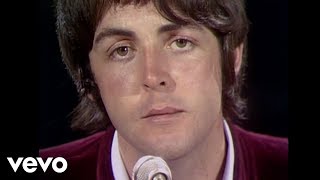
Watch the official Hey Jude
music video
Who Is Jude, and Why That Matters
On the factual level, McCartney originally wrote the song as “Hey Jules” for Julian Lennon, then changed the name to Jude because it sang better. That origin matters because it explains the song's tenderness. It does not sound like a lecture. It sounds like someone trying to steady a young person during family upheaval.
Interpretation: the song also works on adult levels. John Lennon later believed it could be heard as a message to him too, especially because of the lines about love and moving forward. Some critics also hear McCartney speaking partly to himself. That layered quality helps explain why the song feels both personal and universal.
The Voice Speaks to One Person, Then Everyone
The lyrics use direct address, which makes the song feel intimate. Yet the emotional problem is broad: how do they carry grief without carrying the whole world? The phrase upon your shoulders
turns pain into weight. It suggests emotional overload, the kind that makes people feel responsible for fixing everything at once.
The song answers that burden with compassion. Instead of praising toughness, it warns against becoming cold. That is one reason “Hey Jude” remains moving. It treats vulnerability as strength, not weakness.
How the Song Builds Its Meaning Line by Line
The verses follow a clear emotional path:
- First, they acknowledge sadness.
- Then, they encourage openness to love.
- Next, they warn against fear and emotional isolation.
- Finally, they turn reassurance into confidence.
One key line is let her into your heart
. In context, that “her” can mean a real love interest, but it also represents connection itself. The song argues that healing does not come from shutting feelings out. It comes from letting life back in.
Another striking phrase is the movement you need
. McCartney once considered changing it, but John Lennon told him it was the best line. Interpretation: the phrase suggests that the answer is already present. Jude does not need rescue from outside. They need trust in what is already within reach.
Why the Long Ending Changes Everything
The most unusual part of “Hey Jude” is its huge coda. After about three minutes, the song stops adding new lyrical ideas and turns into an extended communal refrain. On paper, that sounds repetitive. In practice, it feels liberating.
That ending transforms the song's meaning. The early verses are private counsel. The closing section turns that counsel into shared release. Listeners are no longer just hearing comfort; they are participating in it. This is a major reason the record became such a giant hit in 1968, spending nine weeks at No. 1 on the Billboard Hot 100, according to Billboard coverage.
Na-na-naHey Jude
Even this tiny repeated section matters. It strips language down to feeling. The words become less important than the act of singing together.
Sound, Production, and Emotional Lift
The arrangement carries the song's meaning as much as the lyrics do. It begins with McCartney's piano and voice, which makes the opening feel close and conversational. As the track grows, drums, guitars, backing vocals, and a 36-piece orchestra widen the emotional frame.
Recorded at Trident Studios in London and produced by George Martin, “Hey Jude” was also the first Beatles song recorded on eight-track equipment. That extra space helped the band build a fuller, more expansive sound. The gradual rise from ballad to mass singalong mirrors the message itself: pain can open into connection.
There is also something powerful about the contrast between the band's internal tensions in 1968 and the song's warmth. In that sense, “Hey Jude” does not ignore chaos. It answers chaos with togetherness.
Why It Endures Across Generations
“Hey Jude” lasts because its message is not tied to one breakup or one era. It understands that people often try to protect themselves by numbing out. The song pushes the other way. It says sadness can be faced, love can still be chosen, and relief can be collective.
That is the deepest meaning of Hey Jude The Beatles: a sad moment does not have to become a permanent identity. The song begins as comfort for one person and ends as a ritual of hope for millions.
Disclaimer: This interpretation separates documented facts about the song's origin and recording from critical readings of what the lyrics may mean to listeners.