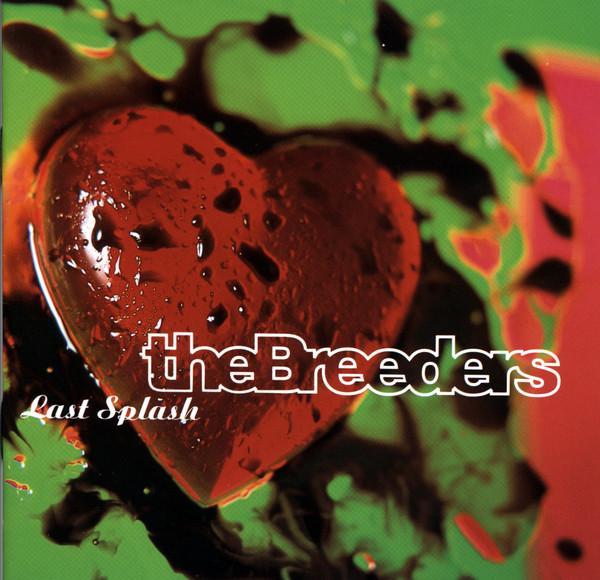
Cannonball by The Breeders
The meaning of Cannonball The Breeders starts with a trick: the song sounds loose, funny, and almost random, yet it is sharper than it first appears. Released on Last Splash in 1993, “Cannonball” became the band’s biggest hit and reached No. 2 on Billboard’s Alternative Airplay chart. It was written by Kim Deal and produced by Deal with Mark Freegard.
"Cannonball" - The Breeders
(One, two)
(One, two)
Loading lyrics...
Unable to load lyrics
We're unable to display the lyrics at this time. Please try again later.
Even with its playful surface, the song is not nonsense. It uses odd images, teasing language, and a slamming groove to describe a reckless person and push back against them at the same time.
The Wild Heart of the Song
On the simplest level, “Cannonball” is about chaotic attraction. The speaker seems drawn to someone unpredictable, maybe selfish, maybe thrilling. The lyrics keep circling that person with labels like little libertine
and real cuckoo
, which suggest both fascination and warning.
That matters because the song does not present desire as soft or dreamy. It feels jumpy, physical, and unstable. When the lyric lands on want you cuckoo cannonball
, it sounds less like a calm confession and more like being pulled toward impact.
Interpretation: many listeners hear the title image as a person who crashes into life without much care for consequences. A cannonball is heavy, fast, and hard to stop. That fits the song’s emotional world.

Watch the official Cannonball
music video
Kim Deal’s Stated Inspiration
There is also a more specific context behind the lyrics. In a 1996 interview, Kim Deal said the song was inspired by the Marquis de Sade and that its message was essentially mocking his worldview. In that explanation, she said the song was saying, in effect, life is not a contest and people are not just playthings.
That comment is important because it reframes the song. Instead of being only a weird flirtation, “Cannonball” can also be heard as a jab at a person who treats others like objects. The phrase little libertine
stops sounding cute and starts sounding critical.
Interpretation: the song may be performing attraction while also exposing the ugliness inside that kind of power game.
How the Lyrics Build That Tension
The opening image, paraphrased, is one of a wish turning violent. The line spitting in a wishing well
twists a symbol of hope into contempt. Then the song moves to a crash and a splash, as if the fall has already happened.
That sequence gives the track its emotional shape:
- Hope gets mocked.
- Desire becomes collision.
- The speaker names the other person as wild.
- The chorus turns that wildness into a repeated obsession.
Later, the lyric I'll be your whatever you want
sounds at first like surrender. But it is too strange and exaggerated to be simple devotion. It feels more like imitation, parody, or a dare.
There is one especially revealing moment:
I'll be your whatever you want
The bong in this reggae song
Paraphrased, the speaker offers to become an accessory inside the other person’s scene. But the image is so jokey that it undercuts the offer. They are not giving in sincerely; they are showing how ridiculous the role is.
Why the Sound Matters So Much
A big part of the meaning of Cannonball The Breeders comes from its sound. The song began as a demo called “Grunggae,” a mash-up idea that blended grunge force with a reggae-like bounce. That hybrid feel survives in the final version.
The track’s famous bass line, played by Josephine Wiggs, helps define the song’s personality. Reports about the recording note that its slightly awkward entrance came from a “mistake” that the band kept. That tiny stumble makes the groove feel human, unstable, and cool.
The production adds even more tension. The distorted count-in, the clipped metallic percussion, and the loud-soft dynamic shifts create a feeling of controlled mess. Kim Deal once joked that a song beginning with a noisy mic check did not seem destined for radio, which makes its success even more striking.
Interpretation: the arrangement mirrors the lyric meaning. Everything sounds like it could tip over, but it never fully falls apart.
A Hit That Turned Weirdness Into Pop
“Cannonball” came from Last Splash, released in 1993, at a moment when alternative rock was breaking into the mainstream. The song helped push The Breeders far beyond side-project status and made Kim Deal’s songwriting central to the band’s identity.
Its impact was huge. Critics named it one of the best singles of 1993, and over time it became a staple of 1990s alt-rock history. The video, co-directed by Kim Gordon and Spike Jonze, matched the song’s odd energy with garage performance shots, surreal movement, and underwater imagery.
That success matters to the song’s meaning because it proved something unusual: a track could be funny, abrasive, catchy, and mysterious all at once. “Cannonball” does not explain itself neatly, and that is part of why it lasts.
The Best Way to Read “Cannonball”
So, what is the best reading? The strongest one is this: the song captures the thrill of being pulled toward someone destructive while also mocking their ego. It is attraction mixed with critique, pleasure mixed with impact.
The repeated in the shade
can even suggest withdrawal or distance, as if the speaker steps back to watch the chaos rather than fully live inside it.
In the end, “Cannonball” works because its music and words say the same thing in different ways. The lyrics describe a person who is erratic and overpowering. The band then turns that feeling into bass, distortion, rhythm, and attitude.
That is why the meaning of Cannonball The Breeders still feels fresh: it is not just about wanting someone. It is about what it feels like when wanting them is already a crash.
Disclaimer: This interpretation mixes documented artist comments with critical reading of the lyrics and sound. Like most great songs, “Cannonball” remains open to more than one meaning.









