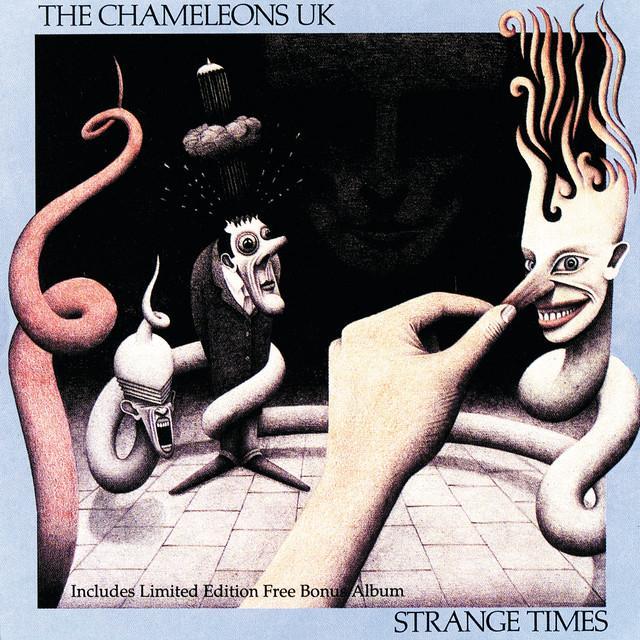
Swamp Thing by The Chameleons
A storm song that feels bigger than weather
The meaning of Swamp Thing The Chameleons is less about a literal swamp and more about emotional overload. The song captures the feeling of being crushed by daily life, public noise, and private fear. It is tense, restless, and strangely beautiful at the same time.
"Swamp Thing" - The Chameleons
Calling me across the room
When the world and his wife are on my back again
Loading lyrics...
Unable to load lyrics
We're unable to display the lyrics at this time. Please try again later.
Released in 1983 and later associated with the band’s album Script of the Bridge, “Swamp Thing” stands as one of The Chameleons’ signature songs. The Manchester group became known for ringing guitars, driving rhythm, and lyrics that mixed personal distress with social unease. In this song, they turn that style into a portrait of a mind under pressure.

Watch the official Swamp Thing
music video
The central idea: too much world, too little shelter
At the heart of the song is a person who feels attacked by the outside world. Early lines describe pressure from every direction, then balance that with a distant source of comfort. The song opens with attraction and memory, but quickly moves to stress: not enough joy, too much hurt, too much noise.
That is why the repeated phrase the world is too much
matters so much. It suggests overload, not just sadness. They are not dealing with one problem; they are dealing with everything at once.
Interpretation: the unseen “you” in the song may be a lover, a memory, or even a private inner refuge. The lyrics never fully define that figure. That ambiguity gives the song its pull, because listeners can hear either romance or survival in it.
Who they seem to be speaking to
The voice in “Swamp Thing” sounds personal, but the song keeps widening outward. At first, it seems directed at one person across a room. Then the lyrics shift toward public images: collapsing walls, false leaders, empty work lives, and television-fed dread.
That movement matters. It shows how private distress and social distress feed each other. A lonely thought becomes a bigger crisis.
One of the sharpest moments is the image of people still staring at the ground
while everything falls apart. In plain terms, the song criticizes passivity. It is about exhaustion, yes, but also about refusing to look up and face what is happening.
The song’s images of collapse
The lyrics are filled with weather, noise, and damage. Thunder appears in the brain, rain replaces sunshine, walls are falling, and something is moving in the side street. None of these images settle into one clear story. Instead, they create an atmosphere of dread.
That is why the storm imagery works so well. A storm can be real weather, social breakdown, or an anxious episode inside the mind. The repeated question just another shower?
turns uncertainty into the song’s key emotional trick. They know something bad is coming, but they cannot tell whether it is a passing disturbance or a life-changing event.
So long
The storm comes
Or is it just another shower?
In paraphrase, the song keeps asking whether this pain is temporary or the start of total collapse. That question feels familiar because many people experience stress this way: unsure if they are having a bad day or hitting a breaking point.
Social criticism under the surface
The meaning of Swamp Thing The Chameleons also includes a critique of modern emptiness. The song points to shallow authority, drained work routines, and a culture where nothing feels sacred. The line about being half alive
in routine work is especially revealing. It suggests spiritual numbness, not just boredom.
Another striking image is the figure who profits during crisis, a kind of hustler feeding on public weakness. The song does not stop to explain that image in detail. It does not need to. The point is that when people are frightened and exhausted, someone always sells answers.
Interpretation: this gives the song a political edge, though it is not tied to one event. It speaks more broadly to a culture of manipulation, alienation, and emotional burnout.
Why the music makes the meaning hit harder
The Chameleons were masters of making dark feelings sound huge and alive. “Swamp Thing” races forward with muscular drumming, echoing guitars, and a bass part that keeps the song grounded even as it seems to spin upward. Their sound sits between post-punk urgency and atmospheric rock.
That contrast is crucial. The music is energetic, but the lyrics are full of strain. So the song does not simply sound depressed. It sounds like a fight against depression.
Listeners often connect this to the band’s wider style, documented in accounts of The Chameleons and their rise in the early 1980s UK post-punk scene. They were less icy than some peers and more emotionally expansive. In “Swamp Thing,” that means panic arrives wrapped in motion and melody.
Is the title important?
The title may invite thoughts of the DC Comics character Swamp Thing, created by Len Wein and Bernie Wrightson in 1971. That character later became famous for stories about identity, transformation, and the pull between humanity and a larger natural force. Those themes are interestingly close to the song’s mood, even if there is no clear evidence that the lyrics retell comic-book material.
Interpretation: the title may work mainly as a suggestive image. “Swamp thing” sounds murky, unstable, and hard to escape. That feeling matches the song’s emotional terrain.
Why the song still resonates
What keeps “Swamp Thing” alive is how well it describes a recognizable state: too much input, too little peace, and the fear that collapse may already be underway. Yet the song is not hopeless. Its huge sound gives emotional pressure a kind of dignity and force.
In the end, the meaning of Swamp Thing The Chameleons lies in that tension. It is about anxiety, disillusionment, and social decay, but also about awareness. The song urges people to look up, listen closely, and admit that the storm is real.
Disclaimer: This interpretation draws on the lyrics, the band’s context, and the song’s sound. As with most poetic songs, listeners may hear other meanings too.







