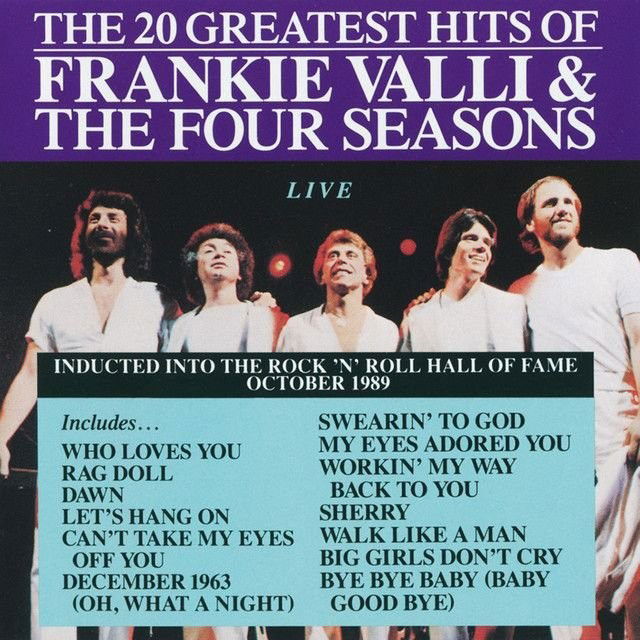
Why 'Oh What a Night' Still Feels So Big
The meaning of December, 1963 (Oh What a Night!) The Four Seasons starts with memory. This is not just a party song or a catchy oldies hit. It is a flashback to one unforgettable moment that changed the narrator's sense of himself.
"December, 1963 (Oh What a Night!)" - The Four Seasons
Late December back in sixty three
What a very special time for me
Loading lyrics...
Unable to load lyrics
We're unable to display the lyrics at this time. Please try again later.
The song sounds light on the surface, but its story is more grown-up than its bright hook suggests. Under the singalong chorus, they present a memory of first intimacy, sudden desire, and the shock of realizing that one night can divide life into before and after.
A Nostalgic Night With Real Stakes
At the most basic level, the narrator looks back at a night in late 1963 and treats it like a turning point. When he says late December back in sixty three
, the date matters less as history than as emotional timestamp. It marks the exact moment he believes his life changed.
The rest of the lyric supports that idea. He admits he didn't even know her name
, which makes the encounter feel impulsive and dreamlike. But he also says he was never gonna be the same
, showing that the night was not casual in its effect, even if it was brief.
Interpretation: Many listeners hear the song as a memory of first sexual experience. That reading fits the lyric's mix of awe, confusion, excitement, and hindsight. It also matches comments long associated with the song's creation and reception.

Watch the official December, 1963 (Oh What a Night!)
music video
Where the Song Came From
Factually, the song has an unusual backstory. It was written by Bob Gaudio and Judy Parker, produced by Gaudio, and released on the Four Seasons' 1975 album Who Loves You. It came out as a single on December 5, 1975, and later hit No. 1 on the Billboard Hot 100 in March 1976, becoming the group's final U.S. chart-topper, according to Wikipedia.
Even more interesting is the original concept. Gaudio first imagined the song as "December 5th, 1933," a tribute to the repeal of Prohibition. That idea was dropped, while Judy Parker reshaped it into a romantic memory, as summarized by Wikipedia and Songfacts.
That rewrite explains why the final lyric feels so specific and so hazy at the same time. The date sounds exact, but the details are blurred by emotion.
How the Story Unfolds
The narrative is simple, which is part of its strength:
- The narrator remembers one extraordinary night.
- A woman enters, and he feels instantly overwhelmed.
- The connection becomes intimate and life-altering.
- The night ends quickly, but the memory stays huge.
A key line is the phrase ended much too soon
. That tells readers the night was short, but its emotional impact lasted. Another revealing phrase is see the light
, which suggests awakening. He now understands something that once felt confusing or even forbidden.
Interpretation: The line about something seeming wrong before seeming right hints at guilt, innocence lost, or a young person's uncertainty about desire. The song never fully explains that tension, which is why it has lasted.
Why the Hook Sounds So Joyful
The chorus keeps returning to oh what a night
. Instead of describing events in detail, it circles around feeling. That repetition captures how memory works: people often remember the emotion first and the facts second.
There is also a clever contrast in the song. The narrator cannot fully explain what happened, yet he cannot stop reliving it. The hook becomes the sound of someone trying to turn a private experience into a public celebration.
Oh, what a night
What a very special time for me
Those short lines are simple, but they carry the whole song. He is not just recalling a date. He is honoring the moment he became more aware, more adult, and more vulnerable.
The Sound Makes the Memory Glow
The production is a huge part of the song's meaning. The Four Seasons blended tight harmonies with a smoother, dance-ready 1970s sound. Sources such as Wikipedia note its mix of disco, doo-wop, pop, and soft rock, while Billboard famously praised its disco feel
and strong harmonies, as quoted there.
That blend matters. The groove is warm and bouncy, not dark or heavy. It turns a private memory into something communal. Listeners do not just hear desire; they hear the glow that nostalgia puts around desire.
The vocals help too. Gerry Polci leads the verses, with Frankie Valli and Don Ciccone taking key featured parts, according to Wikipedia. That shared vocal approach gives the song a youthful freshness. It sounds less like one man confessing and more like a memory being passed around in harmony.
Why the Song Was a Comeback
By 1975, the Four Seasons were adapting to a new pop world. This song helped prove they could move into the dance era without losing their identity. American Songwriter describes it as the peak of their mid-1970s comeback, and the chart numbers back that up.
Its success makes sense because the song balances opposites:
- innocence and experience
- nostalgia and physical desire
- classic harmony and disco rhythm
- private memory and mass singalong appeal
That balance is the reason people still return to it.
The Lasting Meaning of “December, 1963”
So what is the meaning of December, 1963 (Oh What a Night!) The Four Seasons? It is the memory of a moment that felt thrilling, confusing, and life-changing all at once. The narrator looks back not to report facts, but to relive the rush.
Interpretation: The song lasts because it captures a common human feeling: the realization that one brief encounter can reshape how someone sees love, adulthood, and themselves.
That is why the record still feels bigger than its story. It turns a single night into a lifelong echo.
Disclaimer: This interpretation separates documented background from informed reading of the lyrics. Like many pop classics, the song supports more than one meaning for different listeners.








