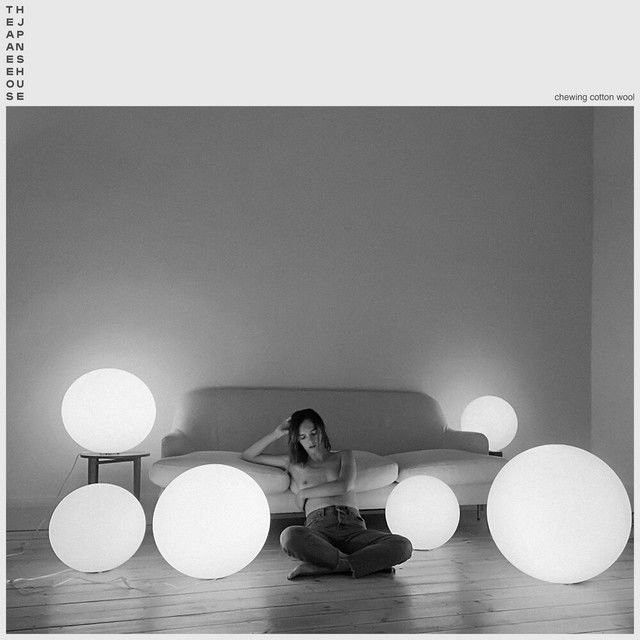
Sharing Beds by The Japanese House
The meaning of Sharing Beds The Japanese House comes through fast: this is a song about jealousy that feels immediate, ugly, and impossible to quiet. In just a few lines, Amber Bain turns a private spiral into something painfully recognizable. They present a narrator who cannot stop picturing a former lover with someone else, and that mental image becomes the real wound.
"Sharing Beds" - The Japanese House
I can't feel her
Won't stop goin' through my head
Loading lyrics...
Unable to load lyrics
We're unable to display the lyrics at this time. Please try again later.
Because the lyric is so brief, the song works less like a full story and more like an emotional snapshot. It catches the exact second when suspicion hardens into belief. That narrow focus is what gives it force.
A breakup song trapped in one terrible thought
At the center of the track is a mind looping through the same fear again and again. The narrator says something's movin'
, which suggests that the relationship has shifted in a way they can sense but not control. Right after that, I can't feel her
makes the emotional distance clear. Someone who once felt close now feels unreachable.
From there, the song jumps straight into obsession. The idea won't stop goin' through my head
tells listeners that this is not calm reflection. It is rumination. The narrator is stuck replaying a possibility until it feels like fact.
Interpretation: The song is not only about betrayal. It is also about how heartbreak rewires attention. The mind keeps returning to the one image that hurts the most.

Watch the official Sharing Beds
music video
Why the accusation hits so hard
The line about sharin' beds
gives the song its title and emotional center. On the surface, it points to physical intimacy. But in a breakup song, a bed also symbolizes closeness, trust, routine, and emotional access. The pain is not just that someone else is there. It is that someone else may have taken the narrator's place.
That is why the next words matter. When the narrator calls the other person another mess
, it sounds bitter and defensive at once. They are trying to diminish the rival, but the insult also reveals insecurity. If this new person is a mess, then what does it mean that they were chosen anyway?
The most striking detail is the plea, tell me it wasn't Jess
. Naming one person makes the jealousy feel specific rather than abstract. This is no vague fear of being replaced. It sounds like a targeted suspicion, maybe based on prior tension, a known connection, or a person the narrator already worried about.
A tiny lyric with a clear narrative arc
Even in a short text, there is a sequence:
- The narrator senses a change.
- They feel emotional absence.
- Their thoughts spiral into a vivid suspicion.
- They ask for confirmation while already bracing for the truth.
- They end in repetition rather than resolution.
That final repetition of I know
is crucial. It does not sound peaceful or certain in a healthy way. It sounds like someone trying to survive what they believe is already true. Whether they actually know may matter less than the fact that they feel they know.
Interpretation: This makes the song about intuition colliding with anxiety. The narrator may have evidence, or they may only have dread. The lyric leaves that open.
How Amber Bain's style shapes the meaning
Amber Bain, the songwriter behind The Japanese House, is known for intimate writing and atmospheric pop production, a style widely noted in coverage of their work by outlets like NME and AllMusic. That context helps explain why such a short lyric can still feel complete.
They often build songs where texture does part of the storytelling. In a song like this, listeners would expect soft but uneasy production choices: layered vocals, blurred edges, and a sense of space around the words. Even when the lyric is direct, the sound can make the feeling more dreamlike, as if the narrator is trapped inside their own head.
That matters for the meaning of Sharing Beds The Japanese House because the song does not need many details. The emotional architecture is simple but effective: distance, suspicion, fixation, and resignation.
Sound, repetition, and emotional compression
One reason the song lands is compression. There is almost no wasted language. Each phrase pushes the same emotional crisis from a slightly different angle. The opening establishes movement. The middle names the fear. The ending repeats the conclusion.
If the production follows The Japanese House's usual approach, that repetition would likely feel less like a shout and more like a sinking realization. Their songs often let vulnerability sit inside polished, hazy arrangements rather than explode outward. That contrast can make pain feel even more personal.
Two believable ways to hear it
There are at least two strong readings:
- Interpretation 1: Literal betrayal. The narrator believes an ex or partner has slept with someone else, possibly someone they know.
- Interpretation 2: Emotional paranoia after a breakup. The exact event may be uncertain, but the narrator is devastated by the idea of replacement.
Both readings fit because the lyric never fully proves the accusation. It only proves the intensity of the narrator's reaction.
Why the song lingers
What makes this song memorable is how honestly it captures an embarrassing emotion. Jealousy is rarely graceful. Here, it is raw, suspicious, and repetitive. That makes it believable.
In the end, the meaning of Sharing Beds The Japanese House is less about the facts of who did what and more about the private violence of imagining it. The song freezes the moment when heartbreak becomes a loop, and the listener is left inside that loop with them.
Disclaimer: This interpretation is based on the available lyrics and publicly known artist context. Like many songs, "Sharing Beds" can support more than one valid reading.









