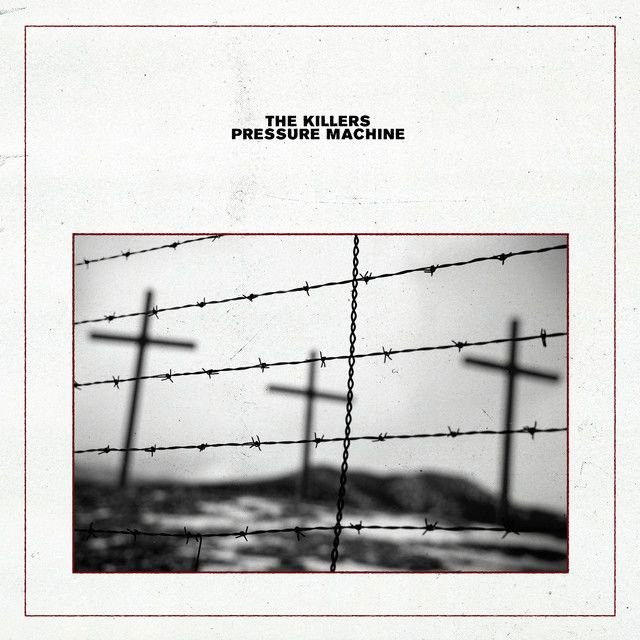
Cody by The Killers: A Portrait of Restless Faith
The meaning of Cody The Killers comes into focus when they treat the song as both a character sketch and a town-wide prayer. On the surface, "Cody" introduces a troublemaking young man who lies, fights, drinks, and pushes against authority. Underneath that story, the song asks a harder question: what happens when someone rejects easy answers but still aches for wonder?
"Cody" - The Killers
(Higher powers than me, higher powers than me)
(I've seen 'em in the hill, you know, I've seen the spirts you know)
Loading lyrics...
Unable to load lyrics
We're unable to display the lyrics at this time. Please try again later.
The track appears on Pressure Machine, The Killers' 2021 album about life in small-town Utah, a setting Brandon Flowers discussed in interviews around the record's release. That context helps explain why "Cody" feels so specific and symbolic at the same time. It is about one person, but it also sounds like a whole place talking through him.
A Small-Town Character With a Bigger Meaning
The opening verses paint Cody as a kid who causes damage and then denies it. The line about not starting the fire makes him sound defensive before anyone even finishes accusing him. When the song adds that he is different kind of kid
, it does not excuse him. Instead, it frames him as the local outsider who both attracts and unsettles everyone around him.
That matters because The Killers do not present Cody as a cartoon rebel. They show him as someone performing toughness while also searching for power. He mocks belief, brushes off guilt, and acts larger than he is. Yet all of that swagger hints at insecurity. The more he pushes away rules and religion, the more the song suggests he is still wrestling with them.
Watch the official Cody
music video
The Real Tension: Doubt Versus Longing
One of the clearest ideas in the song is spiritual conflict. Cody claims that religion's just a trick
, reducing faith to social control. In plain terms, he sees organized belief as something used to manage ordinary people rather than free them.
But the song does not stop at that rejection. The chorus keeps asking who will save or lift them. That shift is crucial to the meaning of Cody The Killers. Even after the verses express doubt, the chorus reaches upward, imagining glory-painted wings
and waiting for a miracle.
Interpretation: this is not a simple attack on religion. It is a song about spiritual hunger that survives even when formal belief feels broken. Cody may reject the system, but he has not killed the need behind it.
How the Chorus Changes the Story
The verses stay close to Cody, describing his habits, bravado, and reckless energy. Then the chorus widens the lens. Suddenly, it is not just his problem. The repeated "who's gonna carry us away?" turns private rebellion into collective longing.
That little word "us" changes everything. The town, or at least the people around Cody, seem just as stuck as he is. They are all waiting for something to descend, rescue them, or give life a clearer shape. When the song says they keep on waiting
, it captures a cycle of hope and disappointment.
In other words, Cody may be the loudest symptom, not the whole disease. His chaos reflects a community that feels trapped between inherited faith and unanswered desire.
The Images of Fire, Fists, and Summer Nights
The song uses vivid details to build Cody's world. Fire suggests danger, blame, and temptation. Fists and wrist-grabbing suggest a rough kind of masculinity, where control and force stand in for real intimacy. August nights, bottle rockets, truck coolers, and cheap whiskey place the song in a familiar American setting of heat, boredom, and low-stakes rebellion.
These details do more than decorate the scene. They show a life driven by impulse. Cody lives in motion, in noise, in confrontation. Yet none of it brings peace. Even the fun feels temporary, like a spark that burns bright and disappears.
A Brief Lyric Snapshot
The song's emotional circle is captured in this refrain:
So who's gonna carry us away?
We keep on waiting for the miracle
Those lines summarize the whole struggle. They paraphrase a community looking past its own habits and still hoping for transcendence.
How the Sound Supports the Meaning
"Cody" sits within the stripped-back, heartland style of Pressure Machine, an album shaped by Brandon Flowers, Ronnie Vannucci Jr., and collaborators including Jonathan Rado. The arrangement leans into organic rock and Americana textures rather than the band's shinier arena-pop sound.
That production choice matters. The earthy instruments and steady pace make the song feel lived-in, like a memory told from a porch or roadside. Instead of making Cody sound glamorous, the music gives him weight. There is movement in the song, but also sadness underneath it.
The chorus rises without becoming triumphant. That is a smart choice. It lets listeners feel the pull toward salvation while also hearing how uncertain that hope is. The sound reaches up, but it never fully escapes the ground.
Two Strong Readings of the Song
Interpretation 1: Cody is a real small-town type, a local boy whose rebellion hides pain, confusion, and spiritual frustration.
Interpretation 2: Cody is symbolic. They can hear him as the embodiment of a community that has lost trust in institutions but still wants grace, rescue, and meaning.
Both readings work because the song balances concrete details with big spiritual imagery. It stays rooted in one place while asking universal questions.
Why "Cody" Sticks With Listeners
What makes this song memorable is its refusal to choose a simple side. It does not fully condemn Cody, and it does not celebrate him either. It sees the damage he causes, but it also sees the hunger underneath it.
That is the heart of the meaning of Cody The Killers: rebellion is not the opposite of belief here. It is what belief can look like after disappointment, after boredom, after trust has thinned out but the need for wonder remains.
For many listeners, that mix of skepticism and longing feels painfully familiar. The song understands how people can laugh at miracles and still wait for one.
Disclaimer: This interpretation is based on the song's lyrics, album context, and publicly known credits. As with any song, meaning can vary from listener to listener.









