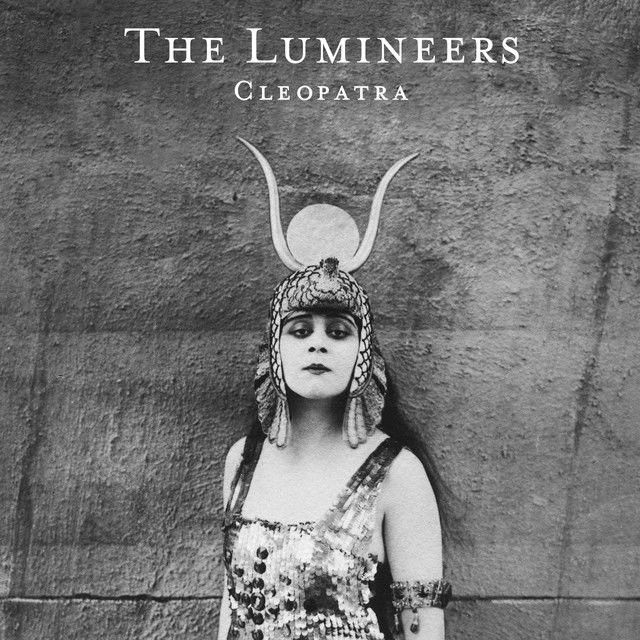
Cleopatra by The Lumineers
The meaning of Cleopatra The Lumineers comes down to one painful idea: a life can be shaped by a single moment of hesitation. In this song, they tell the story of a woman looking back on youth, love, work, and old age with brutal honesty. It is not just a breakup song. It is a song about timing, identity, and the private grief of realizing what could have been.
"Cleopatra" - The Lumineers
When you knelt by my mattress, and asked for my hand
But I was sad you asked it, as I laid in a black dress
Loading lyrics...
Unable to load lyrics
We're unable to display the lyrics at this time. Please try again later.
A Life Story Told in Reverse Light
Factually, “Cleopatra” is the title track from The Lumineers’ second album Cleopatra and was released as a single in 2016. It was written by Wesley Schultz, Jeremiah Fraites, and Simone Felice, and produced by Felice. It also became a major rock-radio hit, reaching No. 1 on Billboard’s Alternative Airplay chart.
Schultz has said the song was inspired by a real woman named Manana, a taxi driver in the Republic of Georgia. He described her as tough, unsentimental, and deeply honest about her life. That background matters because the lyrics feel specific, grounded, and human rather than purely fictional.

Watch the official Cleopatra
music video
Why “Cleopatra” Means More Than a Name
The opening image, I was Cleopatra
, does not seem meant as a literal claim. Interpretation: it works as a symbol for youthful greatness, beauty, drama, and possibility. The narrator once saw herself as larger than life, almost royal in her sense of future.
But the song quickly undercuts that image. A marriage proposal arrives during a moment of grief, with her father dead and her emotions frozen. Instead of a sweeping romance, they show a young woman unable to answer love because sorrow has swallowed her timing.
That is the emotional engine of the whole song: not lack of love, but inability to act when love appears.
The Missed Moment at the Center
The most important line in the song is probably the repeated idea that she was late for the love of my life
. Before and after that phrase, the song makes clear that she did love him. She just could not reach that truth in time.
This is what gives “Cleopatra” its unusual power. Many songs blame another person, fate, or bad luck. Here, they let the narrator admit her part in the loss. She knows she hesitated. She knows the chance passed. She knows that knowledge will stay with her forever.
Interpretation: the refrain about lateness is not only about romance. It suggests a broader fear that she was late to her own life, late to self-knowledge, and late to becoming who she wanted to be.
Small Images, Big Wounds
The song uses simple details to show lasting pain. One of the sharpest is the image of mud stain on the carpet
. In plain terms, the lover leaves behind physical traces when he walks out. Emotionally, that stain becomes a memory she cannot scrub away.
Another revealing phrase is my flesh, it was my currency
. The song does not present this as glamour. Instead, it suggests the pressures placed on women, especially by age, desire, religion, and survival. The narrator knows her body has social value, but she also insists she held true
, which hints at a moral line she refused to cross.
Those details make the song feel less like a vague ballad and more like a lived-in biography.
The Taxi Driver as a Symbol
Midway through, the narrator explains, So I drive a taxi
. In the story, that connects directly to the real-life inspiration for the song. But it also works symbolically.
A taxi driver moves other people toward their destinations while remaining emotionally still. Strangers enter and leave. Their faces trigger memories. Life keeps moving, but she remains haunted by the one road not taken.
That is one reason the meaning of Cleopatra The Lumineers hits so hard: they pair a very ordinary job with very large emotional questions. The taxi is not just transportation. It becomes a metaphor for carrying other lives while feeling unable to repair one’s own.
How the Sound Deepens the Lyrics
Musically, “Cleopatra” is folk rock, but it avoids heaviness. Reports on the song’s composition often note its strummed guitar, hand-claps, and rising harmonies. That matters because the arrangement gives the song motion even when the story feels stuck.
The melody has an easy flow, which creates tension with the narrator’s regret. They do not bury the sadness in huge drama. Instead, the band lets the rhythm roll forward, almost like passing miles on a road. The result is wistful rather than melodramatic.
Schultz also called the track the “bedrock” of the album in coverage around the release. That makes sense. The song contains many of the record’s core concerns: memory, myth, longing, and the cost of choosing too late.
The Final Turn Toward Mortality
Near the end, the song moves from memory to old age. The former “Cleopatra” is no longer the young woman of the opening. She is being led back to a room, near the end of life, and thinking about whether she will finally be on time for something.
That final twist is devastating because it widens the song’s scale. What began as a missed proposal becomes a meditation on death. If she could not arrive in time for love, perhaps she can at least arrive in time for the end.
Interpretation: this is not just despair. It is acceptance. The narrator cannot rewrite the story, but she can finally tell it plainly.
Why the Song Still Connects
“Cleopatra” remains one of The Lumineers’ most affecting songs because it treats regret with dignity. It does not beg for pity. It lets a woman tell the truth about the life she lived and the life she nearly had.
That honesty is why the song worked both critically and commercially. It is catchy enough for radio, but emotionally richer than most hits. The story feels singular, yet the fear inside it is universal: almost everyone wonders if they missed a moment that would have changed everything.
Disclaimer: This article offers a literary interpretation of the song based on released recordings, public artist comments, and widely reported context. As with any art, listeners may hear different meanings in it.








