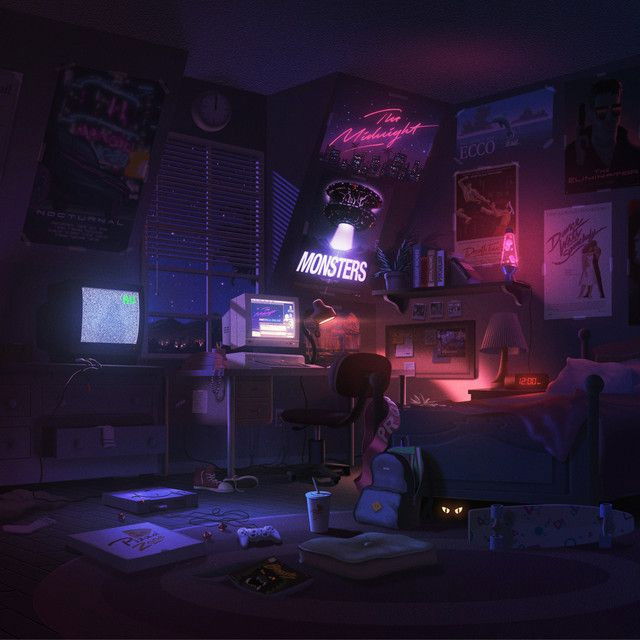
Last Train by The Midnight
The meaning of Last Train The Midnight comes down to one long, nervous night. The song follows two people who miss their way out of the city and step into a moment that feels exciting, intimate, and a little dangerous. It is about desire arriving at the exact point where certainty disappears.
"Last Train" - The Midnight
The west scotch bottles and the soda guns
You missed the last train from the city tonight
Loading lyrics...
Unable to load lyrics
We're unable to display the lyrics at this time. Please try again later.
The Midnight, the duo of Tyler Lyle and Tim McEwan, often build songs around neon memories, city lights, and emotional turning points. In “Last Train,” they shrink that style into a very human scene: old friends, a missed train, a hotel lobby, and the question of whether one night can change everything.
A Missed Ride Becomes a Moral Crossroads
On the surface, the plot is simple. Someone has missed the last train
, and that mistake keeps two people together longer than planned. But the song quickly shows that this is not just a transit problem. It is a moment when boundaries blur and feelings that may have stayed hidden suddenly come into view.
The repeated image of old friends seen in a different light
is the key. The song suggests that nothing magical has appeared out of nowhere. Instead, the missed train removes the usual structure of the night. With no easy exit, they are left alone with attraction, memory, and impulse.
Interpretation: the train stands for the safe, expected path. Missing it means stepping outside routine and into emotional risk.
Watch the official Last Train
music video
The Story Moves Like a Night Out Turning Serious
The verses sketch the scene in quick flashes rather than long explanation. A bar setting, downtown streets, and the city’s restless energy all push the song forward. “Alphabet City” and “Union Square” ground the story in New York imagery, which gives the song a real urban texture instead of a vague romantic mood.
A simple timeline helps explain the narrative:
- The night starts in a bar, where the world feels loose and unstable.
- Two people who already know each other end up stranded together.
- Their bond shifts from familiar to charged.
- Morning arrives, and they are now an
unlikely pair
. - The final question is whether this is a beginning or an ending.
That is why the hotel-lobby scene matters so much. It is not grand or cinematic. It is awkwardly real. Holding hands in a temporary place makes the relationship feel both sincere and fragile.
The Chorus Warns Them Even as It Pulls Them In
The chorus gives the song its emotional philosophy. It describes a force like a hidden melody, a passion that calls out while also threatening damage. When the song says singin' in the dark
, it frames desire as something hard to resist but hard to trust.
The warning not to get too close adds tension. This is not a love song that treats romance as pure rescue. “Last Train” knows attraction can heal, but it can also complicate lives. The line about every season of the heart suggests that feelings change shape. What is right in one moment may hurt in another.
Half in light and half in dark
Is where we start
That brief passage may be the song’s thesis. The relationship begins in ambiguity. It is neither innocent nor fully ruined, neither casual nor committed. The pair stand in between those states.
Symbols That Carry the Song’s Meaning
Several recurring images deepen the meaning of Last Train The Midnight:
- The train: the last clear chance to return to normal life.
- The city at night: freedom, anonymity, and temptation.
- Fire and wire: desire that warms and wounds at once.
- Morning: the moment fantasy must face consequence.
- Light and dark: mixed motives, mixed feelings, mixed futures.
These symbols help explain why the song feels romantic and uneasy at the same time. Even the phrase one beating heart
sounds triumphant, but after everything before it, that unity can be heard in two ways. It may describe real connection, or it may capture the intense illusion of two people briefly feeling fused together.
How the Sound Sells the Emotion
The writing credits given here go to Tim McEwan and Tyler Lyle, and the track sounds built around their usual strengths: glowing synth textures, steady pulse, and a wide-screen sense of motion. That production matters because the song is not only telling a story; it is recreating the feeling of moving through a sleepless city.
The beat has the push of travel, while the synth layers create a dream state. Their music often blends synth-pop, synthwave, and pop-rock touches, and here that mix supports the lyric’s tension between movement and suspension. The listener feels carried forward even though the characters are, technically, stuck.
For context on the duo’s broader catalog and style, their official artist site and their Spotify profile show how often they return to themes of night, memory, and longing.
Two Strong Readings of the Song
There are at least two persuasive ways to hear “Last Train.”
Reading One: A Song About Crossing a Line
In this reading, the missed train creates the conditions for a romantic or sexual turning point between friends. The danger in the chorus points to the emotional cost of acting on desire when the future is unclear.
Reading Two: A Song About Brief Human Rescue
In another reading, the song is less about betrayal or romance and more about two lonely people finding comfort in a suspended hour. The connection is real, but the song does not promise permanence. That final goodbye matters because dawn breaks the spell.
Both readings fit the lyrics. That ambiguity is part of what makes the song memorable.
Why the Song Lingers
“Last Train” lasts because it understands a specific adult feeling: the moment when chance, chemistry, and loneliness meet. It captures how fast a life can seem to tilt after one missed exit. The song does not judge its characters, and that gives it emotional depth.
In the end, the meaning of Last Train The Midnight is not just about romance. It is about the unstable space where people become honest because the night has run out of safe options.
Disclaimer: This interpretation is based on the lyrics, available song credits, and The Midnight’s broader artistic style. As with any song, listeners may hear different meanings.







