Why 'Legend of a Mind' Still Feels Trippy
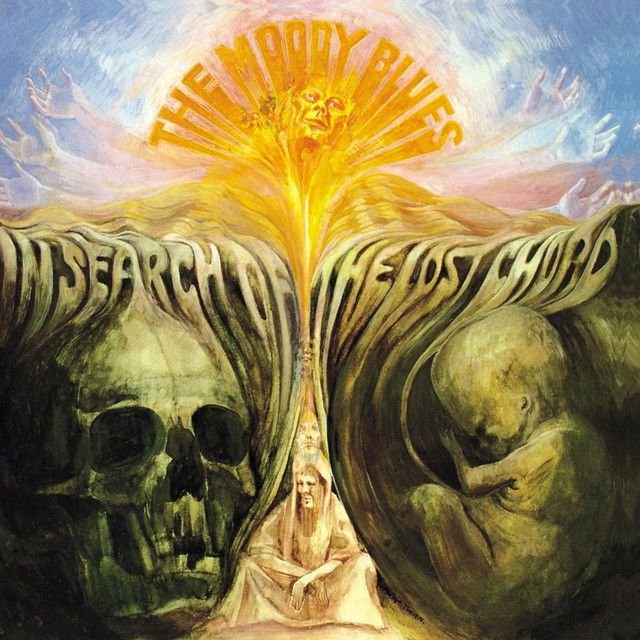
The meaning of Legend of a Mind The Moody Blues starts with a real person, but it does not stop there. Ray Thomas wrote the 1968 song for In Search of the Lost Chord, and its subject is Timothy Leary, the American psychologist turned psychedelic icon. Factually, the track was written by Thomas, produced by Tony Clarke, and released on the album in July 1968.
"Legend of a Mind" - The Moody Blues
No, no, he's outside looking in
Timothy Leary's dead
Loading lyrics...
Unable to load lyrics
We're unable to display the lyrics at this time. Please try again later.
What makes the song last is how it turns Leary into a symbol. They do not present him as a simple hero or villain. Instead, they paint him as a guide, a showman, and maybe even a myth.
A Psychedelic Portrait, Not a Biography
At the most basic level, the song is about Leary's connection to LSD culture and spiritual experimentation. The opening hook repeats Timothy Leary's dead
, then quickly undercuts it with outside looking in
. That twist matters.
Interpretation: rather than literal death, the line points to ego loss, detachment, or stepping outside ordinary society. In other words, the song suggests that Leary has left everyday thinking behind. It also fits his public image as someone who stood apart from mainstream culture.
The lyrics keep returning to movement and altered states. Phrases like astral plane
and references to taking people on “trips” tie Leary to mystical travel, not just chemical escape. The song reflects how 1960s counterculture often mixed psychedelia with Eastern spirituality.

Watch the official Legend of a Mind
music video
Why Timothy Leary Is the Center of the Song
Leary was already a famous and controversial figure by the late 1960s. He promoted LSD as a route to expanded consciousness and became one of the era's best-known counterculture voices. That public image is essential to the song's meaning.
Still, there is a playful edge. Justin Hayward later said Ray Thomas wrote it somewhat tongue in cheek. That helps explain the tone: the song sounds fascinated by Leary, but it also treats him like a larger-than-life attraction.
That tension shows up in the seaside imagery. The figure who sells thrills along the pier feels like a carnival barker. Interpretation: the song may be asking whether psychedelic enlightenment is true wisdom, mass entertainment, or both at once.
The Key Idea in the Chorus-Like Refrain
The repeated Leary lines act like a mantra. Each return pushes the song away from normal storytelling and into a circular, trance-like pattern. That structure mirrors the subject itself.
One of the clearest ideas comes in this short passage:
He'll take you up, he'll bring you down
He'll plant your feet back on the ground
This is not just about getting high and coming down. It presents Leary as a guide figure, someone who leads a person through an intense experience and then returns them to ordinary life.
Interpretation: the song is less interested in reckless chaos than in managed transformation. Even when it sounds wild, it implies a path with a beginning, middle, and return.
How the Sound Carries the Meaning
A huge part of the meaning of Legend of a Mind The Moody Blues comes from the arrangement. Ray Thomas sings lead and also delivers the song's famous flute work. In the middle, the track opens into a long flute solo that feels loose, airborne, and exploratory.
That solo is not decoration. It acts like the musical version of the trip described in the lyrics. The flute can sound pastoral and earthly one moment, then eerie and floating the next.
Mike Pinder's Mellotron is just as important. Its thick, ghostly texture gives the song a cosmic haze, while tabla and percussion add a meditative pulse. The result is classic late-1960s psychedelic rock: part rock song, part mind-expansion ritual.
Symbols That Matter Most
Several images hold the song together:
- Flight: ideas like flying high suggest expanded perception.
- Travel: short “trips” imply altered consciousness with a return point.
- Coast and pier: these settings feel public, social, and slightly theatrical.
- The outside position: being apart from the crowd suggests alienation and insight at once.
Together, these symbols make Leary feel both mystical and performative. He is not only a thinker here. He is a cultural character.
Two Strong Ways to Read the Song
There is more than one valid reading.
A tribute to a counterculture guide
On one level, the song admires Leary's role as a doorway into new ways of thinking. The language of spiritual travel suggests curiosity, not fear.
A sly comment on psychedelic celebrity
On another level, the song may be gently teasing the idea of Leary as a guru for sale. The thrill-seller image hints that enlightenment can become a product, especially in a fast-moving youth culture.
Both readings can be true at once. That duality is part of the song's charm.
Why the Song Still Connects
The track still works because it captures a whole era in one strange, vivid package. It is about drugs, yes, but also about identity, belief, performance, and the search for a bigger reality. They turn a famous name into a question: what happens when a person becomes the mascot for expanded consciousness?
That is why the meaning of Legend of a Mind The Moody Blues remains interesting. The song does not fully answer whether Leary is prophet, prankster, salesman, or seeker. It lets him be all four.
Final thought
In the end, “Legend of a Mind” is best heard as a psychedelic character study shaped by admiration, humor, and ambiguity. This interpretation is based on the lyrics, historical context, and the song's sound, and like all song analysis, it remains an interpretation rather than a final fact.







