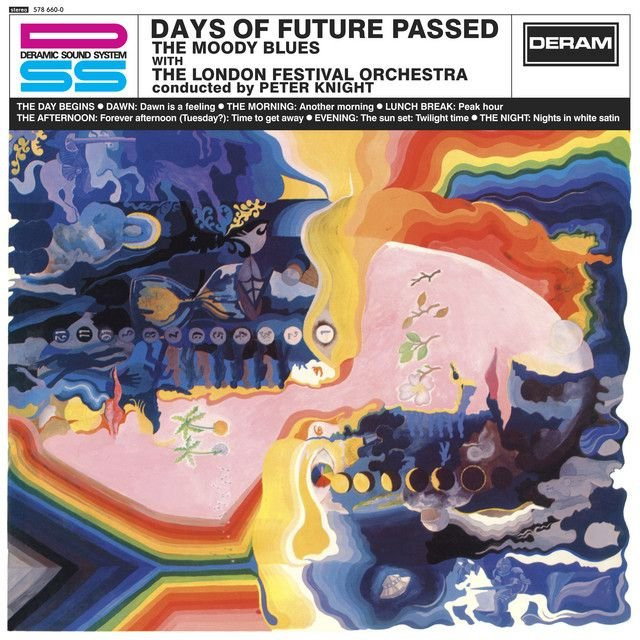
The Afternoon by The Moody Blues
The meaning of The Afternoon The Moody Blues starts with a simple scene: a weekday drifting open into wonder. On Days of Future Passed, the song appears as "Forever Afternoon (Tuesday?)", with the better-known single title "Tuesday Afternoon." Written by Justin Hayward and released from the band’s 1967 concept album about the passing of a day, it turns a quiet outdoor moment into a small awakening.
"The Afternoon" - The Moody Blues
I'm just beginning to see
Now I'm on my way
Loading lyrics...
Unable to load lyrics
We're unable to display the lyrics at this time. Please try again later.
Hayward said he wrote it during a spring afternoon in the English countryside, and the setting matters. According to Wikipedia, the song grew out of time spent near Lydiard Park and was produced for the album by Tony Clarke. That real-world origin helps explain why the song feels both grounded and dreamlike.
A Weekday Becomes a Spiritual Pause
At its core, the song is about stepping out of routine long enough to actually notice life. The narrator is not racing toward a goal. They are slowing down, looking around, and sensing that nature has something to teach them.
When the song opens with Tuesday afternoon
, it does something clever. A Tuesday is ordinary, not romantic like Saturday night or melancholy like Sunday morning. That makes the revelation stronger: beauty does not need a special holiday. It can arrive in the middle of a normal day.
The next emotional move is awakening. The line just beginning to see
suggests fresh perception rather than literal eyesight. They are waking up inwardly. The phrase points to clarity, as if the clouds are not only in the sky but also in the mind.

Watch the official The Afternoon
music video
Nature Is More Than Scenery Here
The natural images are not decorative. They act almost like guides. When the singer says the trees are drawing me near
, the song gives the outside world a voice and a pull. Nature becomes a partner in discovery.
That matters because the song is less about travel than invitation. The trees, clouds, and breeze are signs that peace is available if they stop resisting it. Even the famous image of chasing the clouds away
sounds less like force and more like release. Worry lifts because attention shifts.
Interpretation: The song can be heard as a gentle psychedelic experience, but it also works without that frame. Its deeper point is that the mind becomes clearer when they leave noise behind and let the world speak in a quieter way.
The Inner Mirror at the Center
One of the song’s strongest ideas is self-reflection. The narrator is not only looking at fields and trees; they are looking inward. The song moves from observing the world to examining consciousness itself.
That is why the reflective language feels so important. The afternoon becomes a mirror. Instead of presenting a dramatic plot, the lyric shows a change in awareness. They feel able to drop old pressure, stop performing, and simply exist in the moment.
This is where the song becomes more than pastoral pop. It is about freedom from the busy self. The outdoor setting opens the door, but the real destination is a calmer state of mind.
Why the Hook Feels So Light and Lasting
The repeated title phrase works like a mantra. Rather than pushing the story forward, it suspends time. Every return to Tuesday afternoon
brings the listener back into the same warm pocket of calm.
That repeated hook also explains why the song lingers emotionally. It does not chase a huge climax. It circles a feeling. In that sense, the chorus is not announcing action; it is preserving a mood that they do not want to lose.
The Second Half Turns Toward Evening
On the album, “The Afternoon” does not end with the best-known section. It moves into John Lodge’s companion piece, “(Evening) Time to Get Away.” That shift is crucial because it changes the mood from wonder to weariness.
Here the day meets reality again: labor, tiredness, and the cost of routine. The earlier peace of the afternoon now stands in contrast to work and obligation. The message is not that work is evil. It is that people can lose themselves when life becomes only toil.
Evening time to get away
'Til next day
That brief refrain is simple but revealing. It frames escape as temporary, which makes the earlier vision feel even more precious. Calm exists, but it has to be protected.
How the Sound Carries the Meaning
A huge part of the meaning of The Afternoon The Moody Blues comes from its arrangement. Hayward’s acoustic guitar and lead vocal keep the song intimate, while Mike Pinder’s Mellotron adds the floating string texture that gives it its misty, unreal glow. Songfacts notes that the Mellotron’s tape-loop warble was central to the band’s signature sound, and this track is one of its classic uses.
Ray Thomas’s flute at the end feels like the musical version of exhaling. On the album, Peter Knight’s orchestral writing and the London Festival Orchestra broaden the song from a personal reverie into something almost cinematic. Readers can hear that full concept-album setting on the Days of Future Passed track sequence.
This mix of rock band, Mellotron haze, flute, and orchestra is why the song feels both intimate and cosmic. It starts with one person in a field and ends sounding like a universal human feeling.
Why the Song Still Connects
Part of its staying power is that it honors an experience many people know but rarely name: the sudden moment when an ordinary day becomes meaningful. It does not argue or preach. It notices.
Interpretation: Some listeners hear a mystical awakening, others hear a gentle psychedelic drift, and others simply hear a love song to being outdoors and alive. All three readings fit because the lyric stays open.
In the end, the song suggests that peace is not far away. It may be waiting in a patch of daylight, a quiet walk, or a pause long enough to let the mind clear. That is why this 1960s classic still feels fresh.
Disclaimer: This interpretation blends documented facts about the song’s writing and production with subjective reading of its lyrics and mood.







