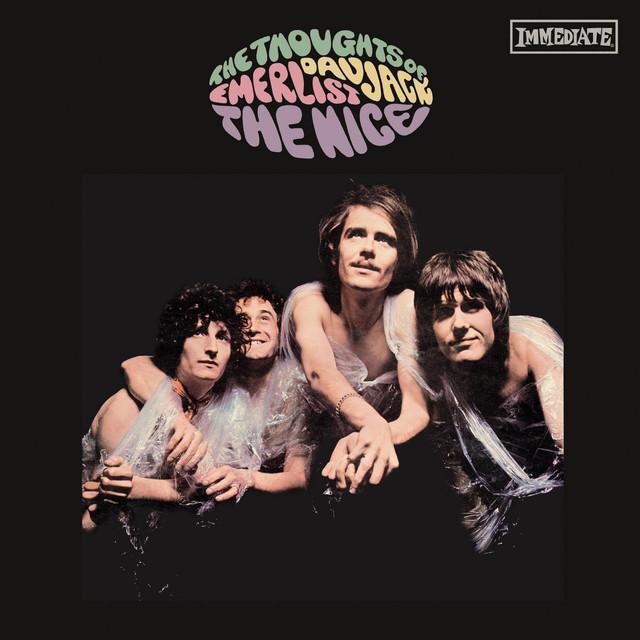
The Thoughts of Emerlist Davjack by The Nice
A Psychedelic Search for Lost Certainty
The meaning of The Thoughts of Emerlist Davjack The Nice starts with a simple wish: to return to youth, not just in age, but in feeling. The song presents a speaker who wants to recover openness, kindness, and a stronger sense of purpose. Rather than sounding like a carefree flashback, it feels like a thoughtful look at what growing older can blur.
"The Thoughts of Emerlist Davjack" - The Nice
To find the time to develop my mind and be kind
To really see, to really hear, to really live
Loading lyrics...
Unable to load lyrics
We're unable to display the lyrics at this time. Please try again later.
When the singer says they are going back
, the idea is not literal time travel. It suggests a mental and emotional reset. They want to find the version of themselves that could think clearly, feel deeply, and move through life with conviction.

Watch the official The Thoughts of Emerlist Davjack
music video
What the Lyrics Seem to Mean
At the center of the song is a contrast between youth and adulthood. The opening lines frame youth as a time to develop my mind
and be kind
. That pairing matters. The song does not treat being young as only fun or reckless. It links youth with moral growth, curiosity, and a fuller way of living.
The next idea deepens that point. The speaker wants to really see
, hear, live, and love. In plain terms, they feel disconnected in the present. They are not only missing the past; they are missing intensity, attention, and emotional honesty.
A brief lyric moment that sums it up
I'm going back to be young again
To find the time to develop my mind and be kind
That short passage captures the song's main message: youth is remembered as a state of possibility. It is a period when growth felt open and values felt clearer.
The Verse Adds Doubt to the Nostalgia
The verse keeps the song from becoming too sweet or sentimental. The line When I was young
leads to a memory of certainty: the speaker believed they were right. But the next thought complicates things. As everything moved, they wandered out of sight
.
That phrase suggests more than simple drifting. Interpretation: it may point to losing direction as the world changed around them. Youth brought confidence, but it did not guarantee stability. In that way, the song is not saying the past was perfect. It says the past held a kind of clarity that later got lost.
This is why the repeated return in the chorus matters. It sounds urgent, almost obsessive. The singer is trying to reclaim something that once felt natural and now feels distant.
Why the Sound Matters So Much
The Nice were not a standard pop band. Their 1968 debut album, The Thoughts of Emerlist Davjack, helped sketch out the border between psychedelic rock and early progressive rock. The band came out of the London scene after backing P. P. Arnold, then quickly built a name for adventurous live shows and a Marquee residency.
That context matters because this song's meaning is carried not only by words but by arrangement. Keith Emerson's keyboards and David O'List's guitar create a bright, swirling texture that feels unstable but exciting. The performance mirrors the lyric idea of reaching backward while still moving forward.
The production also fits the theme. The debut album was recorded in late 1967 at Olympic and Pye, with the group effectively producing it themselves under the alias “Emerlist Davjack,” a name built from the members' surnames. As noted in the album's documented history, the band leaned on psychedelic effects and studio color at a time when British rock was rapidly expanding its sound.
How Music and Message Work Together
The song is short, but it feels larger because of how tightly the band packs in motion. The rhythm pushes forward while the melody circles around a repeated desire. That creates a useful tension: the singer wants to go back, yet the music refuses to stand still.
Interpretation: this may be the song's smartest feature. It suggests that recovering youth is impossible in a literal sense. They cannot truly return. They can only chase the mindset, values, and emotional force they associate with it.
There is also a slightly theatrical quality in the vocal delivery. The Nice were often stronger as instrumental stylists than as traditional vocal storytellers, but here that actually helps. The voice sounds less like everyday speech and more like a dramatic inner monologue. That makes the lyrics feel universal instead of narrowly personal.
Artist Context Sharpens the Reading
The title itself is unusual. “Emerlist Davjack” is a portmanteau made from Emerson, O'List, Davison, and Jackson. That playful naming style places the song firmly in the late-1960s psychedelic era, when bands were building new identities as quickly as new sounds.
Still, the title track is more direct than the name suggests. Unlike some of the album's more surreal songs, this one speaks plainly about growth, memory, and self-recovery. That directness may be one reason it works as an entry point into the band.
Reception adds another layer. The single earned positive notices but did not chart. Even so, the album later gained status as an early prog landmark. That helps explain why the song still draws attention: it stands at a moment when British rock was learning how to pair introspective lyrics with bold, experimental arrangements.
Final Take on the Song's Meaning
So, what is the meaning of The Thoughts of Emerlist Davjack The Nice? At its core, it is a song about longing to regain a younger self that felt more awake, more certain, and more humane. It treats youth not as innocence alone, but as a lost capacity for attention, kindness, and belief.
Interpretation: listeners can hear it either as personal nostalgia or as a wider cultural statement from the late 1960s, when many artists were chasing renewal and trying to break from stale habits. Either way, the song's power comes from how honestly it admits that growing up can feel like losing part of one's vision.
That is why its repeated backward glance still lands. It is less about age than about trying to become fully alive again.
Disclaimer: This interpretation is based on the released lyrics, recording context, and available historical sources. As with most songs, meaning can remain open to individual listeners.







