
Monkey Man by The Rolling Stones
The meaning of Monkey Man The Rolling Stones starts with a messy self-portrait. On the surface, the song sounds playful, even absurd. But under that rough humor, it presents a character who sees himself as damaged, animal-like, and still hungry for connection.
"Monkey Man" - The Rolling Stones
And all my friends are junkies
That's not really true
Loading lyrics...
Unable to load lyrics
We're unable to display the lyrics at this time. Please try again later.
Released on Let It Bleed in 1969, Monkey Man
arrives during one of the band’s darkest and strongest periods. The song was written by Mick Jagger and Keith Richards and produced by Jimmy Miller. It appeared as the eighth track on the album, with a recording lineup that included Bill Wyman on bass and vibraphone, Nicky Hopkins on piano, Charlie Watts on drums, and Richards handling the main riff and slide guitar. Those details matter because the performance shapes the song’s meaning as much as the words do.
A Wild Joke With a Bruised Heart
At its core, the song is about a narrator who lowers himself before anyone else can. He describes himself with bizarre, ugly images, including fleabit peanut monkey
and sack of broken eggs
. Before the listener can judge him, he has already done it himself.
That is why the song feels funny and sad at the same time. The insults are cartoonish, but the emotion behind them is real. He sounds battered by life, romance, and his own habits. When he says he has been pushed around by every she-rat in this town
, he is not telling a clean story of heartbreak. He is dramatizing rejection in a language of grime and animal instinct.
Interpretation: the “monkey” image suggests a person stripped down to impulse and survival. He is not presenting himself as noble. He is presenting himself as raw.
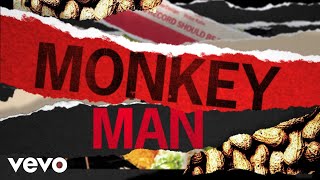
Watch the official Monkey Man
music video
Why the Chorus Matters So Much
The repeated line monkey man
is more than a joke hook. It turns self-mockery into identity. By repeating it, the narrator accepts what he is, or at least performs that acceptance.
The chorus also reaches for companionship. He says he is glad the other person is a “monkey woman” too. In plain terms, he seems to be saying: they are both flawed, both earthy, both outside polite society. That makes the chorus strangely tender. Instead of asking for ideal love, he asks for love between two imperfect creatures.
A Small Lyric Moment That Sums It Up
The song’s emotional center comes through in a short group of lines:
I am just a monkey man
I am glad you are a monkey woman too
Even here, the key idea is not romance in a polished sense. It is recognition. He wants someone who understands the chaos rather than someone who fixes it.
The Strange Images All Point One Way
Many of the verses sound random at first. He compares himself to food, wounds, and broken objects. He mentions being bitten, tossed around, gouged, and gored. These details do not build a neat plot, but they do build a pattern.
That pattern is wear and tear. Everything in the lyric feels bruised, low, sticky, or unstable. Even the domestic image of an unmade bed
points to disorder. This is a person living without polish.
Interpretation: the odd images may show a man talking big while admitting collapse. The nonsense is part of the point. Instead of giving a logical confession, he gives a scattered one. That makes the character feel more real, not less.
How the Sound Deepens the Meaning
The music is a major reason the song has lasted. According to the track’s recording history, the introduction layers vibraphone, bass, guitar, and piano, creating a slippery, almost spooky opening before the riff settles in. That combination gives the song a hazy, dangerous mood rather than a straight blues stomp.
The vibraphone especially matters. It adds a metallic shimmer that feels dreamlike, even suspicious. Some critics have described the intro as having an espionage-like atmosphere, which fits the song’s mix of coolness and threat. Then Richards’ guitar riff enters and grounds everything in dirt and swagger.
So while the lyric says “I’m a mess,” the band plays that mess with control. Jagger sounds amused and worn out at once, while the rhythm section keeps the track stalking forward. The contrast is key: the singer is unraveling, but the groove never does.
The Let It Bleed Context
Hearing the song on Let It Bleed also changes its meaning. That 1969 album is full of moral fatigue, violence, desire, and survival. In that setting, “Monkey Man” fits naturally. It is less a novelty song than another portrait of people living close to the edge.
Research on the song also notes a reported connection to Italian artist Mario Schifano, whom the band met around the time of the film Umano Non Umano. Whether listeners focus on that origin or not, the finished track works best as character writing: a half-comic, half-wounded performance from someone embracing his own fallen state.
Lasting Meaning and Final Take
So what is the meaning of Monkey Man The Rolling Stones? Most clearly, it is a song about accepting a damaged self and finding intimacy inside that damage. The narrator calls himself ridiculous names, but he is also asking to be seen. He is not reaching for innocence. He is reaching for mutual recognition among flawed people.
That balance helps explain why the song still stands out as a deep cut. It is funny without being lightweight, strange without being empty, and dark without losing its pulse.
Disclaimer: This interpretation is based on the song’s lyrics, recording context, and documented release history. As with many Rolling Stones songs, some meanings remain open to listener interpretation.








