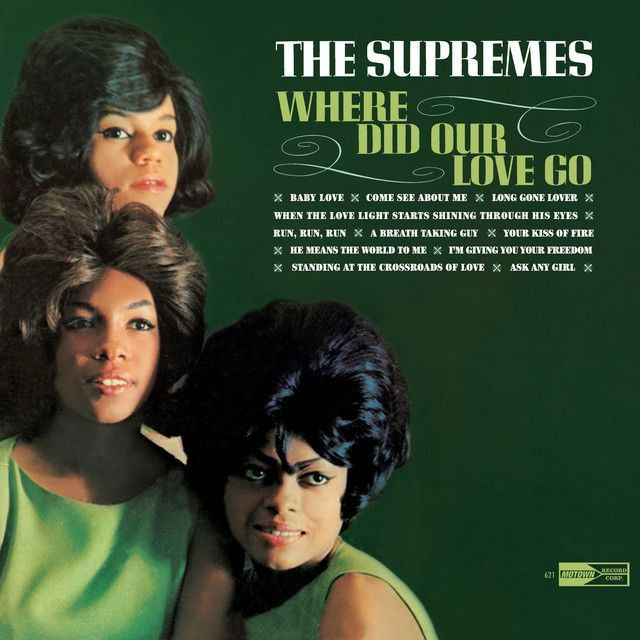
Why 'Where Did Our Love Go' Still Hurts
The meaning of Where Did Our Love Go The Supremes starts with a simple question and turns it into a lasting heartbreak anthem. The song does not describe a dramatic breakup scene. Instead, it captures the slower, more confusing moment when affection fades and one person realizes they are suddenly alone in the relationship.
"Where Did Our Love Go" - The Supremes
Ooh, please don't leave me all by myself
I've got this burning, burning, yearning feelin' inside me
Loading lyrics...
Unable to load lyrics
We're unable to display the lyrics at this time. Please try again later.
Released in 1964, the single became The Supremes' first No. 1 on the Billboard Hot 100, a major step in Motown history and in the group's rise to pop dominance. It was written by Holland-Dozier-Holland, the label's key songwriting team, according to the Rock & Roll Hall of Fame and Billboard.
A Small Question With a Big Emotional Weight
At its core, the song is about being abandoned emotionally after trusting someone fully. The narrator is not angry in a loud or revenge-driven way. They sound wounded, stunned, and still attached.
That is why the title question lands so hard. When they ask where did our love go
, they are not only asking where the romance went. They are also asking when the change happened, why promises failed, and how something once warm now feels empty.
Interpretation: The song's power comes from uncertainty. It is less about a clean ending than about the shock of watching love disappear in real time.

Watch the official Where Did Our Love Go
music video
The Story Inside the Verses
The lyrics sketch a clear emotional timeline:
- The relationship begins with tenderness.
- The singer gives in completely to love.
- The other person starts pulling away.
- The singer pleads for closeness and answers.
Early on, the song remembers a lover entering the heart so tenderly
. That memory matters because it sets up contrast. The problem is not that the relationship was always unstable. The pain comes from the gap between what was promised and what is happening now.
Later, the narrator mentions love forevermore
, pointing to broken promises. The song suggests that words of devotion were easy to say, but harder to live out. That makes the heartbreak feel more personal. It is not just loss. It is betrayal of trust.
Why the Pleading Never Sounds Overdone
One reason the record remains so affecting is its restraint. The singer begs, but they do not scream. Phrases like don't leave me
and all by myself
are simple, almost childlike, which gives them extra force.
Rather than sounding theatrical, the performance sounds exposed. Diana Ross sings with a light, controlled tone that makes the desperation feel even sadder. She sounds as if they are trying to stay composed while their world is slipping away.
Interpretation: That contrast between emotional pain and vocal control may be why the song still feels modern. It understands that heartbreak is often quiet before it becomes dramatic.
How Motown's Sound Deepens the Meaning
The production is central to the song's meaning. Motown often balanced polish with emotional urgency, and this track is a perfect example. Holland-Dozier-Holland built the song around a steady beat, sharp repetition, and a clean arrangement that leaves space for the vocal hook, as noted in historical summaries from the Motown Museum and the Songwriters Hall of Fame.
The rhythm has a near-march quality, which creates tension. It keeps moving forward while the singer seems emotionally stuck. Meanwhile, the repeated background response of baby, baby
works like an echo of obsession. It surrounds the lead vocal with need, memory, and panic.
This is one of the song's smartest tricks: it sounds sweet enough for radio, but the emotional content is much darker. The bright surface does not cancel the sadness. It frames it.
Gender, Image, and Pop Crossover
The Supremes were becoming stars who could cross from R&B to mainstream pop audiences in the United States. Their elegance, style, and controlled presentation helped them stand apart, while songs like this one made emotional vulnerability feel universal. The group's cultural importance is well documented by the National Museum of African American History and Culture and the Britannica entry on The Supremes.
That context matters for meaning. The song presents heartbreak without messiness in its surface style, yet the emotional stakes are intense underneath. This balance made The Supremes feel sophisticated and deeply relatable at the same time.
Another Way to Read the Song
A second reading of the meaning of Where Did Our Love Go The Supremes is that it is not only about one breakup. It is also about a pattern in romance: someone works hard to win love, then loses interest once they have it.
The verse about a once-ideal partner changing after they "got" the singer suggests that the real wound is not just separation. It is being treated as valuable during pursuit, then disposable after surrender.
Final Thought
The song lasts because it turns a familiar fear into a perfect pop question. It asks what many people ask after love cools: Was it real, and when did it change?
That emotional clarity, paired with Motown's elegant sound, is why the record still resonates. Interpretation: this article offers a reading of the song's themes, not a definitive statement of authorial intent.








