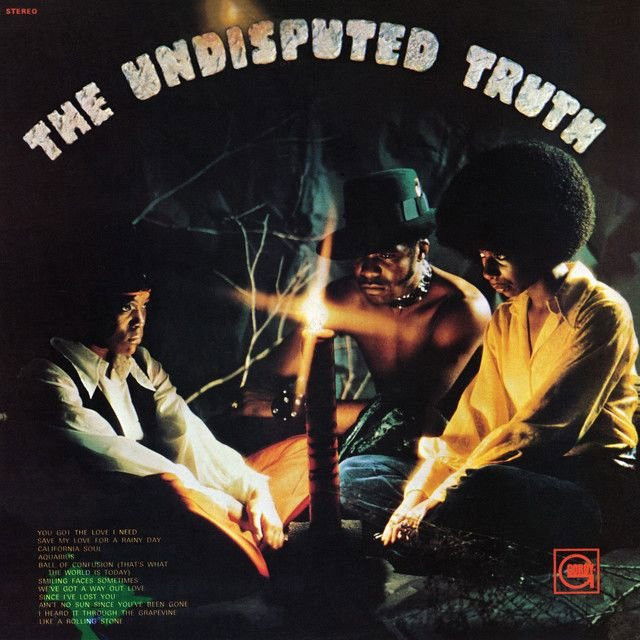
Why "Smiling Faces Sometimes" Still Cuts Deep
The meaning of Smiling Faces Sometimes The Undisputed Truth is simple on the surface and powerful underneath: not everyone who looks kind is trustworthy. The song turns that warning into a blunt lesson about deception, envy, and social danger.
"Smiling Faces Sometimes" - The Undisputed Truth
Pretend to be your friend
Smiling faces show no traces
Loading lyrics...
Unable to load lyrics
We're unable to display the lyrics at this time. Please try again later.
Released by The Undisputed Truth in 1971, the track was written by Barrett Strong and Norman Whitfield, two key Motown figures. It appeared on the group's self-titled debut and became one of their defining songs. Factually, its writers and release history are well documented in standard discographies and music references.
What makes the song last is not just its message. It is the way the record sounds suspicious, tense, and almost haunted while delivering advice that feels universal.
A Soul Warning Disguised as a Hit
At its core, the song says that charm can hide bad motives. The repeated hook, built around smiling faces sometimes
, is less a slogan than a caution sign. The singers are not talking about random sadness or heartbreak alone. They are warning listeners that dishonesty often comes wrapped in warmth.
The lyric keeps returning to the idea that appearances can mislead. When the song says people don't tell the truth
, it pushes beyond private gossip. It suggests a whole social environment where fake friendliness is common and even dangerous.
Interpretation: They sound like people who have learned this lesson the hard way. The directness gives the song a moral force. It does not ask listeners to decode a mystery; it asks them to stay alert.
Watch the official Smiling Faces Sometimes
music video
How the Verses Build That Message
The verses expand the main warning with vivid, everyday images. One of the smartest lines is about the eyes revealing what a smile hides. The song briefly argues that body language can expose real intent even when words do not.
That idea becomes even sharper in the famous image of the handshake
that hides the snake
. The song paraphrases betrayal through a familiar social ritual: a handshake should signal respect, but here it masks danger. In plain terms, the people who seem welcoming may be the ones doing harm.
Another striking moment warns about a friendly gesture that may actually limit someone. The song describes praise and approval as tools that can block progress. That is where jealousy, misery, and envy enter the picture. These are not abstract sins; they are social emotions that create passive-aggressive behavior.
Beware of the handshake
That hides the snake
That short image captures the whole track. Friendly performance and hidden threat live side by side.
The Voice of the Song: Advice, Not Confession
One reason the record feels strong is its point of view. The singers are not mainly confessing pain. They are instructing. Phrases like I'm only tryin' to school ya
make the song feel like older, wiser voices passing down a survival rule.
That gives the track a communal tone. It sounds like a street lesson, a family warning, or hard-earned life advice shared from one person to another. The enemy is not always open. In fact, the song says the obvious enemy may be easier to deal with because at least their intent is clear.
Interpretation: This helps explain why the song connects beyond romance. It can apply to friendship, business, politics, and community life. Anywhere people gain trust, they can misuse it.
Norman Whitfield's Production Makes Distrust Audible
The meaning lands harder because the production refuses comfort. Norman Whitfield, known for pushing Motown into psychedelic soul, surrounds the message with moody grooves, dramatic rhythm, and a dark atmosphere. That larger stylistic turn at Motown in the early 1970s is widely associated with Whitfield's work on records by The Temptations and The Undisputed Truth.
The beat is steady, but the arrangement feels uneasy. The bass and drums lock in like a warning pulse. The vocals alternate between smoothness and alarm, which mirrors the song's central contrast: pleasant surfaces, dangerous interiors.
The chorus is also crucial. It is catchy enough to feel public and singable, yet its content is suspicious. That tension is the point. They are hearing a hook that smiles while describing false smiles.
Artist Context Matters Here
The Undisputed Truth were one of the clearest vehicles for Whitfield's experimental soul ideas. While they never reached the same level of fame as some Motown stars, they became important for records that sounded darker and more psychologically complex than classic label pop-soul.
That context matters for the meaning of Smiling Faces Sometimes The Undisputed Truth because the group's style fits the song's worldview. This is not polished optimism. It is caution set to groove.
The song also had a long afterlife. It has been covered, sampled, and frequently cited as one of the sharpest warning songs of its era. Its appeal comes from how widely the message applies. Every generation discovers that some people weaponize politeness.
More Than Cynicism
It would be easy to hear the song as pure paranoia, but that misses part of its power. The lyric does not say trust no one. It says do not confuse friendliness with honesty. That is a more balanced and realistic point.
Interpretation: In that sense, the song is not anti-social. It is pro-awareness. It teaches discernment. They are not celebrating bitterness; they are encouraging better judgment.
That is why the song still feels current. In any age of image management, branding, and public performance, a warning about fake warmth remains relevant.
Final Thought on Its Lasting Meaning
The lasting meaning of this song lies in how clearly it names a hard truth: betrayal often arrives politely. Through sharp images, repeated warnings, and a shadowy soul arrangement, The Undisputed Truth turn social caution into something unforgettable.
Readers may hear political, personal, or spiritual lessons in it, and those readings can all fit. Interpretation disclaimer: song meaning is never fully fixed, and this article offers a best-faith reading based on the lyrics, recording context, and known artist history.







