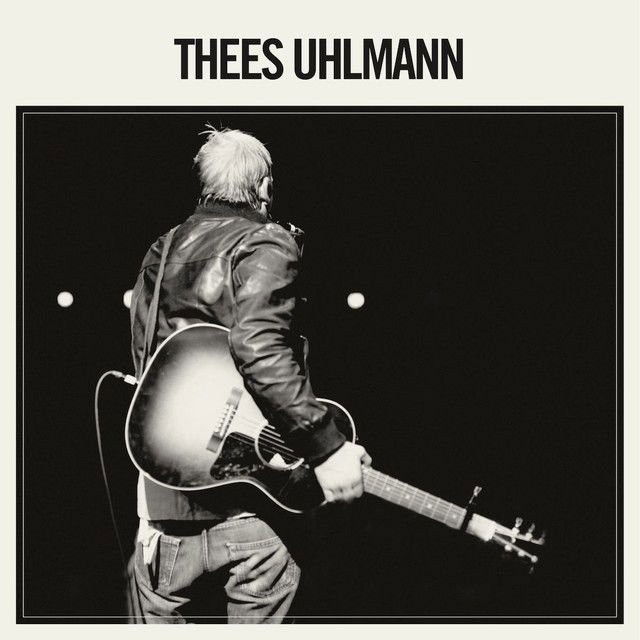
Why Thees Uhlmann’s Salmon Song Hits So Hard
A life story carried by one brutal image
The meaning of Zum Laichen und Sterben ziehen die Lachse den Fluss hinauf Thees Uhlmann comes into focus through one unforgettable metaphor: salmon swim upstream to reproduce and die. In this song, that image is not just about nature. It becomes a way of describing a whole human life—birth, memory, struggle, art, and the decision to keep going anyway.
"Zum Laichen und Sterben ziehen die Lachse den Fluss hinauf" - Thees Uhlmann
Ein Poster von Littbarski über meinem Bett
Im Frühling '74, Sternzeichen Widder
Loading lyrics...
Unable to load lyrics
We're unable to display the lyrics at this time. Please try again later.
Thees Uhlmann builds that meaning from small autobiographical details and then expands it into something larger. They start with a specific life, shaped by West German pop culture and Cold War tension, and then move toward a universal truth: life is hard, but people still push forward.
Watch the official Zum Laichen und Sterben ziehen die Lachse den Fluss hinauf
music video
The opening turns memory into identity
The first verse is grounded in concrete details. The narrator says they came into the world in a Kadett and slept under a Littbarski poster. Those references place the speaker in a recognizable German time and place. Uhlmann was born in 1974, and the lyric echoes that generational setting through images of childhood and political unease.
Even without outside explanation, the effect is clear. The song says that people do not begin as abstract souls. They begin inside a culture, a decade, a household, and a history. When the lyric mentions the Cold War and why people still trembled, it links private memory to collective fear.
That gives the song emotional weight. It is not only about one person growing up. It is about a generation learning early that the world is unstable.
The refrain is the key to the whole song
Everything turns on the repeated line about salmon. Paraphrased, the idea is simple: life includes an uphill pull toward purpose, even when that purpose is tied to suffering and mortality. The short phrase das Leben ist hart
leads directly into the salmon image, making the song’s philosophy plain.
Interpretation: the chorus is neither purely tragic nor motivational. It holds both feelings at once. Salmon do not swim upstream because it is easy or because they are optimistic. They do it because that is the path written into their existence. Uhlmann uses that image to suggest that human beings also move toward love, work, family, art, and meaning even when the cost is obvious.
That is why the refrain feels so powerful. It does not deny pain. It absorbs it.
Music becomes the answer to fragility
The second verse shifts from childhood memory to artistic becoming. The image of a snapped string first feels like catastrophe. The narrator reacts as if the whole instrument were ruined. That detail captures how young people often experience small losses as total disasters.
But the verse does not stay there. It turns toward growth. The song moves from breakage to vocation: now they have a guitar, and they will travel, and they will keep praising what they love. The short phrase die ich liebe
matters because it reveals the speaker’s response to hardship. They do not become detached or cynical. They become more devoted.
Interpretation: this is one of the song’s central ideas. Art does not remove suffering; it gives suffering direction. The same person who cried over a broken string learns to turn feeling into motion.
Fire, animals, and survival instincts
The song’s later images become more surreal and intense. Life feels like hunted whales, a skull filled with eels, a head placed in a lion’s mouth. These are not realistic scenes. They are pressure images. They show what life feels like when fear, danger, and vulnerability become hard to name directly.
Then the song suddenly opens outward again, toward wind and seagulls. That movement matters. Even after the darkest pictures, the narrator chooses exposure over retreat. They lean into uncertainty instead of hiding from it.
A brief multi-line passage captures that leap from danger to release:
in das Maul des Löwen
in den Wind
mit den Möwen
Paraphrased, the song imagines risk first, then surrender to air and motion. It is a vivid way of saying that courage is not the absence of fear. It is moving with fear still present.
How the sound likely strengthens the message
The song is identified here as alternative, and Uhlmann’s writing style is often associated with direct, literary German rock songwriting. That matters because this lyric needs a solid musical frame, not a delicate one. The refrain is built like a mantra, and its repetition suggests a driving arrangement that lets the central line gather force each time it returns.
From a production standpoint, repetition is doing emotional work. The more the title phrase comes back, the less it sounds like a clever metaphor and the more it sounds like a life law. A firm rhythm, steady build, and unvarnished vocal delivery would support that effect by making the song feel lived-in rather than theatrical.
A song about fate—or chosen persistence?
There are at least two strong ways to read it.
Reading one: life follows a harsh natural pattern
In this view, the song says human beings are not as free as they think. Like salmon, they are pulled by instincts, history, and time. The personal details in the first verse support this reading because they show how identity begins inside conditions nobody chooses.
Reading two: meaning comes from how they face the current
This second reading emphasizes agency. Yes, life is difficult, but the speaker still chooses praise, travel, memory, and forward motion. The short phrase es brennt und es wärmt
captures that double truth: life burns, but it also gives warmth.
Both readings can coexist. That tension is part of why the song stays with listeners.
Why the song resonates beyond Germany
Even when some cultural references are specifically German, the emotional structure is widely recognizable. Almost everyone understands the feeling behind ich werd' nicht müd'
: they keep going because something still matters. The song speaks to adulthood without sounding polished or falsely wise.
That is the core of the meaning of Zum Laichen und Sterben ziehen die Lachse den Fluss hinauf Thees Uhlmann. It is a song about being shaped by history, hurt by life, awakened by art, and carried forward by a stubborn inner current.
Final takeaway
Thees Uhlmann turns a strange title into a complete philosophy. Their narrator remembers where they came from, admits how rough life can feel, and still moves upstream.
That mix of toughness and tenderness is what makes the song hit so hard. Interpretation disclaimer: song meaning is never fully fixed, and listeners may hear different shades of fate, courage, memory, or creative survival in these lines.







