Love on Your Side by Thompson Twins
The meaning of Love on Your Side Thompson Twins starts with a breakup song that does not sound defeated. Instead, it sounds bright, catchy, and even danceable while the words describe confusion, jealousy, and emotional distance. That tension is the key to why the song still feels sharp.
"Love on Your Side" - Thompson Twins
And it makes me feel locked out
You say my passion often stifles you
Loading lyrics...
Unable to load lyrics
We're unable to display the lyrics at this time. Please try again later.
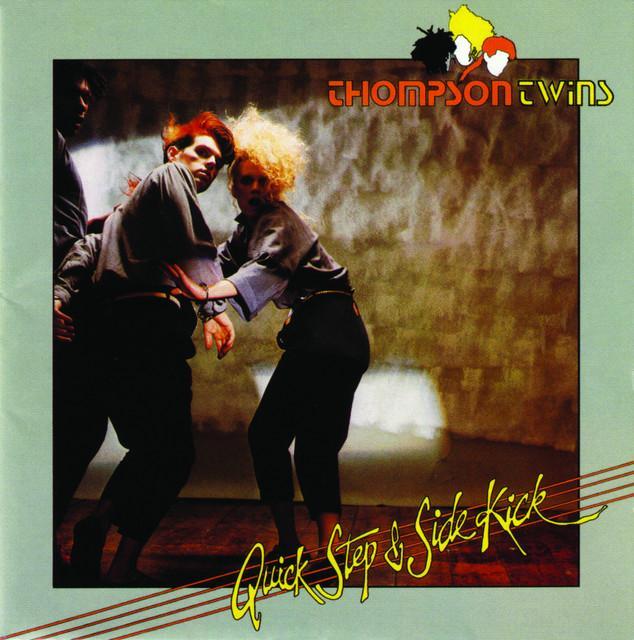
Released in January 1983, the single became Thompson Twins' first UK Top 10 hit, reaching No. 9, and it later reached No. 45 on the US Billboard Hot 100. It appeared on Quick Step & Side Kick, the album retitled Side Kicks in the US, and was produced by Alex Sadkin with the band.
A breakup song hiding inside pop gloss
At its core, the song follows a narrator who feels pushed to the edge of a relationship. They hear the other person laughing elsewhere and immediately feel excluded. That opening image sets up the main conflict: one partner wants freedom and movement, while the narrator wants closeness, clarity, and mutual commitment.
The early lines make that mismatch plain. The partner says his intensity can feel too heavy, and she wants space. He answers from a more traditional view of romance, suggesting he was raised to think couples should need each other. When she rejects that idea, the song becomes less about simple heartbreak and more about changing rules.
Interpretation: this is not just a complaint about being left out. It is a song about discovering that love may not mean the same thing to both people.
Watch the official Love on Your Side
music video
The chorus turns pain into sarcasm
The hook, built around love on your side
, sounds almost celebratory at first. But in context it lands as a bitter observation. The narrator seems to say: of course she can act freely, because she has emotional confidence, other options, or a belief that love will protect her.
That is where the song gets more layered. According to a Songfacts interview with songwriter Tom Bailey, it is "a complicated and quite dark song" about realizing a partner wants to explore relationships in a broader way than the narrator can handle. He also said the song carries a helpless feeling, but also "some kind of confidence" that love can help someone through it.
So the chorus can be heard in two ways:
- As sarcasm aimed at the partner.
- As a fragile hope that love, somehow, helps the narrator survive the hurt.
That double meaning gives the refrain its staying power.
Small details show a one-sided romance
The verses are full of gestures that do not land. He buys roses; she gives them away. He shares favorite records; they talk all night, and still he gets sent home. These scenes are ordinary, but that is why they work. They show someone trying hard to build intimacy and getting no real return.
One of the sharpest turns comes when the narrator realizes it doesn't hurt to be alone
. That is a quiet breakthrough. He begins the song hurt by exclusion, but by this point he sees solitude as less painful than chasing a person who keeps slipping away.
when you meet someone
who doesn't follow all the rules
Those lines capture the song's emotional pivot. The partner is not only distant; she changes the narrator's whole idea of how relationships work.
Gender, perspective, and why the lyric feels so tense
A useful piece of context is that Alannah Currie first wrote the lyric from a female perspective, based on her own experience, before it was changed into a male point of view for Tom Bailey to sing. That matters because the final version keeps a slightly unsettled quality. It feels personal, but also a little displaced, as if the emotions were translated across perspectives.
Interpretation: that may be one reason the song feels both intimate and detached. The narrator is inside the pain, yet he also sounds like he is studying it in real time.
The line RAP BOY RAP!
adds to that off-balance mood. It breaks the emotional flow with a jolt of style and performance, almost like the song refuses to stay purely wounded. That choice fits a band that often mixed art-pop wit with radio-ready hooks.
How the music softens and sharpens the meaning
Musically, "Love On Your Side" sits between new wave and synth-pop, with crisp rhythms, bright keyboards, and a polished early-1980s studio sheen. The groove moves lightly, which creates a contrast with the lyric's insecurity. Instead of slow heartbreak, Thompson Twins give listeners motion.
That production choice matters. The beat keeps the narrator from sounding crushed. Even when he feels locked out
, the arrangement suggests momentum rather than collapse. Alex Sadkin and the band shape the song so that emotional confusion becomes something danceable.
This also helps explain its chart success. The song was smart enough to reward close listening, but catchy enough to break through commercially, including a strong No. 6 showing on the US Dance chart.
What the song finally says about love
By the end, the narrator still does not fully understand what is happening. He admits the partner's arguments make sense, yet he remains unsure. That uncertainty is central to the song's honesty. There is no neat moral.
The best reading is that the song captures the moment when romantic expectations fall apart. One person treats love as flexible and exploratory; the other experiences that freedom as rejection. The result is jealousy, self-questioning, and finally a shaky kind of growth.
That is the lasting meaning of Love on Your Side: love does not automatically make two people want the same thing. Sometimes it reveals the gap between them.
Final takeaway
For listeners searching for the meaning of Love on Your Side Thompson Twins, the song is best understood as a clever, uneasy portrait of mismatched desire. Its bright sound hides a darker story about exclusion, changing relationship rules, and the first hint that being alone may be healthier than begging for closeness.
This article offers interpretation based on the released lyric, documented songwriter comments, and recording context. As with any song, listeners may hear meanings that differ from the artist's stated intent.







