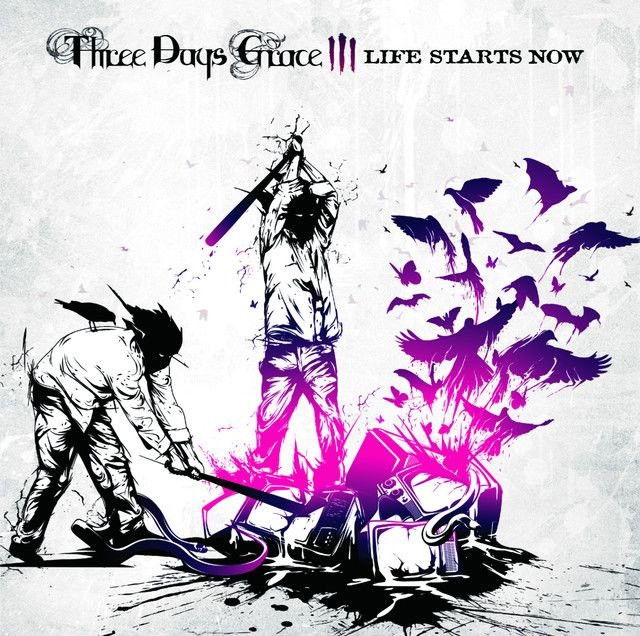
Home by Three Days Grace
Why This Song Still Hits Hard
The meaning of Home Three Days Grace comes down to one painful idea: living in a place that should feel safe, but does not. The song turns the word “home” into something bitter. Instead of comfort, it gives pressure, distance, and emotional neglect.
"Home" - Three Days Grace
'Cause I know you're not there
And I know you don't care
Loading lyrics...
Unable to load lyrics
We're unable to display the lyrics at this time. Please try again later.
Released as a single in 2004 from the band’s debut album, “Home” became one of Three Days Grace’s early signature songs. According to [Wikipedia’s song entry](https://en.wikipedia.org/wiki/Home_(Three_Days_Grace_song), it reached No. 2 on Billboard’s Mainstream Rock chart and later earned Platinum certification in the United States. That success makes sense: the song takes a private hurt and turns it into a loud, easy-to-feel anthem.

Watch the official Home
music video
A House Without Warmth
At its core, the song describes someone who feels unseen inside their own household. They are not talking about missing a building. They are talking about missing care, patience, and real presence.
The opening idea is brutal in its honesty. The narrator says they are coming back only to be alone, and that the other person does not care. In plain terms, the song starts by rejecting the idea that sharing a space means sharing love.
That is why the chorus lands so hard. When the singer insists this is not a home
, they are drawing a line between a house and a healthy relationship. A home should hold trust. Here, it holds criticism and silence.
The Story the Lyrics Tell
The verses sketch a tense routine. The narrator tries to please someone, but nothing works. They feel judged, pushed around, and drained. Neil Sanderson summed up the song’s theme in a brief MTV comment, saying it was about being pushed around and neglected, even while around other people.
Several small details build that picture:
- The narrator says
you’re never satisfied
, suggesting constant criticism. - They describe the other person as absent
even when you’re here
, which points to emotional distance, not just physical absence. - They admit they are
better off alone
, showing that loneliness now feels easier than contact.
One verse adds a darker coping habit. The narrator says they are intoxicated before the other person gets home. That detail matters because it shows they are not just angry; they are trying to numb themselves before another fight begins.
By the time you come homeI’m already stonedYou turn off the TVAnd you scream at me
This is the song’s clearest snapshot of domestic tension. It is not presented as one dramatic event, but as a pattern.
What the Chorus Really Means
The chorus is simple, but that simplicity is the point. Repeating “home” over and over makes the word feel unstable. Each repetition strips away its usual warmth.
Interpretation: the song is not only about wanting to leave a bad living situation. It is also about realizing that “home” is earned through care. If care is missing, the label no longer fits.
That reading explains why the hook feels bigger than one argument. The line this house is not a home
sounds like a verdict after a long buildup of disappointment. The singer is done pretending the situation is normal.
Anger, Neglect, and Emotional Absence
One of the strongest parts of the meaning of Home Three Days Grace is how it links anger with neglect. Many rock songs focus on explosive conflict. “Home” does that too, but it also highlights something quieter: the pain of dealing with a person who seems emotionally gone.
That idea appears in the line about someone disappearing while still being present. In everyday life, that can mean a parent, partner, or authority figure who is physically in the room but emotionally unreachable. The song never locks itself into one exact relationship, and that openness helps many listeners see their own experience in it.
Interpretation: some hear the song as a portrait of a troubled parent-child dynamic. Others hear it as a collapsing romantic relationship. Both readings fit because the lyrics focus less on labels and more on patterns: blame, fear, distance, and the wish to escape.
How the Sound Carries the Message
Three Days Grace do not deliver this theme quietly. “Home” opens with a heavy riff, then adds a high guitar lead that cuts through the mix. Adam Gontier explained in an Ultimate Guitar interview, briefly paraphrased here, that the band and producer Gavin Brown felt the riff needed a melodic guitar part over it, and they built that lead in the studio.
That choice matters. The low riff feels like pressure pressing down, while the sharper lead sounds restless and exposed. Together, they mirror the song’s emotional split: trapped on the ground, but desperate to break out.
The tempo is moderate rather than fast, which gives the anger weight. Instead of sounding reckless, the band sounds exhausted and fed up. Gontier’s vocal also helps. He does not sing like someone debating their feelings. He sounds like someone who has reached a hard conclusion.
Production adds to that effect. Gavin Brown’s work keeps the song tight and punchy, with the chorus opening wide enough to feel like release without losing the tension underneath.
Context, Reception, and the Video
Context strengthens the song’s meaning. “Home” arrived during the band’s breakout period, when Three Days Grace were building a reputation for songs about pain, frustration, and survival. Adam Gontier once called “Home” his favorite song to play live because of the energy it created.
The music video pushes the same emotional message into images. Directed by Dean Karr and filmed in Hamilton, Ontario, it places the band in a haunted-looking building. Sanderson said there were metaphorical images that tied back to the lyrics. That setting works well: the home in the song is not cozy or protective. It feels contaminated by memory and conflict.
Final Meaning in Plain English
So, what is “Home” about? It is about the shock of realizing that the place where they live is hurting them more than helping them. It is about emotional neglect, constant criticism, and the moment they decide distance may be healthier than staying.
The reason the song lasts is its clarity. It takes a common word and exposes how empty it can become when love disappears.
Disclaimer: This interpretation is based on the lyrics, available band comments, and the song’s production context. Like most songs, it can support more than one valid reading.







