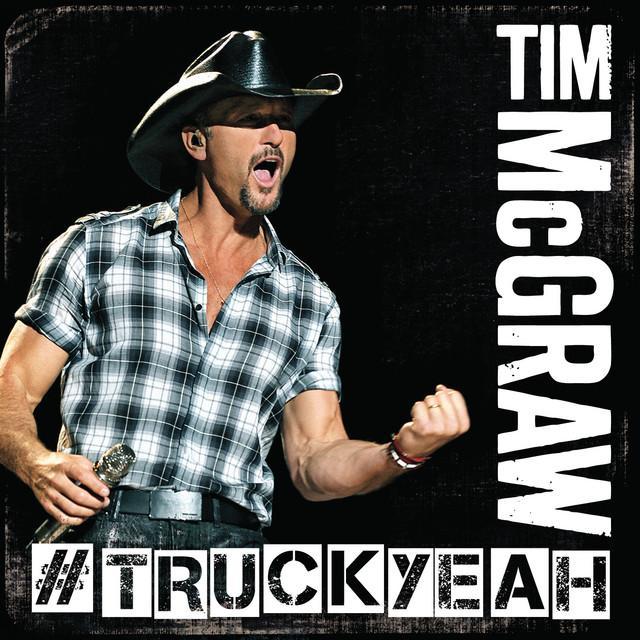
Truck Yeah by Tim McGraw
Why This Loud Hit Matters
The meaning of Truck Yeah Tim McGraw starts with a simple idea: the song is less about a vehicle than a lifestyle. It celebrates country pride, weekend freedom, loud music, flirtation, and a rough-edged sense of belonging. Rather than telling a deep story, it builds an atmosphere where trucks, tailgates, football, bars, and back-road energy all stand for one thing: a community that likes life turned up.
"Truck Yeah" - Tim McGraw
Thumpin' on the subs in the back of my crew cab
Redneck rockin' like a Rockstar
Loading lyrics...
Unable to load lyrics
We're unable to display the lyrics at this time. Please try again later.
Factually, the song was released on July 3, 2012, as the lead single from Tim McGraw’s Two Lanes of Freedom. It was his first single for Big Machine Records, which gave the release extra attention because it marked a new chapter in his career. That context matters, because the song sounds designed as a statement of reset: bold, noisy, and impossible to miss.
Watch the official Truck Yeah
music video
At the Center: Country Identity as Celebration
On the surface, the lyrics describe parties, trucks, mud, beer, and late nights. But the larger point is identity. The singer presents country life as something joyful and modern at the same time. Early lines mix rural imagery with pop and rap culture, including Lil' Wayne pumpin'
, which signals that country people are not stuck in one lane.
That blend is important to the song’s meaning. It argues that country identity can absorb outside influences without losing itself. A crew-cab truck can have heavy bass. A redneck can enjoy rap. A honky-tonk can feel like a club. The song keeps erasing neat borders between “country” and “city.”
Interpretation: This is why the track felt so pointed in 2012. It presents rural pride not as isolation, but as swagger. The repeated attitude is not defensive. It is confident.
How the Verses Build the World
The verses work like snapshots of a whole weekend. They move from Friday football to Saturday nightlife to Sunday worship, then back to another round of music and romance. In a few broad images, the song sketches a rhythm of American small-town life.
One of its key phrases is hillbilly proud
. That line turns a word that can be used as an insult into a badge of honor. The song does this again and again: it takes stereotypes and converts them into group identity.
There is also a social invitation inside the bragging. The singer asks listeners to join in rather than stand back and judge. Even when the lyrics mention a girl, or partying until sunrise, the bigger goal is communal excitement. The world of the song is open to anyone who accepts the energy.
Rap or country, city, farm
It don't matter who you are
Those two short lines state the song’s broadest message. Beneath the chest-thumping hook is an argument that country spirit is an attitude, not just a zip code.
The Chorus Turns a Truck Into a Symbol
The chorus is built around truck yeah
, a phrase that is half joke, half slogan. It is catchy because it sounds like a playful near-curse, but it also works as shorthand for the entire lifestyle the song is selling.
In plain terms, the truck symbolizes:
- freedom of movement
- working-class pride
- masculinity and flirtation
- rural status and self-expression
- fun without apology
When the singer wants to get it jacked up
and find a girl with a truck
, they are not giving practical goals. They are describing a fantasy of mutual energy and equal participation. The ideal partner is not passive. She fits the same loud, independent world.
Interpretation: The chorus matters because it shrinks a full identity into two memorable words. That is why the song landed so well with live crowds and radio listeners. It is easy to shout, but it also carries a whole image set behind it.
The Sound Says as Much as the Words
Production plays a big role in the meaning of Truck Yeah Tim McGraw. Produced by Byron Gallimore and McGraw, the track leans into country rock more than traditional country. The guitars are muscular, the beat is driving, and the vocal delivery has a spoken, swaggering edge in spots.
That sound supports the lyrics in three ways:
Big Drums, Big Confidence
The pounding rhythm mirrors truck stereos, tailgate parties, and the physical thump described in the opening. The groove is made to feel public, not private.
Rock Energy Over Reflection
There is little softness or hesitation in the arrangement. That keeps the song from becoming nostalgic. Instead, it lives in the present tense, where the goal is volume and movement.
A Crossover Mindset
The references to rap culture are matched by a beat-forward mix. Reviews picked up on that swagger. Taste of Country called it highly fun, while other critics found it too broad or silly. That split tells readers something useful: the song was built for impact first, subtlety second.
Reception, Risk, and Why It Divided People
“Truck Yeah” debuted at No. 22 on Hot Country Songs, then became McGraw’s highest chart debut at the time, according to the research data. It was later certified Platinum in the United States. Those facts show that many listeners connected with its energy, even if critics were mixed.
Why the divide? Because the song is intentionally exaggerated. It leans hard into country signifiers and party language. For some listeners, that makes it fun and self-aware. For others, it feels like a caricature.
Interpretation: Both responses make sense. The song is not aiming for emotional complexity. It aims to create a chant, a scene, and a shared attitude. Its success depends on whether a listener hears confidence or cliché.
Final Take on the Song’s Meaning
In the end, the meaning of Truck Yeah Tim McGraw is about turning country identity into a party anthem. It celebrates loud living, local pride, and a version of rural America that borrows freely from rock and rap without giving up its roots.
They use trucks as the main emblem, but the real subject is belonging. If someone hears the song as goofy, that is part of the design. If they hear it as a statement of pride, that works too. Interpretation: the song’s real power is that it makes identity feel shoutable.
Disclaimer: Song meaning is always part fact, part interpretation. This reading is based on the lyrics, production, release context, and public reception.








