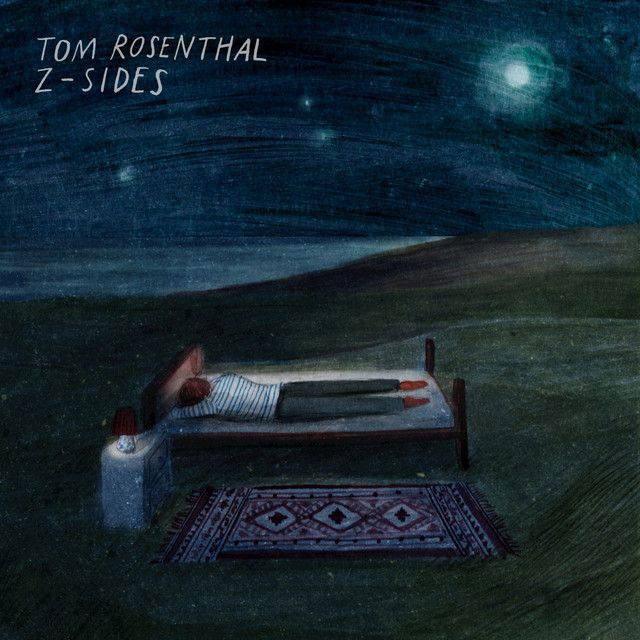
Lights Are On by Tom Rosenthal
A breakup song without a breakup, Tom Rosenthal’s “Lights Are On” finds poetry in feeling switched off yet held. The hook sounds cozy, but the opening shock—God stood me up
—drops them into a quiet crisis. From there, the track turns inward, using love as a shelter rather than a stage.
"Lights Are On" - Tom Rosenthal
And I don't know why
Lights are on
Loading lyrics...
Unable to load lyrics
We're unable to display the lyrics at this time. Please try again later.
A hush between emptiness and embrace
The meaning of Lights Are On Tom Rosenthal is best read as a study in contrast. The verse admits vacancy—Lights are on
, yet nobody's home
—while the chorus insists on connection with There ain't no love like our love
. That gap is the heart of the song: profound numbness on one side, a protected intimacy on the other.
Interpretation: The opening line hints at a failed appointment with faith or fate. When the big answers don’t show up, the singer chooses a smaller, human miracle—two people making a world of their own.
Who’s talking, and who’s being kept safe?
They speak in first person, but they often shift to “we,” as in Don't wake us up
. The song sounds like one partner addressing another, promising a sealed space where no one else gets a vote. It’s not bragging; it’s boundary-setting.
Interpretation: The “we” voice suggests a pact. If the outside is chaotic, the couple becomes a tiny republic with its own rules, rhythms, and mercy.
What actually happens: a simple, private arc
- A cosmic letdown:
God stood me up
signals a spiritual or existential disappointment. - A numb present:
Lights are on
butnobody's home
captures dissociation—life running, person missing. - A door closes: They tell the world to let the last ones go and to keep quiet—
Don't wake us up
. - A shelter forms: They ask to
Build us a dome
, a picture of safety and rest. - A vow repeats: The chorus circles back—
There ain't no love like our love
—as mantra and shield.
The chorus is a shield more than a slogan
The refrain could read like triumph, but the verses tilt it toward protection. Interpretation: Repeating the line is less about convincing others and more about steadying themselves. Each pass of the chorus reaffirms the border around their shared space.
Symbols that do the heavy lifting
- Lights/house: Everyday normalcy continues, but the self is dimmed. The image is common in speech, yet here it becomes tender, not mocking.
- Dome: A dome is both architectural and ceremonial. It implies total coverage—no leaks, no drafts. Interpretation: It’s a soft fortress built from trust, naps, and time.
- Night/sleep: The wish to not be woken signals permission to opt out. This isn’t escapism for its own sake; it’s restorative privacy.
How the sound makes the shelter feel real
Rosenthal often arranges with a light touch—piano up front, gentle percussion, warm reverb, and stacked harmonies that feel like friends leaning in. The tempo is unhurried, leaving space for breath and quiet. When the chorus blooms, the layered vocals behave like the dome itself, wrapping the thin, vulnerable verse lines in a soft, resonant coat.
Interpretation: The production refuses drama, which is the point. Instead of big drums or soaring strings, the song gives us hand-to-heart scale, the intimate volume at which care is exchanged.
Mental health, faith, and why the door stays shut
Interpretation: The lyric can track with depression or burnout—the mind is present enough to function but absent from feeling. The divine no-show of the first line adds a layer of faith fatigue. After that rupture, the only reliable altar becomes the person beside them. That’s why the chorus doesn’t escalate; it circles, like a bedside prayer.
Importantly, the song never attacks the outside world. It simply declines its demands. Saying Don't wake us up
is a way to protect the little light that’s left.
Alternate paths through the lyric
- Grief lens: The house is inhabited by memories, not people. The dome holds space for mourning until the body can catch up.
- New-parent lens: The world knocks; the couple whispers back. The dome is a sleepless nursery, the mantra a promise that this cocoon is worth the fog.
- Secular sanctuary lens: After disappointment with larger systems—faith, work, institutions—the lovers shape their own small system that works.
Takeaway: an inward anthem you can hum
“Lights Are On” turns a flat, familiar phrase into a tender survival plan. When meaning fails at the cosmic level, the song scales down to two, and that’s enough. Love here is not fireworks—it’s a room-temperature glow that lasts.
Disclaimer: Song interpretations are subjective. This reading blends textual evidence with reasonable inference and may differ from the artist’s intent.







