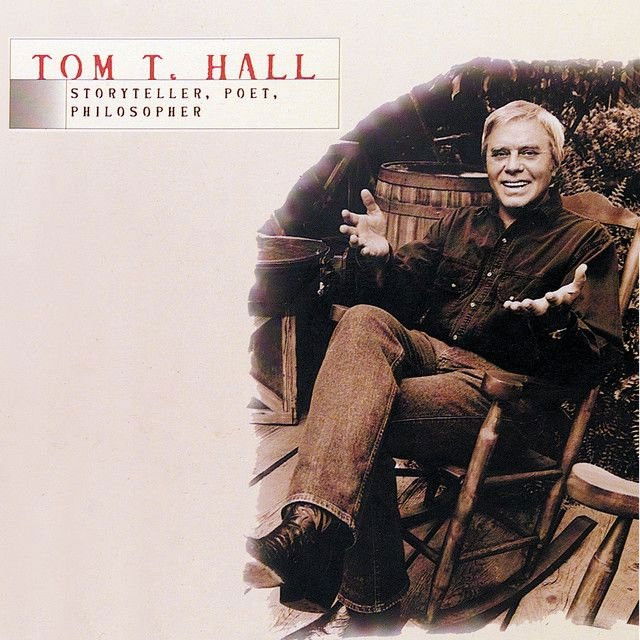
Why Tom T. Hall’s ‘Faster Horses’ Still Lands
The meaning of Faster Horses (The Cowboy And The Poet) Tom T. Hall starts with a joke and ends with a hard truth. On the surface, this 1975 country hit is a funny barroom story about a young poet asking an old cowboy about the meaning of life. The cowboy answers with a list of wants, not ideals. That answer sounds playful, but Tom T. Hall uses it to say something sharp about human nature.
"Faster Horses (The Cowboy And The Poet)" - Tom T. Hall
His eyes were sharp as razor blades his face was leather tan
His toes were pointed inward from a-hangin' on a horse
Loading lyrics...
Unable to load lyrics
We're unable to display the lyrics at this time. Please try again later.
Hall, one of country music’s great storytellers, wrote and recorded the song himself. According to Wikipedia, it was released in December 1975, reached No. 1 on Billboard’s Hot Country Singles chart, and later was named by the Western Writers of America as one of the Top 100 Western songs of all time. That success matters because it shows how widely this song’s plainspoken wisdom connected.
A Funny Story With a Serious Core
The plot is simple. A self-serious young writer meets a weathered cowboy and asks about life’s big mysteries. The cowboy does not answer like a philosopher. Instead, he gives the famous list: faster horses
, younger women
, older whiskey
, and more money
.
On one level, the line is comic because it is so blunt. The poet wants truth with a capital T. The cowboy answers with appetite, comfort, speed, pleasure, and wealth. Hall sets up a clash between romantic ideas and lived experience.
Interpretation: The song suggests that many people dress up their wishes in noble language, but underneath, they still want ease, status, desire, and security. The cowboy is not pretending otherwise.
Watch the official Faster Horses (The Cowboy And The Poet)
music video
The Cowboy and the Poet as Opposites
The song works because the two figures represent two ways of seeing the world.
The cowboy’s side
The cowboy is introduced as tough, worn down, and deeply practical. Every detail about him points to experience rather than theory. He is a person shaped by work, age, and survival. When he talks, he cuts through pretense.
At one point, he dismisses lofty talk like peace and rain
. He argues that even those beautiful words often just mean prosperity. In other words, people may say they want peace, but what they often mean is that they want life to go well for them.
The poet’s side
The poet claims to be searching for truth and says his soul is burning with higher purpose. But the cowboy calls him out with one brutal word: you are a liar
. That is the turning point.
Interpretation: The cowboy is not only insulting the poet. He is accusing him of self-deception. Hall implies that the poet is not free from ordinary wants; he is only better at hiding them behind grand language.
How the Chorus Explains the Song’s Meaning
The chorus is catchy enough to sound like a novelty line, but its repetition gives it weight. Each time it returns, it means a little more.
At first, it feels like a punchline. Later, it becomes a challenge to the poet’s self-image. By the end, when the narrator says his poet days are over
, the list has turned into a rough life lesson.
faster horses,younger women,older whiskey, andmore money
That short list matters because it reduces human ambition to a few vivid desires. It is funny, but it is also bleak. The song asks whether wisdom is noble insight or just honest acceptance of what people chase.
What Happens in the Ending
The ending often gets overlooked because listeners remember the hook. But the final verse is where Hall sharpens the song.
The poet first resists the cowboy’s answer. Then the confrontation turns physical, and the poet suddenly finds himself dealing with reality, not ideas. After that scare, he comes around. He says that if his son asks what he has learned, he may pass on the cowboy’s answer.
This ending can be read in two ways:
- Comic surrender: the poet gives in because the cowboy is tougher.
- Moral awakening: the poet learns that life is less abstract than he wanted to believe.
Both readings fit. Hall leaves enough space for the listener to laugh and think at the same time.
Why the Sound Helps the Message
Musically, the song supports its plain talk. It sits comfortably in country storytelling, with a steady rhythm, clear vocal delivery, and an easy barroom feel. There is no dramatic studio trick pulling attention away from the words. That matters, because Hall’s strength was always narrative first.
The production, credited to Tom T. Hall and Jerry Kennedy, keeps the performance loose and direct rather than grand. That simplicity makes the cowboy’s answer sound like common sense passed across a table, not a polished sermon. The tune’s relaxed swing also helps the hard line go down easy.
Its Place in Tom T. Hall’s Career
Hall built his reputation on songs that sounded conversational while carrying real craft. “Faster Horses” fits that style perfectly. American Songwriter called it a tongue-in-cheek Western tune, and that description is fair. But it is more than a gag song.
Its cultural afterlife proves that. The chorus was even quoted in a 1976 U.S. Senate hearing, which shows how quickly the line entered public life. People remembered it because it is funny, but also because it captures a recognizable truth about wanting more.
The Lasting Meaning of “Faster Horses”
So, what is the meaning of Faster Horses (The Cowboy And The Poet) Tom T. Hall? It is a song about the gap between what people say they value and what they actually pursue. The cowboy stands for blunt honesty. The poet stands for idealism, ego, and maybe denial.
Interpretation: Hall does not fully celebrate the cowboy’s worldview, but he does respect its honesty. That is why the song lasts. It laughs at human desire without pretending people have outgrown it.
In the end, “Faster Horses” is less about horses or whiskey than about stripped-down truth. It says people may chase beauty, wisdom, or art, but they are still pulled by comfort, desire, money, and the hope of getting a little more out of life.
Disclaimer: This interpretation is based on the lyrics, recording context, and public reception. As with most great story songs, listeners may reasonably hear it a little differently.







