
Why “Rose Quartz” Feels So Fragile
Toro y Moi’s “Rose Quartz” says a lot with very few words. For listeners searching for the meaning of Rose Quartz Toro y Moi, the song lands as a portrait of emotional weakness, dependence, and fear of being abandoned at the exact moment someone feels most exposed.
"Rose Quartz" - Toro y Moi
Don't lie to me
Because I feel weak
Loading lyrics...
Unable to load lyrics
We're unable to display the lyrics at this time. Please try again later.
Released on Anything in Return in 2013, the song sits inside an album Chaz Bundick described as bigger, poppier, and shaped by relationship stress and life on the road. That context matters. “Rose Quartz” sounds soft and glowing, but its lyrics keep circling a single truth: the speaker does not feel steady.
A Small Lyric With a Big Emotional Weight
The clearest clue is the repeated phrase Because I feel weak
. They do not explain weakness in a detailed story. Instead, they let repetition do the work. The line turns the song into a loop of confession, as if the speaker is stuck in the same vulnerable state and cannot move past it.
That is why the song feels intimate. There are no long explanations, no dramatic accusations, and no clear ending. The speaker seems to be talking to one person, asking for honesty and care while admitting they are not emotionally strong.
Interpretation: the song is less about a single event than a condition. It captures the moment when trust feels shaky, but the need for connection is still intense.
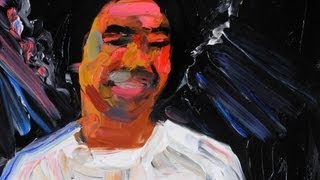
Watch the official Rose Quartz
music video
Trust, Reflection, and the Fear of Letting Go
A second key phrase is Don’t lie to me
. That request is simple, but it changes the whole mood. It suggests suspicion, or at least insecurity. The speaker may fear that the relationship is not as stable as it seems.
Then comes You turned around
and It’s just like mine
. Those lines are ambiguous, which gives the song its pull. They could suggest recognition between two people, almost like one person sees their own feelings reflected back. Instead of making the other person a total mystery, the song hints that both people may share the same confusion or fragility.
Interpretation: this is one reason “Rose Quartz” feels tender instead of bitter. Even when trust is uncertain, the song leaves room for mutual vulnerability.
The Sea Image Says More Than It First Seems
The song’s strongest image appears in the plea If I fall
and then Into the sea
. The sea often stands for being overwhelmed, lost, or swallowed by emotion. Here, it sounds like the speaker fears slipping under feelings they cannot control.
That image leads to the most direct request in the song:
Don’t let me go
Because I feel weak
This is the emotional center of the track. The speaker is not asking for romance in a flashy way. They are asking not to be abandoned while they are struggling. The line feels almost childlike in its honesty, which makes it powerful.
How the Repetition Builds Meaning
One reason the meaning of Rose Quartz Toro y Moi stays with listeners is the structure. The lyrics repeat lines instead of developing a clear plot. That repetition can feel hypnotic, but it also mirrors anxious thinking.
When someone is hurt, uncertain, or afraid, they often replay the same thoughts. The song copies that mental pattern. It does not move forward much because the speaker does not feel emotionally free enough to move forward.
This gives “Rose Quartz” a suspended feeling. It lives in the space between asking for reassurance and fearing that reassurance may never fully come.
The Sound Turns Vulnerability Into Atmosphere
Chaz Bundick wrote and produced the song, and that control matters to its meaning. On Anything in Return, Toro y Moi pushed toward synth-pop, indie pop, house, and R&B textures while keeping his dreamy core intact. The album later reached No. 1 on Billboard’s U.S. Dance/Electronic Albums chart, showing how well that polished sound connected with listeners.
On “Rose Quartz,” the production feels smooth, soft, and slightly distant. The beat does not hit like a crisis. Instead, it glides. That creates an interesting contrast: the words describe weakness, but the music wraps that weakness in something beautiful.
That contrast may be the song’s smartest move. The production makes vulnerability feel luminous rather than ugly. Even the title, “Rose Quartz,” suggests something delicate, pretty, and semi-transparent. Rose quartz is often associated with softness, healing, and love, so the title fits the song’s emotional palette even if the lyric never explains it directly.
Visual Context Adds Another Layer
The official video, noted by Pitchfork, interprets the track through colorful painted animation by Lauren Gregory. That matters because it supports the song’s abstract style. Rather than pinning the lyrics to one literal story, the visual world treats the song like a shifting emotional canvas.
That choice fits “Rose Quartz” perfectly. The track works through mood, color, and sensation more than detailed narrative. Listeners are meant to feel the instability, not just decode it.
A Few Strong Readings of the Song
There are at least three reasonable ways to hear it:
- A relationship plea: the speaker wants honesty and emotional support.
- A mirror song: both people may share the same weakness or uncertainty.
- An inner monologue: the “you” could partly represent the speaker talking to their own unstable self.
All three readings work because the writing is spare. Bundick leaves open space instead of locking the song into one explanation.
Why “Rose Quartz” Endures
What makes the song memorable is how little it says and how much it implies. “Rose Quartz” turns fear, dependence, and tenderness into a minimal emotional loop. They hear someone asking to be held steady without pretending to be strong.
That is the heart of the meaning of Rose Quartz Toro y Moi: weakness is not hidden here. It is admitted plainly, then transformed by shimmering electronic production into something human and strangely comforting.
Interpretation disclaimer: song meanings can vary by listener, and this reading blends lyrical analysis with verified release context rather than claiming a single official explanation.








