
What 'K Lo K' Means in Tory Lanez and Fivio Foreign
The meaning of K Lo K Tory Lanez, Fivio Foreign comes down to energy, status, and performance. This is not a reflective song built around plot. It is a flex-heavy rap record where both artists turn a party setting into a stage for dominance, attention, and style.
"K Lo K" - Tory Lanez, Fivio Foreign
We in the spot (we in the spot)
Hand me the key to the trap (hand me the keys)
Loading lyrics...
Unable to load lyrics
We're unable to display the lyrics at this time. Please try again later.
The title phrase itself matters. "K Lo K" is a slangy greeting heard in Caribbean Spanish, especially Dominican speech, roughly meaning “what’s up?” or “what’s going on?” That phrase gives the track a social spark before the verses even start. It sounds like an invitation into a room where image and presence are everything.
A Party Record With a Competitive Edge
At the surface, the song lives in the club. The repeated setting is simple: they are “in the spot,” people are watching, and the room becomes a test of who has the most pull. The hook keeps circling back to that idea, making the song feel less like a story and more like a live moment replayed over and over.
But beneath that, the track is also about hierarchy. When they say we in the spot
, they are not just describing location. They are announcing control. The room is theirs, the attention is theirs, and everyone else is measured against that standard.
That competitive side shows up again in they don't do it like this
. The line turns ordinary dancing, dressing, and performing into a contest. In this world, style is proof of power.
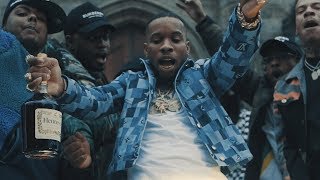
Watch the official K Lo K
music video
What the Hook Is Really Doing
The hook is catchy because it works like a chant. The repeated K lo k, mami?
sounds flirtatious, social, and lightly playful. It helps the song move between seduction and swagger.
At the same time, the chorus piles up images of the trap, smoking, and neighborhood pride. Those details give the song edge. Rather than choosing between club glamour and street identity, the track blends them into one persona.
Interpretation: That blend is the real center of the song. Tory Lanez presents nightlife as a place where different identities meet—ladies’ man, hustler, star, and neighborhood representative. The repetition matters because it keeps reinforcing that self-image until it becomes the whole atmosphere.
Tory Lanez Brings the Melody and the Ego
Tory Lanez handles much of the song’s sticky, repeated language. His verse and hook are built from short bursts, ad-libs, and flexes. That structure makes his part feel immediate and physical, as if he is reacting to the room in real time.
When he boasts I ain't new to this
, the point is experience. He is saying they have been living this life, not pretending to it. In rap, that kind of line is about authenticity as much as confidence.
There is also a lot of body language in his writing: wrists, dancing, smoke, cars, and women’s attention. None of that develops into a deeper narrative, but that is by design. The song is built like a montage of status symbols. Each image adds to the same message: they know how to stand out.
Fivio Foreign Shifts the Song Into Drill Motion
Fivio Foreign enters with a different texture. His voice is more percussive and forward-driving, which changes the song’s momentum. Instead of simply celebrating the room, he pushes through it.
His verse brings motion—spinning, drifting, arriving with the crew, and taking over the party. Even when the content stays brash, his phrasing gives it urgency. That is part of why his feature works so well: he turns Tory’s atmosphere into action.
Interpretation: Fivio’s role is to harden the track. Tory gives the song polish and bounce. Fivio makes sure it still hits with Brooklyn drill force.
How the Production Carries the Meaning
Musically, “K Lo K” pulls from drill’s heavy bounce while staying accessible enough for a club setting. The beat emphasizes repetition, rhythm, and space for ad-libs. That matters because the song’s meaning is less in intricate writing than in how the voices ride the groove.
The production supports two ideas at once:
- celebration n- intimidation
- movement
- repetition as hypnosis
That is why a phrase like throwing my hood up
lands so clearly. Over a beat like this, neighborhood pride becomes performance. The instrumental leaves room for every boast to feel like a public gesture.
Language, Identity, and Crossover Appeal
One reason the song caught attention is its use of bilingual slang without turning it into a full Latin-pop crossover record. The title phrase adds flavor and identity, but the track still sits firmly in rap and drill territory.
That mix suits both artists. Tory Lanez has often moved between rap, melody, and genre experiments, while Fivio Foreign became one of the biggest voices in Brooklyn drill. “K Lo K” lets them meet in the middle: catchy enough for the club, aggressive enough for the street-rap audience.
The credited writers are Daystar Peterson, Ernesto Cornejo, and Maxie Lee III Ryles, which matches the song’s blend of personal swagger and rhythmic simplicity. The writing is not trying to be poetic. It is trying to be memorable.
So What Is the Song Really Saying?
In the simplest terms, the meaning of K Lo K Tory Lanez, Fivio Foreign is about owning a space and making that ownership visible. The song celebrates being recognized, desired, feared, and copied—but never matched.
Its core themes are easy to hear:
- status as performance
- nightlife as a power arena
- street identity as social currency
- repetition as confidence-building
The result is a song that does not ask listeners to unpack a hidden message. It asks them to feel a public persona at full volume.
Final Take on "K Lo K"
“K Lo K” works because it knows exactly what it wants to be: loud, catchy, competitive, and physical. Tory Lanez supplies the chant and shine. Fivio Foreign adds force and motion. Together, they make a song where every line tries to prove they run the room.
Disclaimer: This interpretation is based on the lyrics, performance, and musical context, and other listeners may hear the song differently.









