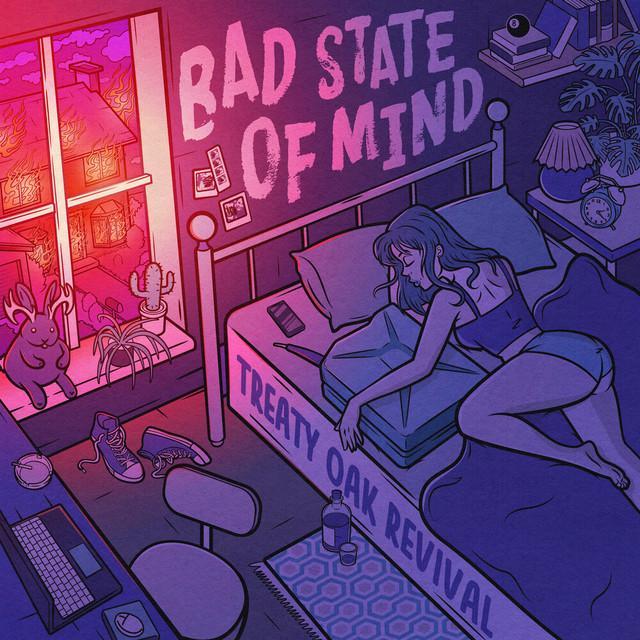
Bad State of Mind by Treaty Oak Revival
Treaty Oak Revival’s “Bad State of Mind” sounds like a breakup song at first, but its real power comes from how it mixes relationship trouble with inner turmoil. The meaning of Bad State of Mind Treaty Oak Revival centers on a narrator who knows they are acting recklessly, knows a certain connection makes things worse, and still cannot stop the spiral.
"Bad State of Mind" - Treaty Oak Revival
On me like a drum, man, I'd kill to still feel young
And days keep flying by, wondering if I'm still high
Loading lyrics...
Unable to load lyrics
We're unable to display the lyrics at this time. Please try again later.
Released as a 2025 single from West Texas Degenerate, the track pushed the Odessa, Texas band further into a rock-heavy lane while keeping their sharp storytelling. That tension between honesty and self-destruction is what gives the song its bite.
A spiral, not just a sad night
On the surface, the lyrics describe a person who is mentally exhausted and making bad choices. Early lines paint that struggle in physical terms, as if their own thoughts are attacking them. When the song mentions barely breathing
, it frames emotional pressure like a bodily crisis, not just passing stress.
That matters because the song never treats this mood as romantic or cool. The narrator admits they are moving too fast, lying, drinking too much, and making situations worse. They can see the pattern, but self-awareness alone does not save them.
Interpretation: The song is less about one single argument and more about what happens when someone is stuck in a destructive mindset. The romance angle gives the song a scene, but the deeper subject is instability.
The chorus turns chaos into one plain truth
The chorus is memorable because it strips everything down. Instead of hiding behind clever images, it says being together is a bad combination
. That phrase does two jobs at once.
First, it shows that this relationship has become combustible. Second, it suggests the narrator is also dangerous to be around when they are in this condition. The late-night call image adds to that idea. Any contact after a certain hour is not healing or loving; it becomes a bad conversation
, the kind that reopens wounds and leads nowhere good.
The title phrase lands because it is so direct. By the time they say they are in a bad state of mind
, the listener already believes it. The verses have shown impulsiveness, regret, and a need for escape.
Cards, fire, and speed: the song’s main symbols
The writing uses a few clear motifs to show how trapped the narrator feels.
Gambling imagery
The repeated card language suggests risk, bluffing, and losing control. The narrator talks as if life is a rigged game, where nobody is fully honest and someone always gets hurt. That image fits the song’s emotional world: both people may be playing roles, but neither is safe.
Fire and motion
When the song shifts into images of burning things down and going full speed, it captures self-sabotage. The phrase all gas, cut the breaks
is especially revealing. The idea is not just recklessness. It is chosen recklessness, the kind that happens when someone stops caring about consequences for a moment.
Time and aging
The song also worries about getting older and losing whatever once felt free or hopeful. The narrator seems to chase old feelings through bad habits, but every attempt leaves them emptier.
Where the song came from changes the meaning
A key piece of context comes from Sam Canty. In an American Songwriter interview, he said he wrote the song in his son’s nursery about two weeks after his birth. Canty, who also spoke about being a recovering alcoholic, connected the song to the strain of entering parenthood and to dark thoughts in the back of the mind.
That makes the lyrics feel even heavier. What might sound like a standard barroom meltdown becomes something more specific: fear, pressure, identity change, and the sudden weight of responsibility. The plea for a sign from God now sounds less theatrical and more like someone trying to keep themselves centered.
You and I in a room
is a bad combination
Calling out to God
bad state of mind
Seen through that lens, the “you” in the song may be a romantic partner, but Interpretation: it could also partly represent temptation, old habits, or the version of the self that comes alive in crisis.
How the sound carries the message
The track works because the arrangement feels as unstable as the lyrics. Reports around the single described it as country rock with midwest emo touches, and that blend is easy to hear. The guitars come in layered and forceful, while the rhythm pushes hard without sounding polished enough to erase the pain.
Canty told American Songwriter the band wanted to lean more into rock instrumentally. That choice fits the material. A softer setup might have highlighted sadness, but this louder approach highlights agitation. The song does not drift through its emotions; it lunges at them.
That also helps explain why the single broke across format lines in 2025, reaching Billboard’s country and rock charts and later earning Gold status in the U.S. Listeners heard both sides of the band at once: rootsy storytelling and explosive alt-rock release.
Final reading: knowing the damage, doing it anyway
The most striking thing about “Bad State of Mind” is how honest it is about repeated failure. The narrator does not present themselves as innocent. They know they are lying, overdoing it, and feeding the cycle.
That honesty is the song’s emotional center. The meaning of Bad State of Mind Treaty Oak Revival is not just that love can go wrong. It is that people can recognize their own collapse in real time and still struggle to stop it.
Treaty Oak Revival turns that idea into a song that feels immediate, loud, and painfully human.
Disclaimer: This interpretation is based on the lyrics, released context, and public comments from the artist. Like most songs, it can support more than one reading.







