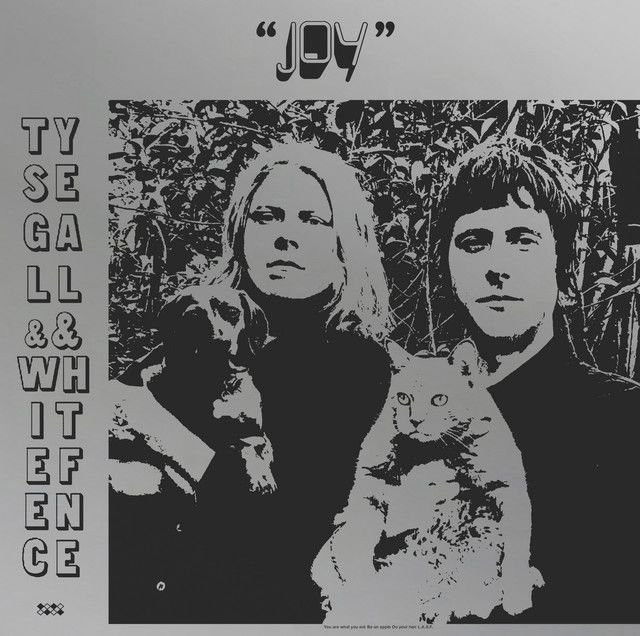
Body Behavior by Ty Segall, White Fence
The meaning of Body Behavior Ty Segall, White Fence starts with a feeling more than a plot. This is not a song that tells a clean story from beginning to end. Instead, it sounds like a rush of sensation: desire, confusion, physical closeness, and the strange gap between what a person feels in the body and what they can explain in words.
"Body Behavior" - Ty Segall, White Fence
I have big drink to love, find future
Deep in your love, come on, take me
Loading lyrics...
Unable to load lyrics
We're unable to display the lyrics at this time. Please try again later.
Ty Segall and White Fence, the project led by Tim Presley, made music together during a fertile stretch of garage-psych rock, including the 2012 collaborative album Hair, released by Drag City. That context matters because their work often favors texture, mood, and vivid fragments over straight narrative. In that style, “Body Behavior” feels less like a diary entry and more like a mind-body snapshot.
The Core Idea Hiding in the Fog
At its center, the song appears to be about instinct. The lyrics keep returning to inner feeling and outer movement, suggesting that the body may reveal truths before the speaker fully understands them.
Interpretation: when the song repeats Body behaviour
, it sounds like an attempt to name a force that is already in motion. This is not just about behavior in a social sense. It seems closer to reflex, chemistry, attraction, or emotional response that takes shape physically.
That reading fits lines that point inward, like deep inside me
. The song seems interested in the hidden interior self, but it never presents that self as stable or easy to read. Instead, the song treats the body as a messenger—active, urgent, and a little mysterious.
Watch the official Body Behavior
music video
How the Chorus Frames the Meaning
The chorus is where the song becomes most legible. It asks, Did you see yourself turning?
, then follows with images of not seeing past blue skies
or dark skies
. In simple terms, the song suggests a person in transition who cannot fully see beyond mood, impulse, or immediate experience.
That contrast between blue and dark skies is one of the song’s best clues. On one level, it can mean emotional swings—hope against dread, pleasure against fear. On another, it may suggest that even when conditions look bright, the person still cannot see clearly.
Interpretation: “turning” may describe change happening in real time. The person is not reflecting calmly after the fact. They are caught in the act of becoming someone slightly different through touch, desire, or pressure.
Fragments, Pressure, and Physical Language
The verses are full of unusual phrases. Rather than reading them as literal events, it makes more sense to hear them as sensory fragments. Words like glass, silk, drink, pressure, and hands create a physical vocabulary. The song keeps pointing back to touch and force.
When it lands on your hands moving
, the image is simple but loaded. Hands can signal intimacy, action, restlessness, or even loss of control. Because the phrase repeats, it becomes one of the clearest signs that the song is focused on behavior the body performs almost automatically.
That matters in the stranger lines too. References to pressure and automatic action make the body sound mechanical at times, as if human desire is part instinct and part machine. The result is both sensual and uneasy.
Why the Sound Matters as Much as the Words
A song like this lives through production as much as lyrics. Segall and Presley are known for fuzzy guitars, vintage psych textures, and a loose, handmade sound on Hair. That rough-edged style helps “Body Behavior” feel unstable in the right way.
The arrangement does not tidy up the song’s meaning. It deepens the blur. The garage-rock pulse gives the track physical momentum, while the psychedelic haze makes the listener feel slightly off-balance. That combination mirrors the lyrics: the body keeps moving, but the mind cannot pin everything down.
Interpretation: the sound makes the song feel embodied. It is not merely about physical reaction; it acts it out. The repetition, groove, and distorted edges all turn meaning into motion.
Artist Context Helps Explain the Ambiguity
For listeners looking for a literal explanation, it helps to remember who made it. Ty Segall and Tim Presley often write in a style that values impression over exposition. Their collaboration on Hair is widely associated with garage rock and psychedelia, genres that often use surreal images to evoke states of mind rather than tell fixed stories.
That means the song’s abstraction is probably a feature, not a flaw. They are not withholding a neat answer. They are building an experience where mixed feelings—attraction, confusion, self-awareness, and tension—arrive all at once.
Two Strong Ways to Read It
There are at least two solid interpretations of the meaning of Body Behavior Ty Segall, White Fence:
- A song about desire and instinct. The inward language, physical imagery, and repeated movement suggest attraction that feels deeper than rational thought.
- A song about identity in motion. The turning, the blocked vision, and the fragmented phrasing suggest someone witnessing themselves change but not yet understanding that change.
These readings can coexist. In fact, the song is stronger if they do. Desire often changes how people see themselves, and this track captures that unstable middle ground.
The Lasting Takeaway
“Body Behavior” feels like a study of what happens when the body knows something before the mind can explain it. Its cryptic lyrics, repeated hook, and hazy psych-rock sound all point toward the same idea: human feeling is messy, physical, and often beyond neat language.
That is why the song still sticks. It does not decode experience; it throws the listener inside it.
Disclaimer: This interpretation is based on the recorded lyrics, the artists’ broader style, and the song’s musical context. Like many psychedelic rock songs, its meaning remains open to more than one valid reading.







