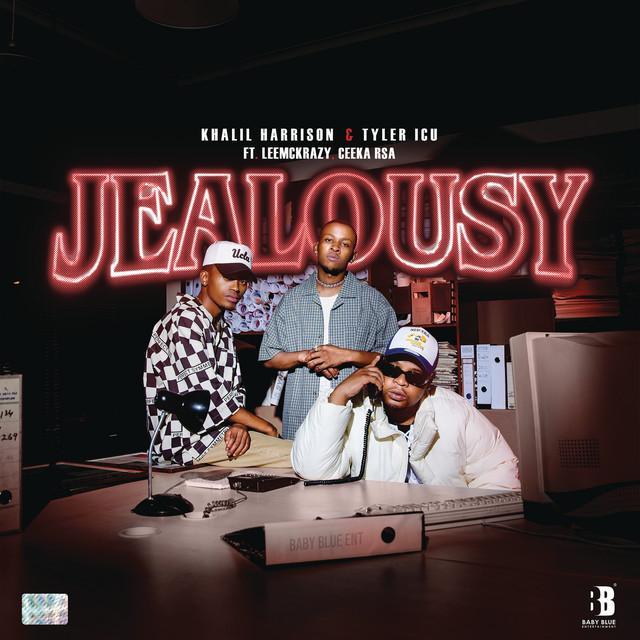
Why "Jealousy" Turns Envy Into Status
For listeners searching for the meaning of Jealousy Khalil Harrison, Tyler ICU, LeeMcKrazy, Ceeka RSA, the song lands with unusual clarity: it is a swagger anthem about how success attracts envy. Rather than hiding from that feeling, they treat it like evidence that they matter.
"Jealousy" - Khalil Harrison, Tyler ICU ft. LeeMcKrazy, Ceeka RSA
Bathini man
Bare ke LeeMcke
Loading lyrics...
Unable to load lyrics
We're unable to display the lyrics at this time. Please try again later.
The hook keeps circling the same idea. When they say baba ne jealous
and laba baba ne jealousy
, they are not asking for sympathy. They are calling out the people around them who watch, compare, and resent their presence.
A Crew Anthem, Not a Confession
One key to the song is its collective voice. The repeated yithina Amabhoza
suggests a group identity, almost like a team introducing itself before entering a room. That matters because the track is less about one person feeling hurt and more about a whole circle moving with confidence.
The line usbone masingena
points to a scene of arrival. In plain terms, they are saying people see them come in and instantly react. The reaction is not admiration alone; it quickly turns into tension and jealousy.
Interpretation: This makes the song feel social rather than personal. It is about public energy—what happens when style, attention, and status become visible.
What the Lyrics Suggest About Jealousy
The verses expand that central idea. They describe people who cannot admit what they feel, who are blocked by pride, and who keep making plans around the group they envy. Even without using long lyric quotes, the pattern is clear: jealousy here is tied to denial, gossip, and rivalry.
A phrase like bahlushwa yi pride
sharpens that point. The song suggests these rivals are trapped by ego. They cannot simply say they are bothered, so they act indirectly.
There is also a material side to the song. References to money, style, and social attention make jealousy feel connected to lifestyle. The repeated image of having a “bag” or visible means implies that envy grows when success can be seen, not just imagined.
Status, Romance, and Competition
The lyrics also hint that romantic attention adds fuel to the conflict. They suggest that other people’s partners notice the group, which raises the stakes. In songs like this, envy is never only about cash or fashion; it is also about charisma.
Interpretation: That mix of money, attraction, and pride turns “Jealousy” into a song about social hierarchy. They are saying the room changes when they show up.
Why the Chorus Hits So Hard
The chorus works because it is simple, repetitive, and easy to chant. Instead of explaining jealousy in a deep or poetic way, the song performs it. Every repetition feels like a crowd echoing the same accusation back at the room.
Laba baba ne jealousyBaba ne jealous
That small loop does a lot of work. It names the feeling, mocks it a little, and turns it into a badge of honor. If people are jealous, the song implies, then the crew must be doing something right.
This is why the hook feels triumphant rather than defensive. They are not wounded by envy. They are energized by it.
How the Sound Carries the Message
The production style strongly supports the meaning. Khalil Harrison and Tyler ICU are associated with Amapiano, a South African dance sound known for deep log drums, hypnotic repetition, and group-friendly vocal patterns. LeeMcKrazy and Ceeka RSA bring a performance style that fits that world: rhythmic, animated, and built for call-and-response.
In this track, repetition is not filler. It mirrors how jealousy spreads in public spaces—one glance becomes a conversation, then a rumor, then a whole mood. The beat keeps moving while the vocal phrases cycle, making the song feel like a live scene in motion.
The chant-like structure also matters. It lets the message land instantly, even if a listener does not catch every line. They can still understand the emotional frame: arrival, attention, envy, defiance.
A Useful Reading of the Verses
For U.S. listeners unfamiliar with every phrase, the smartest way to hear the song is to follow its emotional logic:
- The crew announces itself.
- Other people notice them entering.
- That visibility triggers jealousy.
- Pride stops the jealous people from being honest.
- The song turns that envy into proof of power.
That arc makes the track easy to feel even when some slang or language shifts are unfamiliar. It is built around energy first, explanation second.
The Bigger Idea Behind "Jealousy"
The deeper meaning of Jealousy by Khalil Harrison, Tyler ICU, LeeMcKrazy, Ceeka RSA is about visibility in a competitive social world. When they step out with style, confidence, and group unity, they know not everyone will celebrate them. Some will compare. Some will resent. Some will watch closely.
Interpretation: The song’s bold move is that it refuses to shrink in response. Instead, it treats envy as background noise—annoying, maybe, but also confirming.
That is why the track feels so catchy. It takes a negative emotion and flips it into momentum. Jealousy becomes part of the performance.
Final Take
For anyone looking up the meaning of Jealousy Khalil Harrison, Tyler ICU, LeeMcKrazy, Ceeka RSA, the song is best understood as a communal flex. It is about walking into a space, feeling eyes turn, and recognizing that not all attention is love.
They answer that tension with rhythm, repetition, and confidence. In their hands, jealousy is not the end of the story. It is the proof that they have already been seen.
Disclaimer: This interpretation is based on the provided lyrics and publicly understood genre context. Meaning can vary by listener, language nuance, and artist intent.








