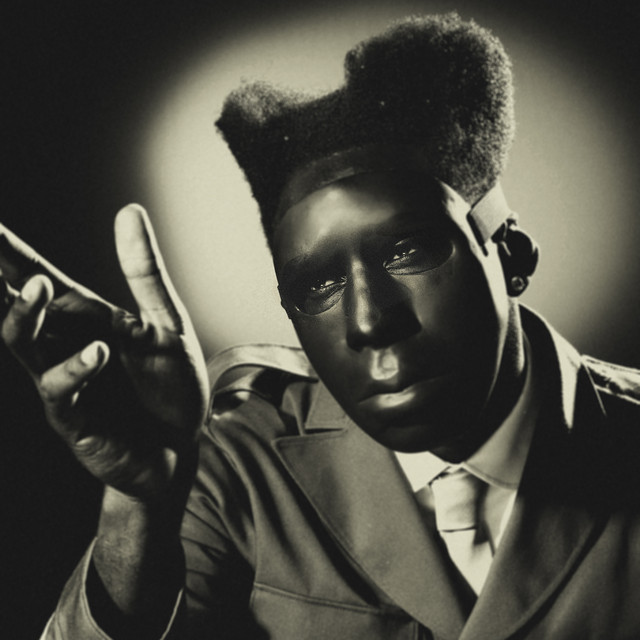
Like Him by Tyler, the Creator, Lola Young
A song about resemblance, absence, and truth
The meaning of Like Him Tyler, the Creator, Lola Young centers on a painful question: how do they understand a parent they never really knew? On the surface, the song is about looking like an absent father. Under that, it is about identity, family silence, and the fear that blood can shape a life from a distance.
"Like Him" - Tyler, the Creator ft. Lola Young
Nigga, you got that nigga feet
You got that nigga body
Loading lyrics...
Unable to load lyrics
We're unable to display the lyrics at this time. Please try again later.
Tyler frames the father as a missing figure, someone felt more through rumor and resemblance than memory. The repeated idea of being like him
is not just physical. It carries worry, curiosity, and even dread. If they share his face, could they also share his choices?
Lola Young’s feature is crucial here. Her vocal presence softens the edges without removing the hurt. According to a Billboard interview, Tyler invited her onto the track for Chromakopia, and her chorus helps turn the song into something tender instead of purely accusatory.
The emotional story hidden inside the verses
A child trying to build a father from clues
The first section gives small physical details and family observations. Those comments matter because they show how children of absent parents often piece together identity from scraps. People tell them they have the same expression, body type, or posture, and those comparisons become a substitute for real contact.
That is why the line about make expressions like him
hits so hard. It suggests they are learning about the father secondhand. They are not remembering him; they are being told about him.
Then the song moves to its emotional center: chasing a ghost
. That phrase sums up the whole conflict. The father is real enough to leave marks, but distant enough to feel unreal. Tyler presents the search as both personal and impossible.
Why the chorus hurts so much
The hook keeps returning to one question: do they resemble this missing man? That repetition matters because it sounds less like vanity and more like a loop of anxiety. They are not asking whether the likeness is flattering. They are asking what it means.
Mama, I'm chasing a ghost
I don't know who he is
This is the song’s clearest statement of loss. The mother is addressed directly, which turns the song from reflection into confrontation. They are not only grieving the father’s absence. They are also asking why the truth has been so hard to reach.
The twist changes everything
The outro turns blame into grief
The ending is what makes “Like Him” more than a sad song about abandonment. In the outro, Tyler’s mother admits the separation was her fault, not the father’s. Factually, that spoken section reframes the entire track: the father was not simply a man who did not care. He was, according to her confession, a man who wanted involvement.
That shift is devastating because it changes the source of pain. The song begins with the common wound of an absent father. It ends with a more complex wound: a life built on incomplete truth.
Interpretation: this is why Tyler sounds less angry than stunned. The real heartbreak is not just abandonment. It is discovering that their emotional history may have been shaped by a misunderstanding.
How the sound carries the meaning
“Like Him” is often described as neo-soul, and that fits. The production is piano-led, spacious, and slow enough to let each thought linger. According to the song’s Wikipedia entry, it appears on Tyler’s 2024 album Chromakopia and was later sent to U.S. rhythmic radio in 2025.
The arrangement matters because it avoids drama in the usual rap sense. There is no hard beat pushing the song forward. Instead, the music hangs in the air. That makes the listener sit with each question. Silence and space become part of the storytelling.
Lola Young’s vocal also works like memory itself: warm, blurred, and sad. Her chorus does not solve the problem. It echoes it. That is why the feature feels essential rather than decorative.
Identity, inheritance, and fear
Looking alike is not the same as being alike
One of the song’s smartest ideas is that resemblance can feel like fate. Tyler keeps returning to body language and appearance because those are the most visible forms of inheritance. But the deeper fear is moral inheritance.
When they ask Do I look like him?
, another question sits underneath it: will they become him? The song never says that directly in a simple way, but it hangs over every verse.
Then Tyler adds balance. He acknowledges the mother’s love, care, and protection. That prevents the song from becoming a one-note accusation. It recognizes that a parent can provide deeply and still leave a child with unanswered questions.
Why the song connected so widely
The track resonated because it speaks to a very common American experience: trying to understand family history after years of silence. It is specific to Tyler’s voice and story, yet broad enough for listeners who have also inherited mysteries.
Its success reflects that reach. The song peaked at No. 29 on the Billboard Hot 100 and was later certified 2× Platinum by the RIAA, showing that this deeply personal track also became a major public one.
Interpretation: listeners responded not because the song offers closure, but because it does not. It captures the moment when truth finally arrives and only makes the past more complicated.
Final takeaway on the song’s meaning
The meaning of Like Him Tyler, the Creator, Lola Young is about more than an absent father. It is about how identity gets shaped by stories, secrets, and the need to know where they come from. Tyler turns resemblance into a metaphor for emotional inheritance, while Lola Young’s chorus gives that search a haunted softness.
In the end, “Like Him” lands as a song about discovering that the ghost was never just the father. It was the missing truth around him.
Disclaimer: This article offers informed interpretation based on the lyrics, released recording, and public reporting. Song meaning can remain open to different listener readings.







