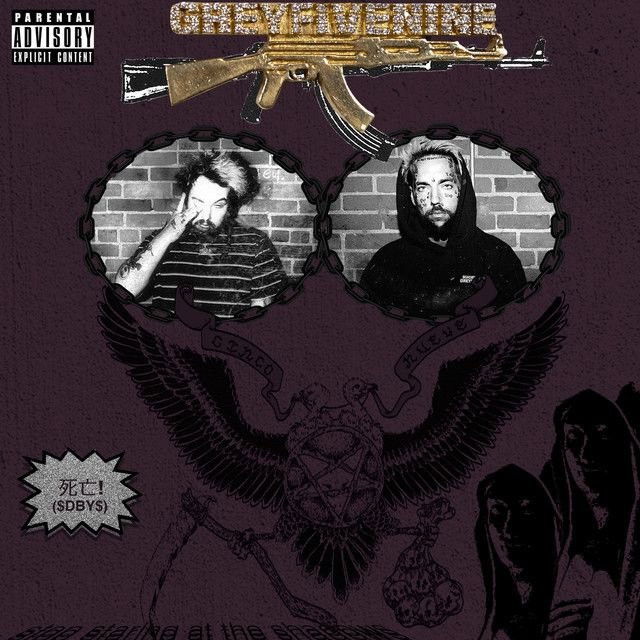
Why ‘All Dogs Go To Heaven’ Feels Doomed
The meaning of All Dogs Go To Heaven $uicideboy$ sits in a familiar place for the New Orleans duo: death, drugs, rage, and a damaged sense of self. Even without a clean narrative, the song creates a world where danger is constant and morality has almost fully collapsed.
"All Dogs Go To Heaven" - $uicideboy$
Triple six degrees
Heard they started hating
Loading lyrics...
Unable to load lyrics
We're unable to display the lyrics at this time. Please try again later.
Rather than sounding sad in a quiet way, they turn that darkness into swagger. The result is a track that feels both threatening and exhausted, like they are bragging to survive their own despair.
A Title That Hides a Much Darker Song
The title suggests comfort, innocence, or maybe a pop-culture wink. But the lyrics do the opposite. They fill the song with violent fantasy, chemical escape, and anti-religious imagery.
That clash matters. Interpretation: the title works like irony. It frames the song as a place where no one is truly innocent, yet everyone still wants some form of pardon at the end.

Watch the official All Dogs Go To Heaven
music video
The Core Meaning Beneath the Shock
On the surface, the verses are packed with threats, guns, and intoxication. But taken together, they point to something deeper than simple aggression. They describe lives shaped by chaos until chaos becomes identity.
When one voice says chasing death
, the line does more than provoke. It suggests a person who no longer sees danger as a boundary. Instead, danger becomes a source of feeling, control, or even pleasure.
That idea returns across the song. Drug references are not celebratory in any healthy sense. They feel rotten, numbing, and compulsive. The body is not protected here; it is wearing down in public.
The Two Voices, One Worldview
$uicideboy$ are made up of Ruby da Cherry and $crim, cousins from New Orleans, and they have built their reputation on bleak, independent rap that mixes Southern hip-hop with punk and horror textures. Their background and discography are well documented on their official pages and major music profiles such as Genius and Apple Music.
In this track, both rappers speak in first person, but they share one emotional setting. One voice sounds feral and confrontational. The other sounds almost amused by collapse. Together, they create a single worldview: life is poisoned, so they answer with bigger poison.
Bravado as emotional armor
Lines about being a problem, causing harm, or daring people to test them are not just street posturing. Interpretation: they function like armor. If they sound untouchable, they do not have to sound wounded.
That is why phrases like fucking problem
and queen of drama
matter. They make destruction sound theatrical. The persona becomes larger than life, which helps hide how unstable that life really is.
Violence, Drugs, and Religion All Point to Ruin
The song keeps cycling through three images:
- weapons and retaliation
- intoxication and bodily decay
- religious inversion and damnation
Each one supports the others. Violence shows a world with no trust. Drugs show an attempt to escape that world. Blasphemous language shows a speaker who no longer expects redemption from above.
When they mention Triple six degrees
and Yung Christ turned to Satan
, they are not making a careful theological argument. They are flipping sacred symbols into signs of alienation. Interpretation: this is rebellion, but it is also a confession that they feel too far gone for ordinary salvation.
One Key Section Explains the Song’s Logic
The hook is especially revealing because it turns the verses into a group mentality:
Fuck 'em all
leave them in the yard
Paraphrased, the chant reduces other people to targets and loyalty to criminal duty. It is cold on purpose. That emotional emptiness is part of the song’s meaning: empathy has been replaced by survival logic.
Cosmic Images, Same Human Damage
Ruby’s verse widens the scale. Suddenly the lyrics move from streets and bottles to commas, comets, aliens, and Area 51. Those images sound wild, but they do not really escape the earlier themes.
Instead, they make human violence feel cosmic and absurd. When he says people are the same but divided by money, then imagines disaster from the sky, the point seems to be that modern life is petty and doomed at once. Interpretation: the surreal images dramatize how meaningless everyday status looks next to death.
How the Sound Carries the Message
Production is crucial to the meaning of All Dogs Go To Heaven $uicideboy$. Like much of their catalog, the track uses hard-hitting low end, minimal but ominous melody, and a tense loop that leaves little room to breathe. The beat does not soothe the lyrics; it boxes them in.
Their delivery adds even more. One rapper sounds clipped and brutal, while the other bends toward a sneer or slur. That contrast mirrors the song’s two energies: attack and intoxication.
The likely goal is immersion, not realism. They want listeners to feel trapped in a headspace where impulse beats reflection.
So What Is the Song Really Saying?
The clearest reading is that the song stages self-destruction as power. It turns fear into a persona, then keeps exposing the damage underneath. All the guns, drugs, and devil imagery build a fantasy of control, but the details keep revealing decay.
That is why the song lingers. It is not just loud or offensive. It is about what happens when death feels ordinary and aggression becomes the easiest language left.
Final takeaway
For many listeners, the meaning of All Dogs Go To Heaven $uicideboy$ is a portrait of nihilism dressed as bravado. They sound dominant, but the world they describe is collapsing from the inside.
Disclaimer: This interpretation is based on the lyrics, performance, and broader artist context. Song meanings can remain open to more than one valid reading.









