Why Razor Guarding My Heel (IV) Feels Unwinnable
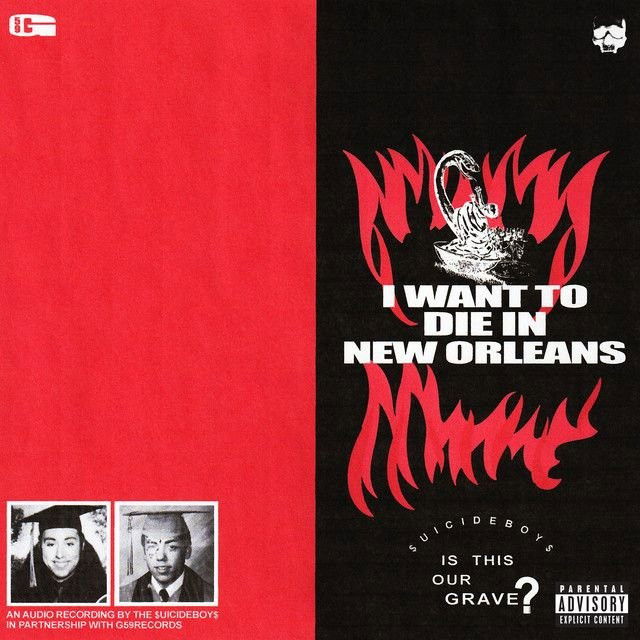
The meaning of I No Longer Fear the Razor Guarding My Heel (IV) $uicideboy$ centers on survival that does not feel triumphant. Instead of a comeback story, the track sounds like two artists describing what it means to keep moving while still trapped in addiction, paranoia, rage, and self-erasure. Even when they flex money, cars, or status, the song keeps circling back to the same point: success has not cured the darkness.
"I No Longer Fear the Razor Guarding My Heel (IV)" - $uicideboy$
Reach into my pocket, then I grab a couple crumbled hunnids
We look like some crumbled hunnids
Loading lyrics...
Unable to load lyrics
We're unable to display the lyrics at this time. Please try again later.
That idea fits $uicideboy$ as a duo. Ruby da Cherry and $crim built their following with raw, often disturbing songs about depression, substance abuse, and death, while staying tied to New Orleans imagery and the Grey59 identity. Their official artist pages and releases frame that world clearly through G*59 Records and major streaming discographies like Spotify.
The Hook Is a Contract, Not a Victory
The song’s most important line is the repeated signed my life away
. Before and after that phrase, the verses describe speed, intoxication, and emotional collapse, so the refrain does not sound proud for long. It sounds like a confession that the lifestyle, the persona, and even the career have come with a cost.
On the surface, Grey59 is their label and crew. In the song, though, it becomes bigger than branding. Interpretation: the repeated claim suggests a pact with pain itself, as if belonging to the movement also means carrying its damage forever.
Watch the official I No Longer Fear the Razor Guarding My Heel (IV)
music video
Chaos as Daily Routine
One reason the track hits so hard is how normal disaster sounds inside it. They describe racing forward, dodging pressure, and living with constant tension, but the delivery feels almost casual. A phrase like one hundred miles per hour
is not just about driving fast; it reflects a whole life lived in overdrive.
The song keeps stacking images of money, pills, weapons, and wreckage until they blur together. That matters because the blur is the point. Instead of telling one neat story, the duo creates the mental feeling of being unable to slow down long enough to sort fear from thrill.
A Mind Split Between Flexing and Falling Apart
The verses often swing between boastful detail and open despair. They can sound untouchable in one bar, then spiritually broken in the next. When they admit their depression clinical
, the song drops the mask for a second and reveals that the bravado is not strength so much as armor.
That tension is key to the meaning of I No Longer Fear the Razor Guarding My Heel (IV). The song is not asking listeners to believe the threats or the swagger literally at every moment. It is showing how self-destructive identity gets performed, especially when pain has become routine.
New Orleans Haunts the Song
Near the end, the spoken reflection about graveyards gives the track an anchor in real memory. That moment changes the song. Suddenly, the death imagery is not just shock value or horror-rap style; it feels connected to childhood curiosity, local culture, and a lifelong closeness to mortality.
New Orleans matters here because the city’s above-ground cemeteries and gothic atmosphere have long shaped the duo’s art. Interpretation: the graveyard passage suggests that death, for them, is not only a metaphor. It is part of the landscape they grew up seeing, which makes the song’s obsession feel lived-in rather than borrowed.
The Most Disturbing Images Mean More Than Violence
Some of the song’s harshest scenes describe self-harm, arson, and total collapse. Those moments should not be read as simple plot points. They work more like emotional extremes, translating numbness and self-hatred into violent pictures.
A short line such as dig your own grave
captures that perfectly. They are not calmly narrating a realistic event. They are dramatizing the belief that they have become both the victim and the destroyer of their own life.
We are tired of this new world
I don't want to be here
This is the clearest emotional statement in the song. Everything around it is noisy and chaotic, but these lines are plain. They strip away persona and reveal exhaustion, alienation, and a wish to disappear.
How the Sound Carries the Meaning
The production helps explain why the song feels suffocating. The beat moves in waves: heavy low end, murky atmosphere, repetitive vocal loops, and abrupt shifts between rapped verses, chants, and spoken fragments. That structure makes the track feel less like a single scene and more like a spiral.
The repeated vocal sections matter most. When phrases come back again and again, they mimic obsessive thinking. Interpretation: the repetition creates the sense of being trapped inside one mental state, where every flex turns back into dread.
Their performances also separate the two sides of the song. One side is manic and confrontational; the other sounds drained and defeated. Together, they create a portrait of people still moving, still performing, but not truly escaping anything.
Why the Ending Still Feels Empty
Late in the track, they mock outside criticism and the music scene around them, then admit they still feel like they are losing. That ending is crucial. It means success, notoriety, and even artistic reinvention have not delivered peace.
So the meaning of I No Longer Fear the Razor Guarding My Heel (IV) $uicideboy$ is not fearlessness in a heroic sense. It is closer to emotional overexposure. They sound like people who have stared at ruin for so long that terror has turned into familiarity.
Final Take
What makes this song powerful is its refusal to fake recovery. It presents despair, aggression, addiction, and identity as tangled together, not neatly resolved. Interpretation: the title suggests they no longer fear the blade because they have lived beside it too long.
This reading is an interpretation based on the lyrics, performance, and known artist context, and other listeners may hear different shades of meaning.









