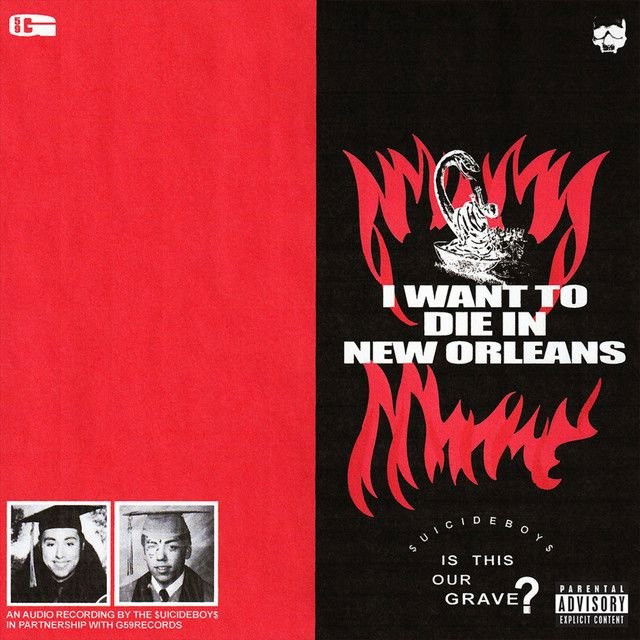
Nicotine Patches by $uicideboy$
A song about death, fame, and fading memory
The meaning of Nicotine Patches $uicideboy$ centers on a harsh idea: success does not protect anyone from decay, addiction, or being forgotten. The song keeps returning to death, but not in a simple shock-value way. They frame death as both feared and expected, almost like a final stage in a cycle that fame cannot stop.
"Nicotine Patches" - $uicideboy$
Hold up, wait
Hold up, wait
Loading lyrics...
Unable to load lyrics
We're unable to display the lyrics at this time. Please try again later.
The hook makes that point with brutal clarity. When they say all of my heroes
are in the grave and later fear they will also be forgotten, the song connects idol worship to human fragility. Their heroes died, and even memory itself fades. That thought gives the whole track its numb, doomed feeling.
Watch the official Nicotine Patches
music video
Where the song sits in $uicideboy$'s world
$uicideboy$ are the New Orleans duo Ruby da Cherry and $crim, also known as Aristos Petrou and Scott Arceneaux Jr. Their catalog often blends horrorcore imagery, Southern rap influence, punk energy, and open references to substance abuse, depression, and self-loathing. Those themes are part of their larger identity, documented across their releases and artist background on Genius.
That context matters here. “Nicotine Patches” does not sound like a random dark song. It fits their long-running habit of treating pain and bravado as two sides of the same voice. They boast, confess, and self-destruct at the same time.
The verses move from age anxiety to spiritual exhaustion
One of the strongest parts of the song is how it tracks time. They mention ages in sequence, turning birthdays into markers of dread instead of growth. The line about being twenty-seven and dreaming of death, then feeling more dead than alive
at twenty-eight, shows a mind that sees aging not as progress but as proof of damage.
That age counting also nods to dead musicians and legends. Interpretation: by bringing up idols who are gone, they place themselves inside that same mythology. The thought is not glamorous, though. It feels empty. If heroes die, and names disappear, then fame starts to look temporary and almost pointless.
Money appears in the song too, but it does not solve anything. There are references to checks, cash, and status, yet every flex quickly turns sour. Wealth becomes just another problem
. In other words, the rewards of rap success do not heal the mental state underneath.
Addiction is not just a detail here
The song’s drug references are direct and ugly. They do not present intoxication as fun escapism. Instead, substances blur time, erase memory, and push the speakers closer to oblivion. The phrase Pop a Xan
is not followed by freedom or celebration. It leads into forgetting, isolation, and emotional shutdown.
Later, the imagery becomes even more graphic, with the body described as a place of damage and invasion. That physical detail matters because it keeps the song grounded. This is not abstract sadness. It is a song where pain lives in veins, skin, and nerves.
Brotherhood as the only thin lifeline
For all its darkness, the track includes one small source of loyalty: their bond with each other and their circle. When outside friendship is rejected, they still hold onto family and duo identity. That does not cancel the despair, but it gives the song a human center.
Interpretation: this is why the track feels tragic rather than empty. They may sound detached from the world, yet they still care about a few people. That small attachment makes the rest of the collapse hurt more.
The chorus turns personal fear into a bigger theme
The repeated hook is simple, which is why it sticks. It starts with dead heroes and ends with the possibility of forgetting them. Then the verses extend that thought to themselves. They imagine becoming ashes, an object, a display, and finally another lost name.
One day, I'll become the same
A pile of ashes
That short moment sums up the song’s core fear: not only dying, but becoming one more symbol after death. The person turns into an image. The image turns into a memory. Then the memory fades.
Why the sound matters as much as the words
Production helps deliver the meaning of Nicotine Patches $uicideboy$. The beat feels heavy, hypnotic, and claustrophobic, with a slow-burning menace instead of bright energy. Their music often uses murky low end, repetitive loops, and bleak vocal presence, a style noted in coverage from Pitchfork.
On this track, that kind of production supports the lyrics perfectly. The repetition in the hook feels obsessive, like a thought they cannot stop replaying. The hard drums and shadowy atmosphere make the verses sound trapped inside a spiral. Rather than lifting the listener out of the darkness, the instrumental keeps them inside it.
Ruby’s writing leans theatrical and image-heavy, while $crim often sounds flatter and more exhausted, and that contrast sharpens the song. One voice dramatizes the doom; the other sounds like it has already accepted it.
Fame shines bright, then blacks out
Another key idea in the song is that attention can be blinding. They mention lights, display, chains, and crowds, but these images do not feel triumphant. Fame is flashy on the surface, yet it leads toward blackout, pressure, and collapse.
That is why one of the most telling phrases is Fuck the fame
. It rejects the very thing rap often chases. But the line is complicated, because they still want to be remembered. They reject fame while also asking the crowd not to forget their name. The song lives in that contradiction.
Final takeaway on the song’s meaning
In the end, the meaning of Nicotine Patches $uicideboy$ is about the terror of becoming what they once mourned: dead idols, ruined bodies, and fading names. It is a song about addiction and depression, but also about legacy and the false promise of success.
Interpretation: the track suggests that what they fear most is not just dying. It is disappearing twice, first in body and then in memory.
Disclaimer: This interpretation is based on the lyrics, known artist context, and the song’s production style. As with most art, listeners may hear different meanings in the same track.








