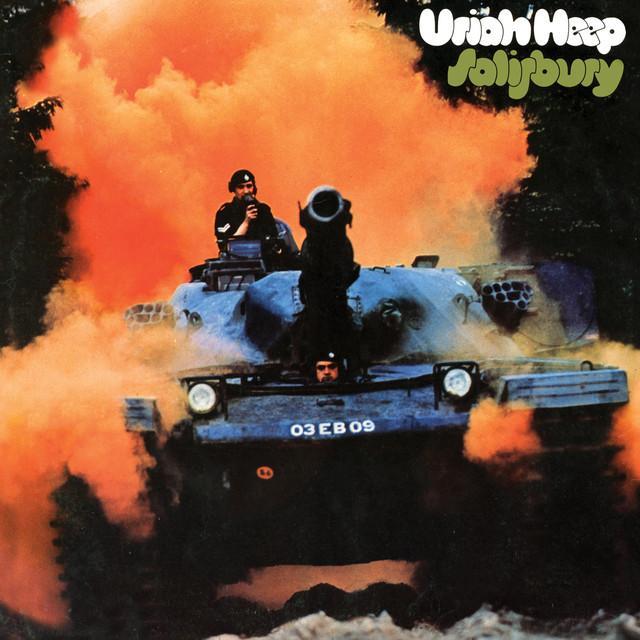
Salisbury by Uriah Heep
The meaning of Salisbury Uriah Heep can be confusing because the name points to one thing, while the lyrics provided here point to another. Factually, Salisbury is Uriah Heep’s second album, released in January 1971, produced by Gerry Bron, and known for its blend of hard rock and progressive rock, with the title track stretching past 16 minutes and using orchestra arrangements on the album overall source material (Wikipedia).
"Salisbury" - Uriah Heep
That very special glow
Something drawing me
Loading lyrics...
Unable to load lyrics
We're unable to display the lyrics at this time. Please try again later.
But these lyrics tell a much smaller, more intimate story. Rather than war, landscape, or the album’s famous long-form prog ambition, they focus on desire, heartbreak, and emotional dependence. Interpretation: at its core, this song is about how quickly passion can turn into loneliness when one person gives themselves over too fully.
A Romance That Starts Like a Spell
The opening lines frame attraction as something almost hypnotic. The singer notices a very special glow
and feels pulled somewhere they cannot even name. That matters because the song does not describe love as a calm choice. It describes love as a force.
When the singer says they are going faster than anybody else
, the idea is not just excitement. It suggests loss of control. The relationship feels thrilling, but it also feels dangerous because the speaker already senses they are being swept away.

Watch the official Salisbury
music video
Desire First, Then Emotional Risk
In the next section, touch and movement drive the mood. The other person seems almost unreal, moving softly and creating a private world for two. The lyrics use natural images like rain and sand to make intimacy feel gentle and inevitable.
That softness matters because it sets up the later pain. The singer believes this connection is rare, even unique. A phrase like no-one else like you
shows how quickly admiration becomes idealization.
Interpretation: this is not just lust. It is the moment when physical attraction becomes emotional surrender.
Where the Song Breaks in Half
The real turn comes when the timeline jumps forward. Instead of staying in the heat of the moment, the song suddenly looks back on a relationship that has failed. That shift is the song’s strongest move.
They go from dreamlike closeness to blunt grief:
As time passedand all too fast
the love they tried to keep
finally collapsed,
and the speaker cannot explain why.
This short section changes the song from a seduction story into a breakup lament. The speaker thought they had found something lasting, but time proves otherwise. The line of thought is simple and painful: they loved deeply, it ended, and they still do not understand the reason.
The Chorus Turns Pain Into Identity
Once the refrain arrives, the emotional center becomes clear. The repeated cry of alone again
is not just a complaint. It becomes the singer’s new identity.
That repetition matters in a rock song because it works like obsession. Instead of processing the breakup in a balanced way, the singer circles the same wound over and over. They do not ask what they learned. They ask how they were left behind.
Interpretation: the chorus suggests dependence as much as heartbreak. The pain is real, but so is the sense that the singer may have placed too much of their self-worth in the relationship.
Images of Warmth, Waves, and Dawn
One reason the lyrics land emotionally is their use of soft sensory images. Eyes glow, breath grows warm, hands touch, dawn approaches, and waves or rain move across sand. These details keep the song close to the body.
That choice deepens the later sadness. The more physical and vivid the early scenes feel, the harsher the emptiness becomes after the breakup. A phrase like til dawn
hints at wanting the moment to last forever, which makes the later loneliness feel even more final.
How Uriah Heep’s Era Shapes the Meaning
Context helps here. Around the Salisbury period, Uriah Heep were expanding beyond straightforward hard rock. Ken Hensley was becoming a major writing force on the album, and the record moved between heavy riffs, folk touches, and progressive arrangements (Wikipedia). That mix matters when thinking about meaning.
Even when the words are simple, music from this era often enlarges feeling through contrast: soft passages make desire sound intimate, while heavier sections make grief sound overwhelming. Uriah Heep’s early style was built on strong vocals, organ textures, guitar weight, and dramatic shifts in mood. Interpretation: if these lyrics are placed in that kind of arrangement, the result would likely underline the song’s emotional swing from tenderness to desperation.
A Simple Story With a Lasting Hook
The song’s narrative can be reduced to four beats:
- Attraction feels magical.
- Intimacy grows quickly.
- The relationship fails.
- The speaker cannot accept being left.
That simplicity is part of the appeal. The lyrics do not hide behind clever puzzles. They move straight from longing to loss, which makes them easy to feel.
Final Reading of the Meaning
So, what is the meaning of Salisbury Uriah Heep in the context of these lyrics? The best reading is that it captures the speed of emotional attachment and the shock that follows when love ends. It is about wanting someone so intensely that their absence feels like a collapse of self.
There is also a second possible reading. Interpretation: the song may be warning against idealizing romance. By turning one person into the answer to loneliness, the speaker sets themselves up for a deeper fall.
That is why the song still works. It understands that heartbreak is not only sadness. It is confusion, repetition, and the stubborn hope that someone who left might still return.
Disclaimer: This interpretation is based on the lyrics provided and available historical context about Uriah Heep’s Salisbury era. Meaning in songs can remain open to more than one valid reading.







