Why 'The Hustle' Means More Than a Dance
The meaning of The Hustle Van McCoy starts with a simple truth: this is not a story song. It is a dance record that uses almost no lyrics, yet still says a lot. With little more than commands like Do the hustle
and Oh, do it
, Van McCoy built a hit that turns movement into meaning.
"The Hustle" - Van McCoy
Oh, do it
Do it
Loading lyrics...
Unable to load lyrics
We're unable to display the lyrics at this time. Please try again later.
Released on April 18, 1975, as a single from Disco Baby, the track was credited to Van McCoy & the Soul City Symphony. It went to No. 1 on the U.S. Billboard Hot 100 and Hot Soul Singles, sold over a million copies, and won the 1976 Grammy for Best Pop Instrumental Performance. Those facts explain its success, but they also point to its deeper role: it helped carry a local dance into pop history.
A Dance Song That Says Its Meaning Out Loud
At the most basic level, the song is about doing the hustle. That may sound obvious, but it matters here because the record is almost entirely instrumental. Instead of telling listeners what to feel, it invites them to join in.
The repeated hook, Do the hustle
, works like a social cue. It is less a lyric than a command, a chant, and a welcome. The song does not describe romance, heartbreak, or conflict. It creates a shared moment on the dance floor.
Interpretation: that simplicity is the point. McCoy turns language into motion. The message is not “listen to this story.” The message is “get up and take part.”
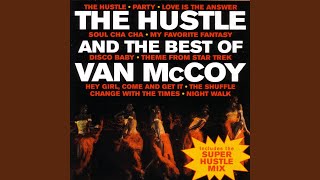
Watch the official The Hustle
music video
Where the Song Came From Matters
The song’s meaning becomes clearer in context. According to reporting on the track’s history, McCoy wrote it after his music partner Charles Kipps saw people doing the hustle at the Adam’s Apple nightclub in New York. The dance itself had roots in the Latin hustle associated with Puerto Rican teens in the Bronx before it spread into wider club culture.
McCoy later described the dance as a return to people dancing together, not separately. That is an important clue. The record is not just about fashion or trend-chasing. It captures a feeling of connection.
Interpretation: in that light, The Hustle is about partnership as much as rhythm. Even with almost no lyrics, it celebrates coordination, closeness, and social energy.
How the Tiny Lyrics Work
There are only a few words, including Do it
and Do the hustle
. Because there are no verses, every phrase has to do a lot of work.
First, the words are direct. They do not explain the dance; they trigger it. Second, their repetition matters. By saying the same idea again and again, the record mirrors the loop of dancing itself: step, turn, repeat, groove.
Oh, do it
Do the hustle
That short vocal pattern gives the track a human center. The instruments may lead, but the voice acts like a caller on the floor, pushing the crowd forward.
The Sound Is the Real Story
Because the lyric content is so spare, the production carries the song’s meaning. McCoy recorded it in 1975 at Mediasound Studios in New York with top session players, including Steve Gadd, Richard Tee, Eric Gale, John Tropea, Gordon Edwards, and Gene Orloff leading strings and horns. Producers Hugo Peretti and Luigi Creatore helped shape the final sound.
The most famous choice was the lead melody. McCoy first imagined it on guitar, but the released version uses piccolo, played by Phil Bodner. That one decision changes everything. The piccolo gives the tune a light, airborne feel. It sounds nimble, stylish, and a little playful.
Under that melody, the rhythm section stays steady and smooth. The beat is built for coordinated movement rather than wild chaos. Strings add lift and glamour. Together, those elements make the song feel elegant but accessible.
Interpretation: this is why the record helped mainstream the dance. Its sound translates club movement into something broad audiences could instantly understand. It is street-born energy dressed in polished disco clothes.
More Than a Novelty Hit
It is easy to treat The Hustle as a fun period piece because it is so closely tied to 1970s disco culture. But its staying power suggests something more. The track has been used for decades in films, television, and pop culture because it quickly signals joy, style, and collective motion.
That lasting life comes from how clearly the song communicates. It does not need detailed lyrics to be understood. Listeners hear the pulse, the bright melody, and the repeated cue, and they know the assignment.
There is also a bigger cultural angle. Commentary around the song has noted that once it became a hit, the dance itself shifted. What had been a Latin hustle in New York was reshaped by the record’s lush strings, pop structure, and partner-friendly flow into a more mainstream ballroom-style hustle.
Interpretation: the song did not just reflect a dance craze. It helped reinvent it.
Van McCoy’s Place in the Message
McCoy was far more than a one-hit disco figure. Before this song, they had already built a career as a songwriter and arranger for major R&B and pop acts. That background helps explain why The Hustle sounds so carefully constructed. It is not a rough jam. It is a highly designed piece of musical communication.
McCoy also spoke about disco as a challenge they wanted to master, especially the groove and uptempo feel. That makes the song’s achievement even sharper. The record sounds effortless, but it came from craft.
The Final Take on the Meaning
So what is the meaning of The Hustle Van McCoy? At its core, it is a song about shared motion. It celebrates a real dance, but also the feeling behind that dance: connection, coordination, elegance, and joy.
Its few words point the way, but the arrangement does the deeper talking. The Hustle means that sometimes a song does not need a long lyric to say something lasting. Sometimes a beat, a melody, and an invitation are enough.
Disclaimer: This interpretation mixes documented background with critical reading of the music and lyrics. Meaning can vary from listener to listener.








