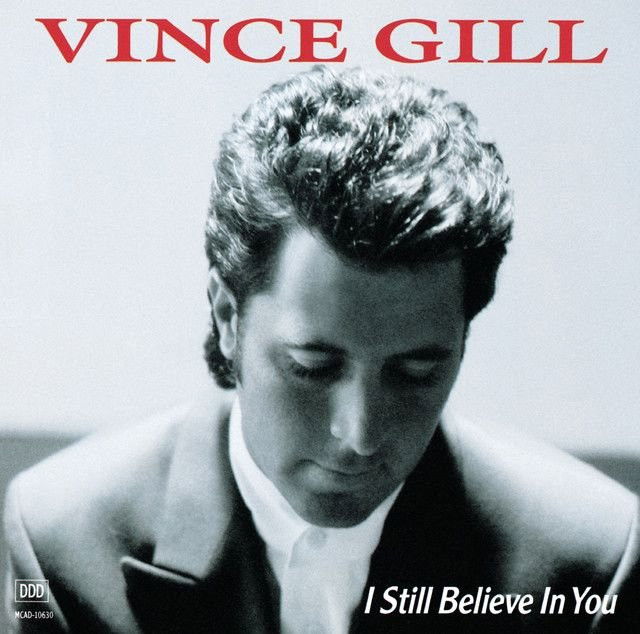
Why 'I Still Believe in You' Hits So Deep
The meaning of I Still Believe In You Vince Gill comes down to a simple but powerful idea: love can survive failure, but only if someone admits they were wrong. This 1992 hit is not just a love song. It is an apology set to music, with the singer looking back at selfish choices and asking for one more chance.
"I Still Believe In You" - Vince Gill
But still I put you at the end of the line
How it breaks my heart to cause you this pain
Loading lyrics...
Unable to load lyrics
We're unable to display the lyrics at this time. Please try again later.
Released as the lead single and title track from I Still Believe in You, the song became Vince Gill’s first No. 1 country hit and later won the Grammy for Best Country Song, a sign of how strongly it connected with listeners. Its success makes sense. Many breakup songs focus on blame. This one focuses on responsibility.
An Apology at the Center
At its core, the song follows a narrator who realizes they have pushed their partner aside. Early lines describe a life crowded by other demands, then admit the person they love was left waiting. When the song mentions tears falling like rain
, it turns emotional hurt into a clear image anyone can understand.
That is what gives the song its force. The narrator does not say the relationship failed because of fate, bad timing, or mixed signals. They say they lost track, thought too much about themselves, and caused pain. In plain language, this is a confession.
Interpretation: The song is not really about doubt in love. It is about shame after neglect. The title sounds romantic, but the verses reveal that belief alone is not enough. The singer must also change.

Watch the official I Still Believe In You
music video
How the Chorus Reframes the Story
The chorus matters because it moves the song from guilt to hope. After admitting fault, the singer insists, I still believe in you
and also in you and me
. That second idea is important. They are not only praising the other person. They are trying to save a shared future.
In other words, the chorus is a vow. The love is described as strong and true
, but those words land differently after the verses. They do not sound boastful. They sound like someone trying to prove that their feelings were real even when their behavior was poor.
Give me the chance to prove
That nothing's worth losing you
Those lines capture the emotional hinge of the song. The narrator knows words are not enough, so they ask to be judged by future action.
The Personal Context Behind the Song
The factual background deepens the reading. The song was co-written by Vince Gill and John Barlow Jarvis, released on June 29, 1992, and produced by Tony Brown and Gill. It became Gill’s first No. 1 on the Billboard Hot Country chart and was the lead single from the album of the same name.
There is also a personal story attached to it. Song background sources report that Gill wrote it as a make-up song after a disagreement with his then-wife, Janis Oliver. Jarvis later said the writing session happened when Gill was already in that apologetic frame of mind. That does not make every line strictly documentary, but it does explain why the song feels lived-in rather than generic.
Why the Sound Feels So Honest
A big part of the meaning of I Still Believe In You Vince Gill comes from the production. Jarvis said the song started as a more midtempo idea, but Gill and Tony Brown slowed it down. That choice was crucial.
The final version gives every line room to breathe. The arrangement is polished but restrained, built around soft country-pop textures that support the vocal instead of distracting from it. Gill’s singing is gentle and controlled, which makes the regret feel real. He does not oversell the emotion. He lets it settle.
That may be why Billboard called it a "pristine ballad" and praised its broad-format appeal. The track sounds country, but its softness and melodic clarity helped it cross toward adult contemporary listeners too.
Images of Time, Rain, and Distance
The lyrics use simple motifs, but they work well:
- Time: other people want pieces of the singer’s day, showing how attention gets fragmented.
- Line or distance: the loved one has been pushed back emotionally.
- Rain: sadness becomes visible and physical.
- Proof: love must be demonstrated, not just declared.
These are not flashy symbols. They are ordinary images tied to ordinary relationship damage. That simplicity is a strength. The song understands that many serious hurts begin with everyday neglect.
A Quietly Painful Video
The music video adds another layer. It shows Gill singing in an empty theater, framed as if he is performing after everyone has gone home. The opening sound of paparazzi suggests public pressure, while the empty room suggests private loneliness.
Interpretation: The contrast may reflect a common country-music theme: success in public, distance in private. Whether or not viewers read it that way, the staging reinforces the song’s remorse. This is not a celebration of love. It is a lonely appeal.
Why the Song Still Lasts
The song endures because it offers something many love songs avoid: humility. The narrator does not ask for forgiveness because they are charming. They ask because they finally understand the cost of taking someone for granted.
That is the heart of the meaning of I Still Believe In You Vince Gill. It is a song about believing in love after one person has failed it. Its emotional power comes from the gap between devotion and behavior, and from the hope that the gap can still be closed.
Like all song analysis, this reading is an interpretation based on the lyrics, recording context, and documented history around the release.









