Why “Portugal” Feels Like a Memory You Keep
The meaning of Portugal WALK THE MOON comes down to one clear idea: some people leave, but they do not fully disappear. This song turns a past relationship into a living memory, one that still shapes the present.
"Portugal" - WALK THE MOON
You know everyone I know
A venn diagram is one circle
Loading lyrics...
Unable to load lyrics
We're unable to display the lyrics at this time. Please try again later.
On the surface, “Portugal” sounds soft and romantic. Under that, it is a song about growing up too fast, missing the moment while it is happening, and realizing later how much a person mattered. WALK THE MOON place that feeling inside a dreamy alt-pop track, making nostalgia sound both warm and painful.
A Love Song About Time More Than Place
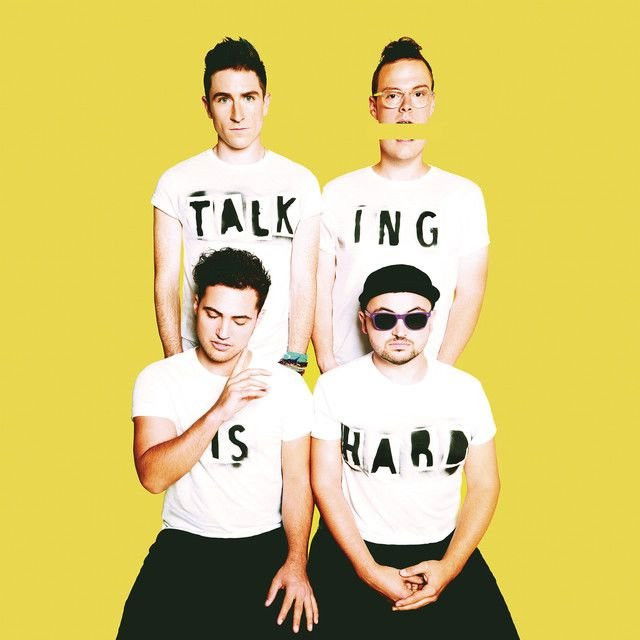
“Portugal” appears on Talking Is Hard, the band’s 2014 album, released by RCA and produced by Tim Pagnotta. The record mixed indie pop, new wave, and glossy 1980s influence, and the band said they wanted to explore different sounds across the album. In track-by-track commentary, Nicholas Petricca explained that “Portugal” acts as a reminder that people they loved and lost are still close and still part of their life. That context matters because it gives the song a clear emotional center.
Rather than telling one straight story, the lyrics move like memory does. They jump from youth to adulthood, from shared social circles to old lovers, from one summer to many years later. The song is not really about travel. Portugal works more like a memory capsule: a place-name that holds intimacy, distance, and a once-bright moment.

Watch the official Portugal
music video
The Opening Shrinks Two Worlds Into One
The first verse starts with overlap. The image of a social network becoming one circle
suggests two lives that once felt inseparable. It is a smart way to show closeness without overexplaining it.
Then the song pivots to maturity. The idea that people grow up without noticing tells listeners that loss is not always dramatic. Sometimes life simply moves, and one day somebody is leaving. That line of thought leads to regret, especially when the narrator admits they watched time get away from them.
Growing Up Is the Song’s Real Conflict
The emotional key of the song is not jealousy or even breakup. It is the burden of becoming older. The striking phrase a heavy leaf to turn
reframes adulthood as something awkward and weighty.
That image matters because leaves usually suggest nature, change, and seasons. Here, change is not light. It has resistance. Interpretation: the song suggests that growing up means carrying old selves, old mistakes, and old attachments instead of neatly leaving them behind.
There is also a subtle lesson in the line that says, in effect, you do not understand this yet, but you will. That gives the narrator a reflective, almost older perspective. They are speaking from the far side of experience.
Why the Chorus Sounds Like Comfort
The chorus shifts from regret to reassurance. When the singer repeats Take me with you
and says you are not alone
, the song stops being only about what was lost. It becomes a promise that emotional connection survives separation.
This is where the meaning of Portugal WALK THE MOON opens up most. The song is not asking to restart the relationship in a literal way. Interpretation: it is asking to remain present in memory, identity, and feeling. Loving someone changes them, and that change stays.
That final idea becomes even clearer near the end, when the song suggests people carry others with them. It is a gentle answer to distance: if someone mattered enough, they travel forward inside the self.
Summers, Lovers, and the Weight of Memory
Midway through, the song speeds through time. One summer becomes ten, one lover becomes many. Those lines compress years into a few words, showing how quickly life stacks up.
But the memory remains fixed. The mention of Once upon a time in Portugal
gives the song a fairy-tale glow. It sounds personal, but also mythic, like a scene polished by remembrance.
Your clothes underneath my clothesOnce upon a time in Portugal
This is the song’s most intimate image, and it matters because it places physical closeness next to storybook distance. The moment was real, but now it feels almost unreal. That is exactly how old love often survives: vivid in detail, unreachable in time.
The Hardest Verse: Love Meets Reality
One of the strongest sections is the verse about wanting, unfairness, and timing. It says, in plain terms, that other people want the same things, some have it worse, and sometimes someone else got there first.
That verse grounds the song. Without it, “Portugal” might drift into pure nostalgia. Instead, WALK THE MOON admit that love exists inside competition, timing, and missed chances. The result is more mature than a simple “the one that got away” song.
How the Production Carries the Meaning
The music supports the lyric perfectly. According to coverage of the album, “Portugal” is a slower, synth-driven song, and Eli Maiman had a major hand in it. It is also notable for having no guitar part, unusual for the band.
That choice matters. Without guitar pushing the track forward, the arrangement floats. The keyboards blur the edges, the pulse is steady but restrained, and the vocal sits in a reflective space rather than a triumphant one. The sound feels suspended between past and present.
This softer style also fits Talking Is Hard, an album the band described as broader in sound and heavier in subject matter. While the record is famous for bright anthems, “Portugal” shows their quieter side.
The Lasting Takeaway
The best way to read “Portugal” is as a song about emotional permanence. People move on, collect years, and become strangers in practical ways. Still, some connections remain active inside memory and identity.
That is why the song lingers. The meaning of Portugal WALK THE MOON is not just lost romance. It is the idea that love leaves a mark that distance cannot fully erase.
Disclaimer: This interpretation is based on the lyrics, available artist commentary, and the song’s musical context. As with any song, listeners may hear it differently.








