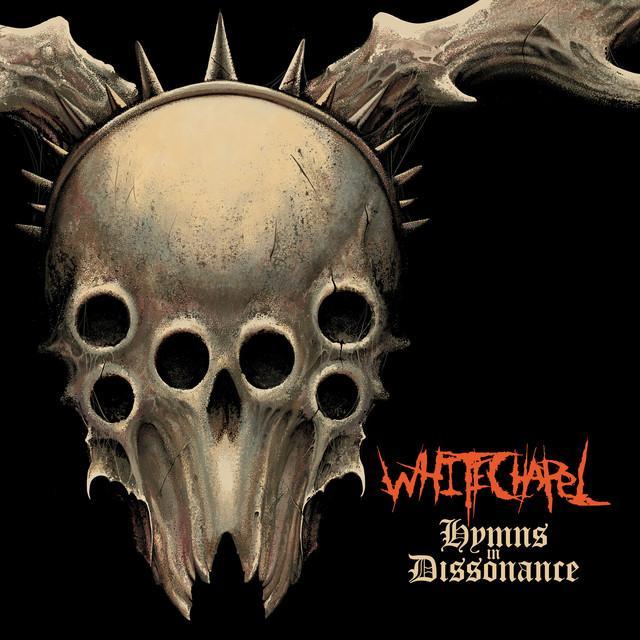
Hate Cult Ritual by Whitechapel
The meaning of Hate Cult Ritual Whitechapel starts with a simple idea: this is a song about hate becoming organized, sacred, and unstoppable. Rather than speaking as one wounded person, they speak as a collective force. The lyrics turn rage into a ceremony, where violence is not just an action but a belief system.
"Hate Cult Ritual" - Whitechapel
We hunt, we kill, we feast, we conquer
We hunt, we kill, we feast, we conquer
Loading lyrics...
Unable to load lyrics
We're unable to display the lyrics at this time. Please try again later.
Whitechapel has long worked in deathcore, a genre known for extreme imagery, low-tuned riffs, and harsh vocal intensity. In that setting, songs often use shocking language to create atmosphere and explore corruption, brutality, or spiritual collapse. Here, the band pushes that style toward a vision of a cult that defines itself through destruction.
A Chorus That Sounds Like a War Chant
The song’s center is its repeated refrain: we hunt, we kill
and we feast, we conquer
. Those short phrases matter because they reduce the group to pure appetite and domination. There is no doubt, no guilt, and no inner conflict.
That repetition makes the track feel ritualistic. Instead of moving the plot forward, the chorus acts like indoctrination. Each return hardens the identity of the speakers until they become, in their own words, disciples of hate
.
Interpretation: The song is less interested in one event than in showing how cruelty becomes culture. The chant-like structure suggests that violence has become a shared religion.
The Speaker Is a Mob, Not a Hero
One striking part of the song is its point of view. The voice says we are the ones
, which frames the lyrics as a mass confession from below. They do not sound like rebels asking for freedom. They sound like a movement enjoying its own corruption.
That matters because it changes how listeners hear the blasphemy and gore. The song does not present a sympathetic narrator. It presents a crowd that has surrendered to rage and now treats desecration as proof of belonging.
Sacred Symbols Turned Upside Down
Much of the imagery comes from reversing religious meaning. The lyrics attack the cross, mock holy water, and describe sacred figures as damaged, abandoned, or rotting. The effect is not subtle. The song creates horror by taking symbols of purity and flipping them into symbols of decay.
There is also cosmic imagery: moonlight, the sun, earth, seas, valleys, and mountains. That broad scale makes the cult feel bigger than one room or one church. Their rise seems world-ending, as if hate has become a force of nature.
Mock, burn, spit on the crossThe line sums up the song’s strategy of turning holiness into an object of contempt.
Interpretation: These images can be read as theatrical anti-religious provocation, but they also work as a metaphor for moral inversion. In other words, the song imagines a world where values are not merely broken; they are proudly reversed.
A Timeline of Escalation
The lyrics move in a rough sequence:
- The group introduces itself through hunting, killing, feasting, and conquest.
- Sacred and natural images begin to warp, showing a world losing its spiritual order.
- The cult grows into a plague-like force, spreading rage outward.
- By the later verses, landscapes collapse and bodies become warnings to others.
That structure helps explain the meaning of Hate Cult Ritual Whitechapel. The song starts as a declaration and ends as a takeover. What begins as belief becomes apocalypse.
How the Sound Carries the Message
Whitechapel’s style is crucial to the song’s effect. Their deathcore foundation usually relies on down-tuned guitar, tightly locked drumming, abrupt rhythmic shifts, and extreme vocals. Those features make repetition feel punishing rather than catchy, which suits a song about ritualized violence.
Phil Bozeman’s vocal approach is especially important. A voice like this does not sound reflective or uncertain. It sounds like command, accusation, and possession. When paired with breakdown-driven momentum, the music gives the impression of a march or invasion, matching the lyrics about overwhelming numbers and collapsing terrain.
The writing credits provided for the song are Alex Wade, Benjamin Savage, Brandon Zackey, Gabriel Crisp, Philip Bozeman, and Zach Householder. That full-band authorship fits a track whose power depends on collective force as much as on words.
Two Strong Ways to Read It
Reading One: Pure horror theater
On one level, the song functions as an extreme-metal spectacle. Its blasphemy, gore, and catastrophic imagery are meant to overwhelm. In that reading, the goal is emotional intensity, not a literal manifesto.
Reading Two: Hate as social contagion
Another reading is more symbolic. The lyrics compare rage to disease and present the speakers as a multiplying force. That makes the cult feel like a stand-in for real-world hatred: a group identity built on contempt, dehumanization, and shared violence.
This second reading is persuasive because the song keeps returning to ritual, repetition, and group language. The horror lies not only in what they do, but in how normal it has become for them.
Why the Song Hits So Hard
The reason this track lands is its total commitment. Everything points in one direction: chant, blasphemy, collapse, and collective brutality. There is no softening detail to interrupt that momentum.
So, the meaning of Hate Cult Ritual Whitechapel is best understood as the sound of hate becoming worship. Whether listeners hear it as shock theater or as a metaphor for fanaticism, the song paints a world where rage is organized, repeated, and made sacred.
Disclaimer: This interpretation is based on the lyrics provided and Whitechapel’s established deathcore style. As with most extreme music, symbolism and theatrical exaggeration can support more than one valid reading.








