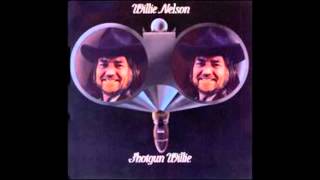
Shotgun Willie by Willie Nelson
Why the meaning still hits hard
The meaning of Shotgun Willie Willie Nelson starts with a joke and ends with a declaration of freedom. The song sounds loose, funny, and almost tossed off. But that looseness is the point. Willie Nelson uses a strange, scruffy character sketch to introduce a new version of himself: less polished, more honest, and no longer interested in fitting Nashville’s old rules.
"Shotgun Willie" - Willie Nelson
Bitin' on a bullet and pullin' out all of his hair
Shotgun Willie's got all his family there
Loading lyrics...
Unable to load lyrics
We're unable to display the lyrics at this time. Please try again later.
Released in 1973 on the album Shotgun Willie, the song arrived during a major career shift. Nelson had left RCA, moved closer to Austin’s freer music scene, and signed with Atlantic. He later said the album cleared his throat
, which is one of the best clues to the song’s meaning. It was not just a story song. It was an artistic reset.
Watch the official Shotgun Willie
music video
A comic portrait with serious edges
On the surface, the track paints a weirdly domestic outlaw. The opening image, sits around in his underwear
, instantly cuts down any romantic cowboy myth. This is not a grand gunslinger riding across Texas. This is a man at home, frazzled, uncomfortable, and probably stuck in his own head.
That comic image matters because the song keeps mixing toughness with embarrassment. When Nelson adds bitin' on a bullet
and pulling out his hair, the character feels both hard and fragile. They are enduring pressure, but they are also falling apart.
Interpretation: The song suggests that being an outlaw is not glamorous. It is messy, anxious, and deeply human. Nelson makes rebellion look lived-in rather than cinematic.
The line that explains the whole song
The clearest statement comes in the refrain about art and purpose. Nelson repeats the idea that you cannot make a record if you have nothing worth saying. He also says you cannot play music if you do not know what to play.
you ain't got nothing to saydon't know nothing to play
Those lines sound playful, but they function like a manifesto. They connect the goofy “Shotgun Willie” character to Nelson’s real career moment. After years of industry pressure, he was finally making records his own way. The song argues that real music starts with lived experience, voice, and conviction.
That helps explain why this short, shaggy track became the album title. According to American Songwriter, the nickname grew from a real family conflict that Nelson later described in his books. Factually, the song does come from real-life danger. But artistically, it turns that history into a symbol of independence.
Family, place, and outlaw identity
Another key line is got all his family there
. That detail keeps the song from becoming only a swagger piece. The character is not alone. Family is present, which changes the emotional frame.
Instead of rebellion for its own sake, the song hints at loyalty and protection. Even the title “Shotgun Willie” carries both threat and defense. The outlaw image is tied to home life, not just public legend.
The verse about John T. Floore also grounds the song in Texas culture and local memory. Floore was a real honky-tonk figure, and the mention adds regional texture. It makes the song feel like talk overheard in a bar or backstage room, where gossip, myth, and truth all blend together.
Interpretation: Nelson builds a folk hero out of everyday details. Underwear, family, local names, and tossed-off jokes make the character feel real enough to believe, even if the song never explains everything directly.
How the sound carries the message
Part of the meaning of Shotgun Willie Willie Nelson comes from its feel. The performance is relaxed, but not careless. The groove has an easy swing, and Nelson’s vocal sounds conversational, almost like they are grinning through the lines.
That matters because the track rejects the stiff polish of the older Nashville system. The 1973 album was produced by Arif Mardin, Jerry Wexler, David Briggs, and Nelson, and it mixed Nelson’s Family band with horns, keys, and other players. Reviews at the time noticed that the record sounded different from mainstream country radio: looser, rougher, and more alive.
The title track especially benefits from that atmosphere. It does not push for drama. It just lets the character exist. That relaxed delivery makes the humor land, while the rough edges support the outlaw idea.
Why the song matters in Willie’s story
Historically, Shotgun Willie was not a huge commercial smash at first, though the album reached No. 41 on Billboard’s Top Country Albums. Its larger impact was cultural. Critics praised it, younger listeners found Nelson, and the album became one of the key early outlaw-country records.
That is why the song feels bigger than its short runtime. It introduces a new Willie Nelson: uncombed, independent, witty, regional, and impossible to package neatly. When Jerry Wexler pushed Nelson toward art over commerce, that freedom showed up here.
So what is the final meaning? The song is about a man who is both legend and regular person, both dangerous and ridiculous. More than that, it is about an artist deciding that truth sounds better than polish.
Final takeaway
The meaning of Shotgun Willie Willie Nelson is not just about guns or outlaw swagger. It is about self-definition. Nelson takes a real nickname, a comic scene, and a few sharp lines about music, then turns them into a statement of creative independence.
That is why the song still lasts. It sounds casual, but it announces a whole new chapter.
Disclaimer: This interpretation blends documented history with critical reading of the lyrics and sound. Like most great songs, “Shotgun Willie” can support more than one meaning.









