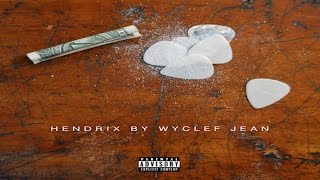
Hendrix by Wyclef Jean
Wyclef Jean’s “Hendrix” is a song about two lives starting in the same place and then splitting apart. At its core, the meaning of Hendrix Wyclef Jean comes from one painful contrast: one young person reaches for art, while another reaches for power through violence and the drug trade.
"Hendrix" - Wyclef Jean
The judge hit the hammer they ain't coming home
We all are from the danger zone
Loading lyrics...
Unable to load lyrics
We're unable to display the lyrics at this time. Please try again later.
Released in 2016 as part of the rollout for J'ouvert EP, the track also fits Wyclef’s larger career story. He has long mixed hip-hop, reggae, soul, and guitar-driven sounds, and “Hendrix” uses that blend to tell a street memoir with a mournful edge.
Two Dreams, One Basement
The song’s central image is simple and strong. Wyclef remembers that when his cousin got a weapon, he was down below playing Jimi Hendrix. The short phrase playing Jimi Hendrix
is not just a music reference. It marks a fork in the road.
One person wants to become a rock musician. The other wants to become a drug kingpin, described through the repeated image of El Chapo
. That pairing gives the song its whole emotional engine. Both boys are chasing identity, status, and survival. They just choose different symbols.
Interpretation: Wyclef is not saying talent alone saves a person. He is showing how environment pushes people toward different futures, even inside the same family.
Watch the official Hendrix
music video
A Song for Friends Lost to Prison and Death
The opening lines set the stakes right away. This is a dedication to “homies gone,” and the loss is double-sided: some are dead, and some are alive but locked away. When the song says the judge’s hammer fell, it frames prison as another kind of disappearance.
The phrase danger zone
sums up the world they came from. In that setting, the choices are narrow. Music, sports, hustling, gangs, and prison all appear as possible outcomes. Even the line about funeral homes making money turns grief into economics. Death is not only tragic here; it is also part of a system.
That is one reason the song feels heavier than a simple cautionary tale. Wyclef does not present himself as morally above everyone else. He sounds like a survivor looking back, aware that luck, gifts, and timing all mattered.
The Chorus Turns Memory Into Warning
The hook repeats the split between Wyclef and his cousin, which makes the song feel almost haunted. Each return to that memory shows how young dreams harden into adult consequences.
All I wanted to bea rock star and all he wanted to be was an Escobar
That short multi-line moment works like the thesis of the track. One dream is tied to creativity and self-expression. The other is tied to domination and criminal legend. By putting them side by side, Wyclef shows that both fantasies can look glamorous to a kid, especially in a place where ordinary success feels far away.
Street Images That Sound Like Trauma
In the middle verse, the song becomes more frantic. There are raids, red dots, guns, and bodies dropping. The writing gets dense and cinematic, like a flashback that will not slow down.
This section matters because it shifts the song from reflection to immersion. Instead of only saying the streets are dangerous, Wyclef recreates that fear. The sound effects, quick internal rhymes, and clipped action verbs make violence feel constant and random.
The line about the rotten apple
twists New York’s old romantic image into something darker. The city can still glitter, but underneath that shine is a night world ruled by paranoia and sudden attack.
Interpretation: These details are less about plot than about memory. They read like pieces of trauma that still come back in flashes.
Why the Hendrix Reference Matters So Much
Jimi Hendrix is more than a cool name drop here. He stands for an artistic path that feels huge, rebellious, and freeing. Wyclef has always been closely tied to the guitar; even basic biographical accounts note that his mother bought him one as a teen and that guitar became part of his identity as performer and producer in the Fugees and beyond (Wyclef biography).
So when “Hendrix” points back to a basement and a guitar, it sounds personal. This is not borrowed symbolism. It is Wyclef locating the first version of himself.
There is also a racial and genre angle. To dream of being a rock star instead of only a rapper or hustler expands what is imaginable. The title suggests that music offered not just escape, but a bigger map of who they could become.
How the Production Supports the Meaning
The production helps carry that split identity. “Hendrix” feels rooted in hip-hop storytelling, but the guitar presence gives it a raw, live-wire texture. That matters because the song is about choosing music over destruction.
The repeated chorus is catchy, almost hypnotic, but the verses are tense and crowded. That contrast mirrors the message:
- the hook sounds like memory
- the verses sound like survival
- the guitar sounds like possibility
Wyclef has spent decades crossing styles, from the Fugees to solo work and major collaborations. That genre fluency makes “Hendrix” feel believable as both confession and social commentary.
The Bigger Meaning of Hendrix Wyclef Jean
The meaning of Hendrix Wyclef Jean is not just “music saved him.” It is deeper than that. The song argues that children in violent systems often grow up choosing between myths: the myth of the outlaw, the myth of the athlete, the myth of the star.
Wyclef’s version of survival happened to be art. His cousin’s version chased fear and power. The sadness of “Hendrix” is that both choices begin in the same hunger to matter.
That is why the track lands emotionally. It mourns lost friends, critiques the world around them, and still honors the fragile force that pulled Wyclef toward a guitar instead of a gun.
Final Take
“Hendrix” works as a memorial, a self-portrait, and a warning at the same time. It turns one family contrast into a larger statement about neighborhood pressure, masculinity, ambition, and fate.
That makes it one of Wyclef Jean’s sharpest late-career story songs: intimate in detail, but broad in what it says about survival.
Disclaimer: This interpretation is based on the lyrics, known career context, and publicly available sources. As with most songs, some meanings remain open to listener interpretation.









