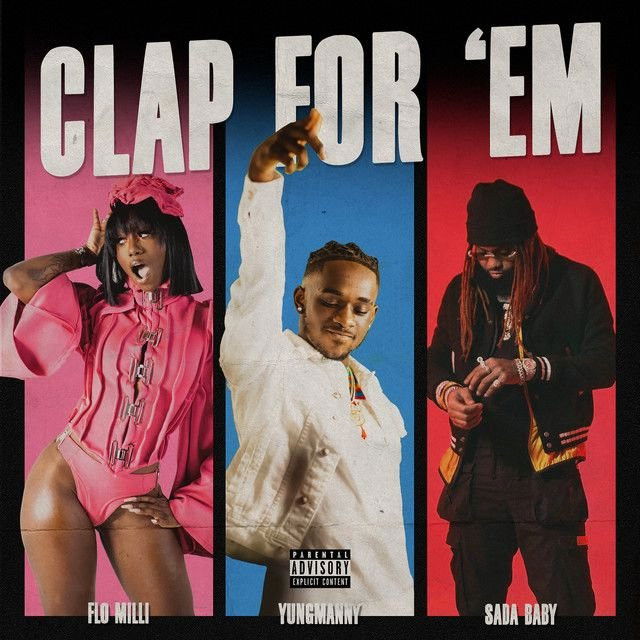
Why 'Clap For 'Em' Is All Swagger, Not Story
The meaning of Clap For 'Em YungManny, Flo Milli, Sada Baby is not hidden behind a deep plot. It sits right on the surface: this is a high-energy rap song about attraction, status, money, and performance. More than anything, it captures the feeling of a club moment where movement becomes power and attention becomes a kind of reward.
"Clap For 'Em" - YungManny ft. Flo Milli, Sada Baby
(B-b-bankroll Got It)
Dior on a nigga, fuck Gucci
Loading lyrics...
Unable to load lyrics
We're unable to display the lyrics at this time. Please try again later.
Rather than building a narrative, the song creates a scene. Each artist steps into that scene with a different style. YungManny sounds amused and boastful, Flo Milli sounds fully in control, and Sada Baby brings his usual offbeat chaos. Together, they make a track that is more about presence than confession.
The Core Idea Lives in the Hook
The chorus repeats one central image again and again: clap on 'em
. In plain terms, the song treats dancing as both flirtation and spectacle. The hook links physical movement to applause, money, and desire.
That matters because the track is not only describing bodies. It is also describing reaction. The repeated lines about throwing money and watching someone move turn the club into a stage. Interpretation: the song suggests that in this setting, attention is a form of power, and whoever controls the room wins.
The line about throw the racks
reinforces that idea. Cash is not just wealth here; it is a public sign of approval. The song keeps tying desire to display.
Watch the official Clap For 'Em
music video
YungManny Sets the Scene With Boasts
YungManny opens the song by placing listeners in a world of brands, bodies, and easy confidence. When he mentions fashion and says Dior on a nigga
, the point is not subtle character development. It is status signaling.
His verse moves fast through club-ready images: women dancing, spending money, travel, and sexual bragging. That style tells listeners what kind of record this is. It is less interested in feelings than in momentum.
There is also a casual, almost playful tone in the way he stacks punch lines. Even when the content is explicit, the performance feels light on its feet. Interpretation: that breezy delivery helps the song feel more like a party soundtrack than a grim statement about power.
Flo Milli Changes the Energy
Flo Milli’s verse is important because she does not simply fit into the men’s point of view. She flips the focus back onto herself. When she says He love when I clap
, she is not sounding passive. She knows exactly how she is being watched, and she turns that attention into her advantage.
That shift gives the track more personality. Flo Milli has built much of her appeal on sharp confidence and playful dominance, and that same persona shows up here. Her verse is about being desired, but it is also about setting the terms of that desire.
She stresses style, body confidence, and command. Even when the song stays in the same club-space as the other verses, her presence changes the balance. Interpretation: she makes the track less about men reacting to women and more about women choosing when and how to provoke that reaction.
Sada Baby Pushes the Song Into Absurdity
Sada Baby enters with the same kind of unpredictable energy that has defined much of his work. His verse is full of odd comparisons, exaggerated sexual jokes, and left-turn imagery. He does not deepen the emotional meaning so much as intensify the song’s wildness.
That matters because the track could have become too repetitive. Sada Baby breaks the pattern by sounding a little unhinged in a fun way. He keeps the focus on shock value and humor.
In other words, his role is to make the party stranger and louder. The final repeated spinnin' like a DJ
phrase also helps end the song on pure motion, as if the whole record is trapped in a loop of dancing and noise.
Sound First, Meaning Second
Production-wise, the beat is designed for bounce. The credited writers include Casada Sorrell, Emmanuel Okanlawon, Joel Banks, Tamia Carter, and Taylor Banks, as provided in the song credits. The production tag B-b-bankroll Got It
points to a beatmaker stamp that frames the track like an event before the verses even begin.
The instrumental is built to leave space for ad-libs, repeated hooks, and quotable lines. That spacious, rhythmic design matters to the meaning. The song is not chasing introspection; it is chasing reaction. The beat supports that by making every return to the chorus feel immediate and physical.
Interpretation: the production tells listeners to move first and analyze later. That is why the repetition works instead of dragging. The song’s message is inseparable from its function as a club record.
What the Song Says About Performance
One useful way to read the meaning of Clap For 'Em YungManny, Flo Milli, Sada Baby is as a song about performance in every sense:
- performance of wealth
- performance of sexuality
- performance of confidence
- performance for a crowd
Nobody here sounds vulnerable. That seems intentional. The song lives in surfaces: fashion, bodies, money, jokes, and reactions. But that does not make it meaningless. It shows how rap party records often turn image into language and repetition into atmosphere.
The title itself hints at that double meaning. “Clap” can suggest applause, dance, and public response all at once. The artists are not asking for quiet admiration. They want visible, loud recognition.
Final Read on the Track
At its heart, “Clap For ’Em” is a celebration of attention. It uses club imagery and repetitive phrasing to turn dancing into spectacle and swagger into social currency. YungManny brings the flexes, Flo Milli brings control, and Sada Baby brings chaos.
That mix is why the song lands as a mood piece rather than a story song. Its meaning comes from what it makes listeners picture: a room, a beat, a crowd, and everybody trying to own the moment.
Disclaimer: This interpretation is based on the lyrics, performance style, and musical context, and other listeners may hear it differently.








