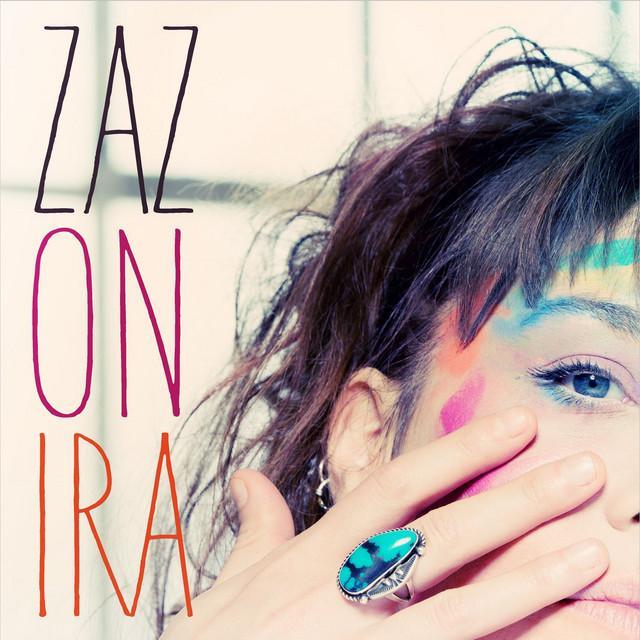
Why 'On ira' by Zaz Feels Like a World Anthem
The meaning of On ira Zaz becomes clear almost right away: this is a song about moving outward, meeting others, and discovering that human difference is a gift. Rather than telling one private story, it opens a wide map of cities, cultures, and shared hopes. The result is a warm pop anthem that turns travel into a symbol for empathy.
"On ira" - Zaz
On ira rougir le thé dans les souks à Amman
On ira nager dans le lit du fleuve Sénégal
Loading lyrics...
Unable to load lyrics
We're unable to display the lyrics at this time. Please try again later.
Zaz released “On ira” as part of Recto Verso, following the success of her breakout work in French pop and chanson. Public discographies and credits list the song with writers including Olivier Volovitch, Kerredine Soltani, Tristan Salvati, and Louise Bécue. That background matters because Zaz’s music often blends street-level energy with idealism, and this song leans hard into both. Sources for basic credits include Discogs and MusicBrainz.
A Journey Song That Means More Than Travel
On the surface, the verses move from place to place. They picture Harlem, Amman, the Senegal River, Kyoto, Rio, the Sistine Chapel, and Moscow. But the song is not really a tourism checklist. Each stop stands for a different way of being human, and the singer treats them all with excitement and respect.
That is why the chorus matters so much. When the song praises notre chance
and the couleurs de l'être humain
, it frames diversity as luck, not threat. In plain English, the song says people are richer when they meet across lines of nation, language, and culture.
Interpretation: the repeated promise of “we will go” is less about boarding a plane and more about choosing openness. The motion of the song becomes moral motion.

Watch the official On ira
music video
Why the "We" Voice Changes Everything
A key part of the meaning of On ira Zaz is its collective voice. The lyric keeps returning to “we,” not “I.” That choice makes the message bigger than one narrator’s feelings. It sounds like an invitation to listeners, as if they are being asked to join a common future.
This also explains the song’s many pairings. In the refrain, one side is compared to stars, horizon, seasons, or shore, while the other side answers with the universe, sea, earth, or foam. Short phrases like vous êtes les étoiles
and nous sommes l'univers
create a pattern of mutual completion. Nobody is whole alone.
Interpretation: these images suggest interdependence. The song is not saying all people are identical. It is saying difference becomes meaningful in relationship.
The Chorus Turns Diversity Into Belonging
The emotional center of the song is simple: people meet at the crossing point of their destinies, and something beautiful happens there. The line about differences being mixed together does important work. It rejects the idea that unity requires sameness.
That is why the chorus feels celebratory instead of abstract. The song does not lecture. It sings. Its hook is easy to remember, and the repeated “oh” vocal line turns the message into something physical and communal, like a crowd singing back.
qu'elle est belle notre chance
mélangées de nos différences
Those brief lines sum up the heart of the track: shared life becomes beautiful when people accept mixture instead of fearing it.
Images of Poets, Children, and Sharing
In later lines, the song widens from travel to values. It suggests that poets do not belong to flags, that children guard the soul, and that people only deserve what they can share. These are idealistic statements, but they fit the song’s spirit.
The imagery points in three directions:
- Poets without flags: art rises above borders.
- Children as guardians: innocence protects what matters most.
- Sharing as merit: worth is measured by generosity.
Together, those ideas move the song beyond geography. It becomes a worldview. Curiosity leads to solidarity, and solidarity leads to giving others ce que l'on a de meilleur
.
How the Sound Carries the Message
“On ira” works because the production sounds as open as the lyrics feel. It sits in French pop, but it also carries the bounce and brightness often heard in Zaz’s work. The rhythm pushes forward, matching the song’s constant motion. The melody rises easily, which helps the chorus feel welcoming and public.
Zaz’s vocal delivery matters too. They sing with a slightly grainy warmth that keeps the optimism grounded. A cleaner, more polished performance might have made the song feel too glossy. Instead, their voice gives the song a human edge, as if the hope in the lyric has been tested by real life.
Interpretation: the upbeat arrangement is not just decoration. It enacts the message. The listener does not only hear unity; they feel carried into it.
A Few Alternate Readings
There is a straightforward reading of the track as a celebration of global culture and shared humanity. That is the clearest meaning.
But there is also a second reading. Interpretation: “going” may symbolize emotional growth. In that version, the many cities become inner destinations. The song is about leaving fear, provincial thinking, or isolation behind.
A third reading is more political, though still gentle. By praising mixture and suggesting that art and human worth exceed borders, the song quietly pushes back against narrow nationalism.
Why the Song Still Connects
For U.S. listeners especially, the meaning of On ira Zaz can feel refreshing because it offers a global vision without cynicism. It believes that meeting others can enlarge a person rather than erase them. That message is easy to understand, and the melody makes it easy to remember.
In the end, “On ira” is a hopeful anthem about movement, encounter, and shared dignity. It argues that the world becomes more beautiful when people treat difference as a meeting place, not a wall.
Disclaimer: This interpretation is based on the song’s lyrics, sound, and public credits. As with any art, listeners may hear meanings that differ from this reading.








