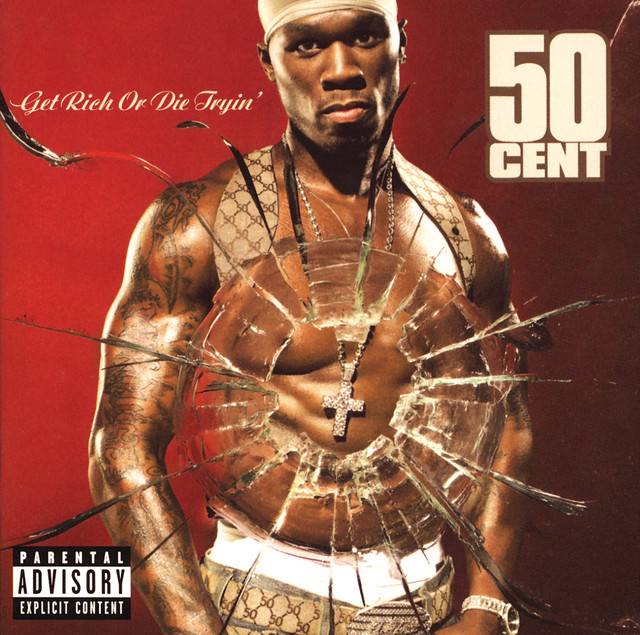
What Up Gangsta by 50 Cent
A blunt opening statement
The meaning of What Up Gangsta 50 Cent starts with introduction. This is not a reflective song and it is not meant to soften his image. As the opening track on Get Rich or Die Tryin', it works like a front-door warning: 50 Cent is arriving with confidence, menace, and a need to be taken seriously.
"What Up Gangsta" - 50 Cent
We can get the drama poppin', we don't care (buck-buck-buck)
It's goin' down (buck), 'cause I'm around (buck)
Loading lyrics...
Unable to load lyrics
We're unable to display the lyrics at this time. Please try again later.
The song was released on the 2003 album that launched him into mainstream superstardom, issued through Shady/Aftermath/Interscope. That album's place in hip-hop history is well documented by major chart records and industry coverage, including the RIAA and Billboard. In that setting, “What Up Gangsta” matters because it establishes the character before the radio hits begin.
Watch the official What Up Gangsta
music video
What the song is really about
At its core, the song is about power through fear. They present themself as someone hardened by street life, suspicious of nearly everyone, and ready to answer disrespect with violence. The repeated greeting What up, gangsta?
sounds casual on the surface, but in context it acts more like a challenge, a test of rank, and a stamp of identity.
The verses build that image through threats, survival talk, and status symbols. They describe weapons, money, and movement through hostile spaces. That mix tells listeners that the narrator's authority comes from two things: having lived through danger and knowing how to perform that danger in public.
Interpretation: The song is not only talking to rivals. It is also talking to the rap industry. 50 Cent had already built a reputation through mixtapes and street buzz before this album broke wide. Here, they sound like someone announcing that mainstream success has not changed their rules.
Why the hook matters so much
The hook is simple, but it does heavy lifting. By repeating gang identifiers and the phrase we don't play around
, the song turns a personal voice into a group voice. It is no longer just one rapper speaking. It becomes a crew anthem, tied to G-Unit branding and collective muscle.
That matters because the song opens an album built on tension between individual hunger and team loyalty. 50 Cent is the star, but the record wants listeners to feel a full movement behind him. The chorus makes that movement sound organized, loud, and impossible to ignore.
What up, Blood?
What up, Cuz?
What up, gangsta?
Paraphrased, this chant reaches across street affiliations and neighborhoods while keeping the tone confrontational. It says they know the codes, know the people, and know how to command attention.
The verses: hunger, paranoia, and image
One of the strongest lines of meaning comes when they ask whether listeners can hear their hunger
. That word is key. Beneath the boasting, the song is driven by appetite: for money, respect, dominance, and security. Hunger explains why the delivery feels so intense. They are not relaxed on top; they sound like someone still climbing.
Another important thread is paranoia. The lyrics suggest that trust is limited, the legal system is a threat, and enemies can appear anywhere. Even when they brag, there is tension inside the brag. Wealth and power do not bring peace. They bring bigger risks and more reasons to stay alert.
The song also builds image through flashy details. Luxury items and expensive gear appear next to street violence. That contrast became central to 50 Cent's early persona: they could move between the underground and the commercial world without sounding torn apart by either one.
How the beat carries the message
Produced by Dirty Swift, the instrumental is lean, dark, and aggressive, matching the album's hard-edged opening mood. The beat does not crowd the verses. Instead, it leaves room for 50 Cent's clipped flow and threatening pauses to do the work.
The ad-libs and chant-like responses are especially important. The recurring “buck” effects mimic gunfire and help turn the song into a live-wire introduction. The production feels like a street corner broadcast: spare, echoing, and built for intimidation rather than melody.
Interpretation: That choice is strategic. If the album had opened with a smoother, more melodic track, the overall story would change. “What Up Gangsta” tells listeners that before the hooks, before the crossover singles, there is a harder core identity underneath.
Artist context sharpens the meaning
50 Cent's life story shaped how audiences heard this song. By 2003, their rise was tied to mixtape success, industry setbacks, and a heavily publicized survival narrative after being shot in 2000, a fact covered in outlets such as The New York Times and Rolling Stone. Because of that history, listeners did not hear these threats as abstract fiction. They heard them as part of a persona rooted in real danger, whether one reads every line literally or as performance.
That context is crucial to the meaning of What Up Gangsta 50 Cent. The song sells authenticity, but it also understands theater. They are crafting a larger-than-life figure, someone who can say I'm around
and make it sound like the whole room should shift.
A useful way to read its violence
The song's violent language can be read two ways at once:
- Factual layer: It reflects gangsta rap conventions and the survival logic of the world 50 Cent often described.
- Interpretive layer: It functions like armor, using extreme talk to project invincibility before anyone can test weakness.
That second reading helps explain why the track feels so important as an opener. It is less a story than a shield. Every bar adds another piece of protective myth.
Final takeaway
In simple terms, “What Up Gangsta” is about arrival, intimidation, and self-creation. It introduces 50 Cent as someone dangerous, ambitious, and impossible to overlook. More than that, it frames the whole album by saying success will not come from politeness. It will come from force of personality.
For many listeners, that is why the track still hits. It captures the exact moment a rapper turns reputation into dominance.
Disclaimer: This article offers interpretation based on the lyrics, performance, and public context. Not every listener will hear the song the same way.








