Why 'Buggin' Out' Sounds So Restless
The meaning of Buggin' Out A Tribe Called Quest starts with a simple idea: they turn a slang phrase about acting wild into a smart statement about pressure, ego, and survival in hip-hop. On the surface, the song is a showcase for Phife Dawg and Q-Tip trading sharp, funny bars. Under that surface, it is also about keeping identity intact while fame, competition, and daily stress try to knock it off balance.
"Buggin' Out" - A Tribe Called Quest
The five foot assassin with the ruffneck business
I float like gravity, never had a cavity
Loading lyrics...
Unable to load lyrics
We're unable to display the lyrics at this time. Please try again later.
“Buggin’ out” can mean losing patience, acting strange, or letting tension spill over. In this track, they use that phrase in more than one way. Sometimes it means raw confidence. Sometimes it means mental overload. Sometimes it means the world around them is the thing that is really off.
A Small Phrase With a Big Point
Phife opens with bravado, but not empty bravado. When he calls himself the five foot assassin
, he is making a joke about size while proving skill matters more than image. That sets the tone for the whole record: they do not need fake mystique. Their authority comes from style, wit, and control.
He keeps building that self-portrait through details that feel ordinary and specific. The New Balance line, the soda joke, and the casual flexes make him sound local, human, and funny. That matters because A Tribe Called Quest often balanced greatness with accessibility. They sounded like stars, but also like people from the neighborhood talking with unusual rhythm.
Watch the official Buggin' Out
music video
How Phife Turns Boasting Into Character
A lot of rap songs boast, but Phife’s verse does more than claim superiority. It shows how personality becomes art. He says he has styles upon styles
, which is a flex, but it also points to Tribe’s bigger aesthetic. Their music was built on variety: jazz references, street humor, playful cadences, and left-field images.
There is also a refusal to chase trends. When he says there is no shame in my game
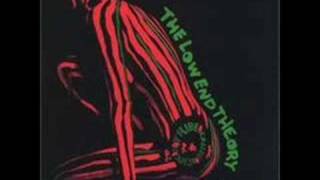
, the point is not only self-confidence. It suggests consistency. They are not reshaping themselves for approval. In the context of early 1990s rap, that independence helped make The Low End Theory such a landmark album, widely seen as one of hip-hop’s most important releases in jazz rap and alternative rap history.
Q-Tip Changes the Meaning of “Bugging Out”
Q-Tip’s verse deepens the song. He explains that when people bug out, there is usually a reason. That shift matters. The hook no longer sounds like simple teasing. It becomes a way to talk about emotional strain and the way outsiders misread behavior.
His lines describe pressure as something physical and mental, almost like a headache building in public. He suggests a person may retreat inward, but other people read that distance as arrogance. In other words, the song is partly about social misunderstanding. Someone protecting their peace can get labeled rude, stuck-up, or unstable.
you usually have a reason
for the action
That brief moment captures the heart of the track. Before or after all the jokes and punchlines, they are saying that strange behavior often has context.
The Hook Is Funny, But Not Light
The repeated hook, buggin' out
, sounds playful at first. It is catchy, blunt, and easy to chant. But repetition gives it another effect. It starts to feel like a diagnosis, a warning, and a release all at once.
Interpretation: the chorus works because it leaves blame open. Are they bugging out? Are critics bugging out? Is the music industry bugging out by rewarding the wrong things? The song never locks into one answer, which is why it still feels alive.
Sound, Rhythm, and the Low-End Mood
The production is a big part of the meaning. “Buggin’ Out” appears on The Low End Theory by A Tribe Called Quest, released in 1991, and the album is famous for its stripped-down bass-heavy sound and jazz-minded approach. The group is credited as producer, and the album’s whole style helped redefine what rap could sound like in that moment.
On this track, the beat feels tense but loose. The drums hit with enough force to keep the verses moving, while the low-end groove gives the song a grounded, almost head-nod meditation. That balance mirrors the lyrics: outward swagger over inward pressure.
The group’s jazz connection matters here too. Tribe often presented themselves as “children of the jazz,” and that identity shows in the song’s structure and flow. Instead of sounding polished in a pop sense, the record feels conversational and alive, like ideas arriving in real time.
Why the Song Matters in Tribe’s Story
“Buggin’ Out” also matters because of who gets the spotlight. Phife’s presence is huge, and many listeners remember the song as one of the clearest early examples of his charisma. Later praise for his writing and delivery often points back to this period, when he sharpened Tribe’s contrast with Q-Tip: Tip was airy and philosophical; Phife was direct, compact, and explosive.
There is also a visual legacy. In the video for “Jazz (We’ve Got)”, “Buggin’ Out” appears as the B-side section, with a sudden shift in mood and color, showing how tightly the two songs were linked in the group’s presentation.
The Best Way to Read the Song
The best reading is that “Buggin’ Out” is about control under stress. They boast because rap rewards confidence. They joke because humor is part of their style. But beneath both, they describe the feeling of being crowded by expectations, competition, and public judgment.
That is the meaning of Buggin' Out A Tribe Called Quest in the clearest terms: they take a phrase about acting irrational and turn it into a portrait of artists staying original while the world around them gets noisy.
Final Take
“Buggin’ Out” lasts because it is clever without being cold. It gives listeners battle-rap energy, memorable character work, and a subtle point about how people carry stress.
This interpretation is based on the lyrics, performance, and historical context, and like most song analysis, it remains an informed reading rather than a single official meaning.
Sources
- https://en.wikipedia.org/wiki/The_Low_End_Theory
- https://en.wikipedia.org/wiki/Jazz_(We%27ve_Got)
- https://www.billboard.com/artist/A-Tribe-Called-Quest/chart-history/RAP
- https://www.rollingstone.com/music/music-lists/a-tribe-called-quest-20-essential-songs-78373/
- https://pitchfork.com/thepitch/1067-a-tribe-called-quests-phife-dawg-10-lyrics-that-prove-his-prowess/








