Why Aaliyah's Most Debated Song Still Matters
The Core Meaning Behind the Hook
The meaning of Age Ain't Nothing But a Number Aaliyah starts with its central argument: the singer tries to make an age gap feel unimportant in a romantic and sexual situation. The chorus keeps repeating that age is just a figure, turning that claim into the song's emotional and moral center.
"Age Ain't Nothing But a Number" - Aaliyah
Throwing down ain't nothing but a thing
This something I have for you it'll never change
Loading lyrics...
Unable to load lyrics
We're unable to display the lyrics at this time. Please try again later.
On the surface, it plays like a slow R&B confession from someone who wants to be taken seriously. They present the speaker as confident, direct, and eager, not shy. Short lines like age ain't nothing but a number
and throwing down ain't nothing but a thing
are meant to sound casual, as if the issue is simple.
Interpretation: That simplicity is exactly what makes the song uneasy. The lyric tries to shrink a serious boundary into a slogan. Instead of exploring consequences, it pushes desire to the front and treats age as a technical detail.

Watch the official Age Ain't Nothing But a Number
music video
A Young Voice Framed as Older
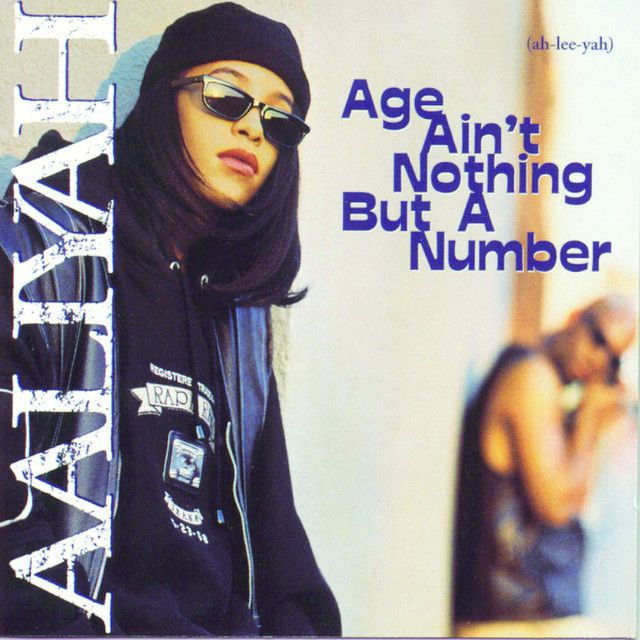
Factually, the song was recorded for Aaliyah's 1994 debut album of the same name and released as a single on December 6, 1994. It was written and produced by R. Kelly, and Aaliyah was still a teenager during the album era. Contemporary summaries describe the track as a young girl wanting to date an older man, wrapped in a polished R&B ballad style.
That context matters because the song does not sound childish or uncertain. Reviewers at the time often noted Aaliyah's poise and maturity. One Billboard assessment said she sounded more composed than lovestruck, which helped sell the song's adult tone.
Interpretation: The track's meaning is shaped not only by what is sung, but by how Aaliyah's image was presented. They were marketed as unusually mature, and this song became one of the clearest examples of that push.
How the Verses Build the Story
The verses move like an invitation. The speaker notices attraction, signals readiness, and asks the other person to act. Phrases such as your eyes are calling me
and take my hand
show mutual pull, at least from the narrator's point of view.
The song then raises the stakes. It promises intimacy, emotional certainty, and physical closeness. When the lyric says let me show you to ecstasy
, it stops being a simple crush song and becomes an argument for crossing a line.
Boy be brave don't be afraid
tonight we're gonna go all the way
That brief moment is important because it flips expected roles. The speaker sounds bold, even dominant, urging the other person not to hesitate.
Interpretation: One reason the song remains so discussed is that it frames the younger voice as the pursuer. That can make the situation seem consensual and self-directed inside the song, even though the real-world context makes that framing deeply complicated.
Why the Production Softens the Message
Musically, the track is often described as a soulful ballad with guitar and piano at the opening. It also nods to Bobby Caldwell's "What You Won't Do for Love" through interpolation, which gives it a soft, familiar adult-contemporary feel.
That sound is crucial to the song's meaning. The arrangement is smooth, slow, and warm. Nothing in the production feels harsh or alarming. Instead, the music creates comfort, romance, and polish.
Interpretation: The production helps normalize the lyric. A difficult premise is wrapped in elegant instrumentation and a restrained vocal, so listeners may first hear tenderness before they fully register the subject. That is part of why the song can feel seductive and troubling at the same time.
Reception Then and Now
At release, the song had modest chart success, reaching No. 75 on the Billboard Hot 100 and No. 35 on Hot R&B/Hip-Hop Songs. Critics often praised Aaliyah's calm vocal control and the sleek production, even when the subject raised eyebrows.
Over time, the reaction changed. After public attention to Aaliyah's connection with R. Kelly and the annulled marriage, the title track became one of the most controversial songs in her catalog. Later writers and fans often hear it less as a standalone love song and more as a document of troubling power dynamics around her early career.
This does not erase Aaliyah's talent. If anything, it sharpens the contrast. They sounded graceful and self-possessed on a record built around adult themes they were very young to carry.
The Strongest Reading of the Song
So what is the best way to understand it? The most direct answer is this: the song is about desire trying to overrule caution. It argues that emotional intensity matters more than the age gap, and it uses a confident narrator to make that case feel natural.
But there is a second layer that listeners cannot easily separate from the first. Because of who wrote and produced it, and because of what later became public, the track now also reads as a cultural artifact about image, control, and the way pop music can blur lines when a young artist is pushed into adult material.
That dual meaning is why the song still matters. It is both a sleek 1990s R&B single and a deeply uncomfortable piece of pop history.
Final Thought on Its Legacy
The meaning of Age Ain't Nothing But a Number Aaliyah is not just in the chorus. It lives in the tension between the song's silky sound and its risky message, between Aaliyah's remarkable presence and the adult framework built around her.
Listeners can admire the performance while still questioning the song's premise and creation. Both responses are part of its legacy.
Disclaimer: This article offers interpretation alongside basic historical context. Meanings can vary by listener, and some readings are shaped by the song's later public history as much as by the lyrics themselves.







