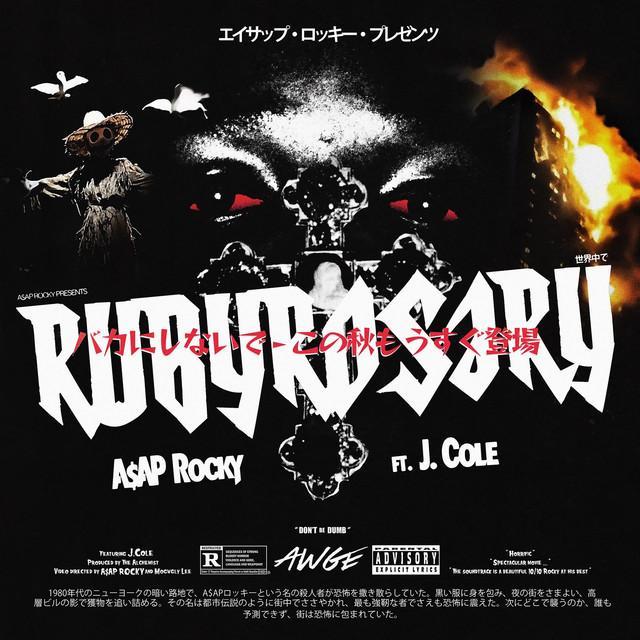
What 'Ruby Rosary' Reveals About Power
The meaning of Ruby Rosary A$AP Rocky, J. Cole starts with a strong contrast: sacred imagery mixed with wealth, danger, and ego. The title alone brings prayer beads to mind, but Rocky turns that image into jewelry, status, and armor. Instead of sounding peaceful, the song feels tense and watchful.
"Ruby Rosary" - A$AP Rocky ft. J. Cole
Know what I'm sayin', pretty nigga shit
Jiggy nigga shit, nigga, (uh) fly nigga shit, nigga
Loading lyrics...
Unable to load lyrics
We're unable to display the lyrics at this time. Please try again later.
Released on September 6, 2024, and produced by The Alchemist, the track was billed as a single tied to Rocky's planned album Don't Be Dumb, though reporting later noted it did not make the final album rollout. That context matters because the song feels like a statement piece: focused, moody, and built to remind listeners of Rocky's style and presence.
The Core Message Hiding in the Shine
At its center, the song is about survival after struggle. Rocky and Cole present success not as simple celebration, but as something earned through danger, hunger, and pressure. The jewels are not just decoration. They act like trophies, shields, and proof that they made it out.
When Rocky repeats Ruby stones on my rosary
, he fuses religion with luxury. Paraphrased, the idea is that faith, identity, and material success have become tangled together. The rosary usually suggests devotion, but here it is also a symbol of image and power.
Interpretation: That mix may be the song's main point. They are not claiming that wealth replaced belief entirely. Instead, they suggest that in rap and in public life, survival often gets displayed through objects people can see.
Rocky's Verses Turn Flexing Into Defense
Rocky's opening verses sound like boasts, but they keep sliding into threat and memory. He brags about style, ownership, and influence, yet those bars are surrounded by violence, police tension, and warnings to rivals. That is why the song feels darker than a normal luxury rap track.
He jokes, taunts, and name-drops, but he also frames himself as someone who had to become hard to last. A phrase like buried alive
turns fashion talk into survival talk. He is not only saying he is fresh. He is saying he has lived through pressure that could have ended him.
There are also lines many listeners read as shots at Drake, especially the references to family and ranking. Outlets including Billboard and other music publications noted that fan response quickly centered on possible subliminals. Factually, that debate shaped the song's reception. In meaning terms, though, the disses matter less than what they reveal: Rocky presents rap as a field where status must be defended at all times.
The Hook Feels Like a Spell
The chorus is simple, but it does a lot of work. Rocky keeps returning to color, stones, and fantasy-world imagery. He mentions home, escape, and Dorothy, which pulls The Wizard of Oz into the song's world.
click your feetyou're comin' home with me
Paraphrased, the hook offers comfort and control at once. Home sounds safe, but the invitation also feels possessive. That tension fits the whole track. Even rest comes with a shadow over it.
Why Dorothy Matters
The Dorothy references connect glamour with illusion. Yellow bricks, ruby shoes, and the idea of going home all point to fantasy, but Rocky twists them into a rap setting full of pressure. Interpretation: He may be suggesting that fame works like a magical land from the outside, while the people inside it know it is unstable.
J. Cole Shifts the Song Toward Fear of Losing It
Cole's verse changes the emotional center. Rocky sounds like he is guarding a throne. Cole sounds like he is thinking about what happens if the throne disappears.
He talks about money slowing down, comfort becoming addictive, and the need to keep writing so he never returns to lack. A phrase like lockin' the fuck back in
shows discipline, but also anxiety. He is not coasting. He is pushing himself because success still feels temporary.
That makes Cole's feature especially important. His verse adds vulnerability without weakening the song. He admits ambition, fear, and hunger in the same breath. In plain terms, he says that even millions do not erase the memory of having little.
Sound First, Then Meaning
The production helps explain why the record feels heavy. Reports described the beat as piano-led and downtempo, and that is exactly what gives the track its haunted pull. The Alchemist does not flood the song with drums or big hooks. He leaves space.
That space lets every bar land like a thought that has been sitting too long. The beat feels expensive, but also cold. It supports the idea that luxury here is not carefree joy. It is polished unease.
Rocky uses a loose, melodic glide, while Cole comes in with denser patterns. Critics noticed that contrast. One HotNewHipHop review praised Cole's feature as dense but catchy, and that is a fair short summary. The result is a song where Rocky sets the mood and Cole deepens the theme.
Symbols That Carry the Song
A few motifs keep returning:
- Rubies and rosaries: faith mixed with wealth
- Dorothy and yellow bricks: fantasy, escape, false safety
- Police references: pressure from the world outside rap
- Family language: loyalty, betrayal, and public feuds
- Travel and luxury cars: success that still never feels settled
Together, these images show why the meaning of Ruby Rosary A$AP Rocky, J. Cole is bigger than bragging. The song is about turning trauma into style, and style into protection.
Final Reading of 'Ruby Rosary'
The best way to hear "Ruby Rosary" is as a meditation on power that never feels secure. Rocky turns wealth into religion-like imagery, while Cole admits that comfort can vanish if they stop pushing. Their message is not just "look what they own." It is "look what it cost to get here."
That is why the song lingers. Beneath the gemstones and threats, it is really about fear, control, and the need to keep proving they belong.
Disclaimer: This interpretation is based on the lyrics, production, and publicly available reporting, and some meanings remain open to listener interpretation.
Sources
- https://en.wikipedia.org/wiki/Ruby_Rosary
- https://www.billboard.com/music/rb-hip-hop/asap-rocky-disses-drake-j-cole-ruby-rosary-fan-reactions-1235768986/
- https://www.rollingstone.com/music/music-news/aap-rocky-j-cole-new-song-ruby-rosary-1235096571/
- https://www.hotnewhiphop.com/840063-asap-rocky-and-j-cole-get-in-their-bag-on-new-single-ruby-rosary-stream








