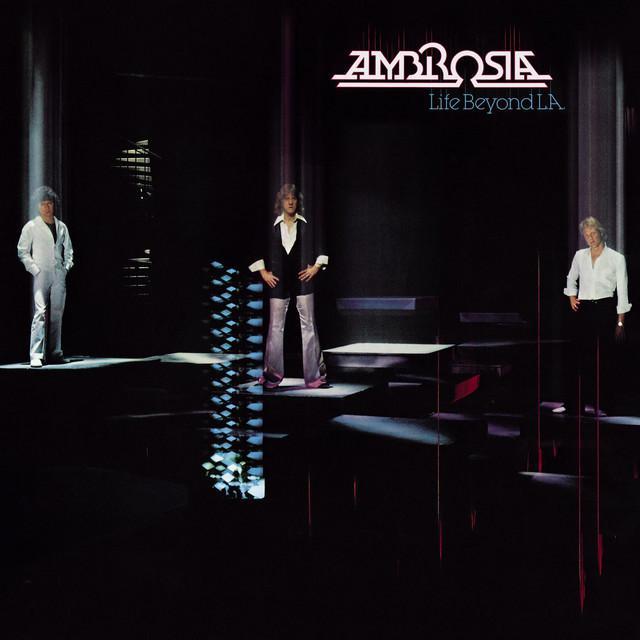
How Much I Feel by Ambrosia
The meaning of How Much I Feel Ambrosia comes down to a painful idea: some relationships end on paper long before they end in the heart. Ambrosia turns that idea into a smooth, emotional ballad about confusion, regret, and a love that lingers for years.
"How Much I Feel" - Ambrosia
Of you thinkin' that I have been untrue
But if you think that we'd be better parted
Loading lyrics...
Unable to load lyrics
We're unable to display the lyrics at this time. Please try again later.
Released in 1978 as the lead single from Life Beyond L.A., the song became one of the band's biggest hits, reaching No. 3 on the Billboard Hot 100 and marking a major commercial breakthrough for the group. It was written by David Pack and helped show how far Ambrosia had moved from its earlier progressive-rock identity into polished soft rock. Those facts are widely noted by sources including American Songwriter, Songfacts, and Wikipedia.
A Breakup Song That Refuses to Stay Simple
At first, the song sounds like a familiar plea from someone trying to save a damaged relationship. The narrator does not understand why the other person believes he was disloyal. He offers to leave if that is what she wants, even though it will hurt him.
That opening matters because it sets up a speaker who feels both wounded and passive. Instead of fighting aggressively, he says he will go if given a sign. In plain terms, the song starts with emotional surrender, not anger.
Then the chorus arrives with the repeated idea of that's how much I feel
. The phrase is simple, but it carries the whole song. He is not just saying he cares. He is trying to measure something that feels too large to explain.

Watch the official How Much I Feel
music video
How the Story Unfolds Across the Verses
The narrative moves in clear stages:
- He is confused by the distance between them.
- He remembers intimacy and wants it back.
- He admits reconciliation may not work.
- He reveals that time has passed, but the bond still haunts him.
That third step is especially important. In the bridge, the song briefly becomes more realistic. The pair try to stay balanced, then try to repair things, but may be better off as friends
. That line undercuts the huge emotion of the chorus.
This is why the song feels more mature than a standard love ballad. It does not promise reunion. It allows for the possibility that deep feeling and a successful relationship are not the same thing.
The Chorus Turns Love Into Obsession
The chorus repeats ideas like I need your touch
and I live for your loving
. Paraphrased, the narrator presents this relationship as central to his emotional life.
Interpretation: that intensity can be heard in two ways. On one level, it is romantic and vulnerable. On another, it hints at dependence. He does not describe a balanced partnership so much as a feeling that has taken over his inner world.
That is why the hook has lasted. It captures a universal experience: trying to explain feelings that are bigger than reason. Even listeners who have never lived this exact story can recognize that emotional excess.
The Final Verse Changes Everything
The song's most famous twist comes near the end. The narrator says he now has a wife and that the marriage has lasted for years. Then he admits that I still can see your face
during intimacy.
That moment transforms the whole track. Until then, it could be heard as a breakup plea. After that line, it becomes a portrait of unresolved longing that survived time, distance, and even marriage.
American Songwriter reads the song as a story of one overwhelming love that outlasts the relationship itself. That reading makes sense because the last verse shows memory operating almost like a ghost. The past is no longer active in his daily life, yet it still intrudes at the most private moments.
Interpretation: some listeners may hear this as tragic honesty. Others may hear it as emotional immaturity. The song leaves room for both.
Why Ambrosia's Sound Makes the Meaning Hit Harder
Part of the song's power comes from contrast. Ambrosia had roots in progressive rock, and American Songwriter notes that the band shifted toward a warmer soft-rock sound on Life Beyond L.A. Without that smoother approach, the song might have felt too stark.
Instead, the arrangement cushions the pain. David Pack's lead vocal is tender rather than explosive. The harmonies, supported by Joe Puerta and Burleigh Drummond, soften the edges of the confession. The instrumental polish also matters: Pack was credited with vocals, guitars, piano, synthesizers, and string arrangements, while Jimmie Haskell also contributed string arranging, according to Wikipedia.
All of that gives the track a glossy surface, but the emotional content underneath is messy. That tension is a big reason the record works. It sounds comforting even when the story is not.
Why the Song Became a Soft-Rock Classic
Songfacts and chart records note that How Much I Feel
peaked at No. 3 in the U.S. and became one of Ambrosia's signature songs. Its success makes sense because it blends several strengths at once:
- an easy, memorable chorus
- a dramatic lyrical twist
- rich harmony vocals
- a polished late-1970s soft-rock production style
It also sits in a space many listeners know well: between devotion and letting go. The narrator cannot fully return to the past, but he cannot fully leave it either.
The Lasting Meaning of How Much I Feel Ambrosia
The meaning of How Much I Feel Ambrosia is not just that someone misses an old lover. It is that emotional truth can survive after practical life has moved on. The song suggests that love can remain powerful even when the relationship itself is over, and that kind of feeling can be beautiful, unhealthy, or both at once.
That ambiguity is what keeps the song alive. It offers no clean lesson, only a polished confession from someone still living in the echo of what used to be.
Interpretation disclaimer: song meaning is never completely fixed. This reading is based on the lyrics, the recording, and available artist and publication context, but other listeners may hear it differently.








