
Why 'Peter Pan Was Right' Hits So Hard
The meaning of Peter Pan Was Right Anson Seabra comes down to a painful but familiar idea: growing older does not always feel like growth. Instead, it can feel like confusion, burnout, and the loss of wonder.
"Peter Pan Was Right" - Anson Seabra
Growing up's a waste of time
So I think I'll fly away
Loading lyrics...
Unable to load lyrics
We're unable to display the lyrics at this time. Please try again later.
Anson Seabra builds the song around the fantasy of Peter Pan, but they use that story to talk about very real adult disappointment. Rather than praising childhood forever, the song shows what happens when someone expected life to open up and instead feels trapped by it.
A Fairy Tale Turned Into Adult Exhaustion
At its core, the song is about disillusionment. The narrator looks back at childhood stories and compares them with the reality of being older, tired, and unsure. When they sing Peter Pan was right
, they are not making a simple claim about never growing up. They are expressing frustration with how heavy adulthood feels.
That is why the line growing up's a waste of time
lands so strongly. It is exaggerated on purpose. The song captures a moment when someone feels so disappointed that maturity itself seems like a bad deal.
Interpretation: The chorus is less a literal belief than an emotional outburst. In calmer moments, they might not truly reject growing up. But in the song’s world, that feeling is real.
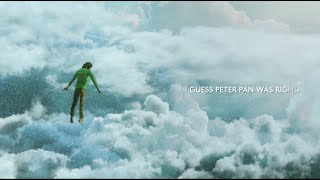
Watch the official Peter Pan Was Right
music video
The Story They Tell From Verse to Chorus
The verses sketch a clear emotional timeline:
- They feel stuck in a small-town life that no longer fits.
- They sit alone at night, left with their thoughts and sadness.
- They remember childhood stories that once promised adventure.
- They choose fantasy language as a way to imagine escape.
One of the sharpest details is make friends with my shadow
. That image turns loneliness into something almost theatrical. It echoes Peter Pan’s famous shadow, but here it feels sadder. Instead of playful magic, the shadow becomes a stand-in for isolation.
Later, the line days feel like a blur now
shifts the song from nostalgia to burnout. This is not only about missing childhood. It is also about adult routine wearing someone down until time loses shape.
Why Peter Pan Is the Perfect Symbol
Peter Pan works so well here because the character already represents eternal youth, escape, and refusal of adult rules. The song borrows those ideas and flips them. Instead of a charming adventure, Neverland becomes a coping fantasy.
The references to the second star
and flying toward morning bring in familiar images from the Peter Pan myth. They suggest hope, but also distance. These are not places the narrator can really reach. That gap matters.
Interpretation: The song may be saying that childhood stories gave them a language for hope, but adulthood taught them those promises were incomplete. In that reading, Peter Pan is not the answer. He is the symbol they cling to when real life feels unbearable.
The Chorus: Escape as a Form of Self-Protection
The chorus repeats the wish to leave, rise above, and head somewhere brighter. On the surface, it sounds freeing. Underneath, it sounds desperate.
That tension is what makes the hook work. The narrator says they will be fine, but the rest of the song suggests they are trying to convince themselves. Their belief in escape feels emotional, not practical.
There is one short section that reveals this most clearly:
And I don't care
if I never land
Paraphrased, the idea is that any distant dream feels better than the life they are currently living. That is not just adventure-talk. It is the voice of someone who would rather keep drifting in hope than stay where they are.
How the Sound Supports the Lyrics
Anson Seabra is known for emotionally direct piano-pop and soft, intimate vocals, a style reflected across their catalog and artist profiles such as Spotify and Apple Music. In this song, the production stays gentle and spacious, giving the lyrics room to feel personal.
The writing credit provided here lists Anson Long-Seabra and Jeremy Fedryk, and the song’s structure reflects that clean pop-writing approach: quiet verses, a soaring chorus, and a repeated hook built for emotional release. The arrangement does not overpower the message. Instead, it mirrors the song’s central conflict: a small, lonely interior life reaching toward something huge.
The vocal delivery matters too. They sing with a fragile steadiness rather than anger. That choice keeps the song from sounding rebellious. It sounds wounded.
Why Listeners See Themselves in It
Many listeners connect with the song because it speaks to a very current kind of exhaustion. It captures the strange feeling of being technically grown up while still feeling lost, young, and unprepared.
The lyric about still feeling eighteen but burned out gives that contradiction a simple form. The narrator is old enough to know childhood is gone, but not settled enough to feel secure in adult life. That in-between space is where the song lives.
A Final Reading of the Meaning
So, what is the meaning of Peter Pan Was Right Anson Seabra? It is a song about grieving the promise of growing up. It uses fairy-tale imagery to describe burnout, loneliness, and the wish to escape into a version of life that still feels magical.
Interpretation: The song does not truly argue against maturity. It argues against disappointment. Peter Pan becomes a symbol for the part of them that still wants wonder, freedom, and a future that feels lighter than the present.
That is why the song resonates. It knows fantasy is not real, but it also knows why people need it.
Disclaimer: This interpretation is based on the lyrics, songwriting context, and musical presentation. As with any song, listeners may hear meanings that differ from the artist’s exact intent.









