A Skeleton In The Closet by Anthrax
Why This Song Hits So Hard
The meaning of A Skeleton In The Closet Anthrax starts with a grim story: evil does not stay buried. Anthrax built the song around Stephen King's Apt Pupil, and the lyrics trace how a teenager becomes obsessed with an old man's Nazi past. What begins as curiosity turns into moral collapse.
"A Skeleton In The Closet" - Anthrax
A sick old man, and who would guess
He was once S.S.
Loading lyrics...
Unable to load lyrics
We're unable to display the lyrics at this time. Please try again later.
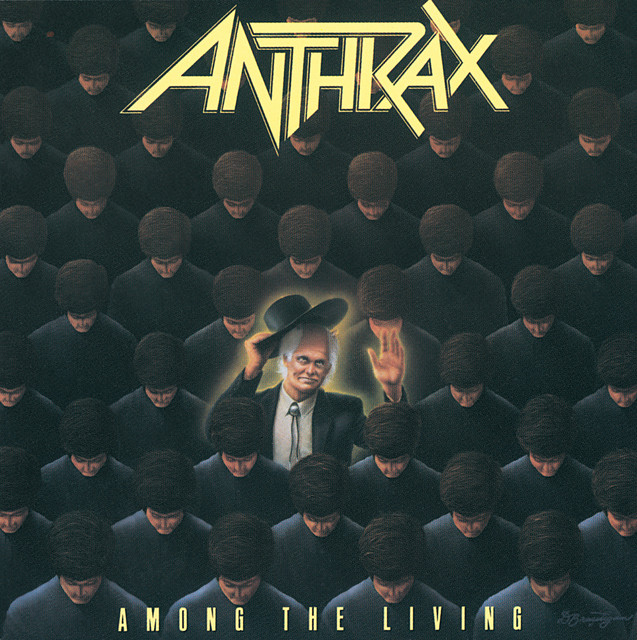
Factually, the song appears on Among the Living (1987), Anthrax's third studio album, and multiple sources note that it was directly inspired by Apt Pupil. The album was produced by Anthrax and Eddie Kramer, and it became the band's breakthrough record, later earning Gold certification in the United States. Those details are documented by Songfacts and Wikipedia's album entry.

Watch the official A Skeleton In The Closet
music video
The Core Story Beneath the Riffs
A hidden past becomes the spark
The song centers on a boy confronting an elderly man with a secret history. Early lines point to extortion and a buried identity, including the shocking phrase He was once S.S.
Anthrax uses that reveal to set up the song's main tension: the past is not dead, and secrecy gives it power.
From there, the lyrics shift from exposure to contamination. The old man's crimes are not just historical facts. In the song's world, they become a poison that gets into the boy's imagination. The repeated demand to Spill your guts old man
sounds less like justice than unhealthy fascination.
How the Chorus Frames the Meaning
The chorus uses the image Any skeletons
and in the closet
to turn one man's secret into a larger symbol. On the surface, it refers to hidden war crimes. More deeply, it suggests that every buried sin keeps exerting pressure until it bursts out.
Interpretation: This is why the chorus matters more than a simple plot recap. It broadens the story from one Nazi's secret to a warning about concealed evil in society. The song is not interested only in exposing guilt. It is interested in what happens when guilt festers and infects someone else.
The Descent of the Boy in the Lyrics
From witness to participant
One of the most disturbing moves in the song is how the young character changes. Anthrax hints that he is no longer only listening; he is becoming excited by violence. The lyric Nightmares turn into wet dreams
marks that change in brutally blunt language.
That line is meant to shock, but it also serves the song's central theme. The boy's moral boundaries collapse. He stops reacting with horror and starts reacting with desire.
The ending is chaos, not triumph
The final section pushes the story into open violence. Anthrax describes a rifle attack and a long police standoff, ending with the detail that It took five hours
to stop him. Songfacts summarizes the same plot point from Apt Pupil, noting that the boy goes to a highway and begins shooting people before police bring him down.
Interpretation: The ending shows that hidden evil rarely stays hidden. It spills outward. The song's violence is not celebratory; it is the ugly final stage of corruption.
Stephen King, Anthrax, and the Song's Context
Anthrax were open fans of Stephen King, and Among the Living contains more than one King-inspired track. Research on the album notes that label lawyers wanted permission for the references, and the band's camp learned that King was himself a fan. That context matters because this song is not a vague borrowing. It is a deliberate metal adaptation of a specific novella, supported by Songfacts and Wikipedia.
The wider album context matters too. Among the Living was dedicated to Metallica bassist Cliff Burton, who died in 1986. Scott Ian later said the album sounded so angry because the band had lost a friend. That grief does not change the plot of this track, but it helps explain the record's harsh emotional edge.
How the Sound Carries the Message
Fast thrash as moral panic
Musically, the song delivers its meaning through speed, precision, and pressure. The guitars move with a clipped, aggressive attack, and the drums keep the story feeling unstable and urgent. Joey Belladonna's vocal phrasing sounds like accusation one second and panic the next.
Production also plays a role. Eddie Kramer recorded the album, but reports from the sessions say the band pushed for a cleaner, drier sound over heavier reverb. That decision fits this song well. A dry mix makes the violence feel immediate, almost report-like, instead of dreamy or distant.
Why that matters
If the production had been bigger and more atmospheric, the song might have felt like horror fantasy. Instead, it feels sharp and concrete. That makes the meaning of A Skeleton In The Closet Anthrax more unsettling: evil is not framed as myth. It is framed as human behavior.
A Bigger Reading of the Song
Interpretation: Beyond Apt Pupil, the song can be heard as a warning about the seduction of extremism. The old man's crimes are monstrous, but the boy's fascination is what gives those ideas a future. Anthrax suggests that evil survives when people stop treating it as evil and start treating it as thrilling knowledge.
That connects with the album's broader interest in social tension, violence, and corruption. Even without knowing the novella, listeners can hear a song about secrets, obsession, and the cost of letting hatred hide in plain sight.
Final Take
At its core, "A Skeleton in the Closet" is about buried guilt becoming contagious. Anthrax uses the story of Apt Pupil to show how curiosity can rot into obsession, and how evil can move from one generation to another.
That is why the song still lands. It is fast and brutal, but its real target is not just one villain. It is the dangerous idea that some secrets can be handled safely. They cannot.
Disclaimer: This article offers informed interpretation based on the song, documented background, and publicly available sources. Meaning can remain open to listener perspective.








