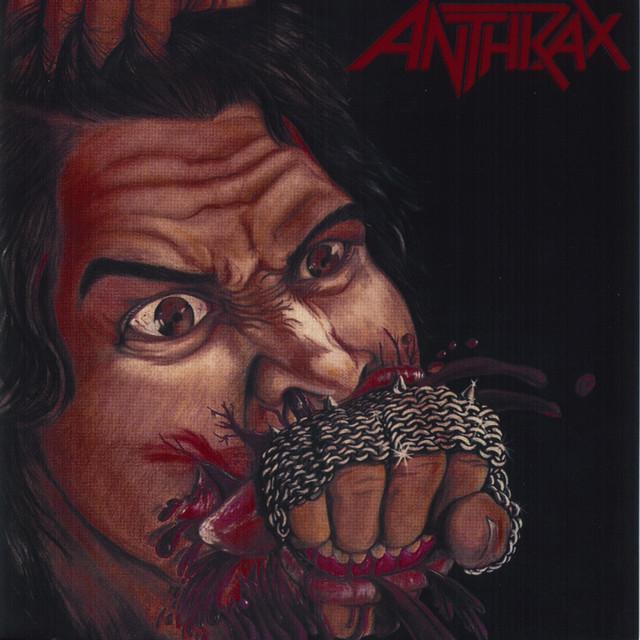
Deathrider by Anthrax
The meaning of Deathrider Anthrax comes down to one thrilling idea: terror made mythical, then set loose at full speed.
"Deathrider" - Anthrax
Provided by LyricFindRiding hard, high in the saddle
Winged steed of unwearing flight
Sweeping through air just like fireLoading...Loading lyrics...
Unable to load lyrics
We're unable to display the lyrics at this time. Please try again later.
Why This Song Hits Like a Charging Beast
Anthrax released "Deathrider" on their 1984 debut, Fistful of Metal, the only full Anthrax studio album with vocalist Neil Turbin. That places the song in the band’s earliest phase, when they were helping define American thrash by mixing speed metal force with darker, comic-book-sized imagery. Those basic release facts are widely documented in band histories and Neil Turbin’s early-career credits.
For listeners asking about the meaning of Deathrider Anthrax, the clearest answer is this: the song imagines death as a mounted invader, a supernatural war figure who sweeps in and crushes everything below. It is not subtle, and that is the point. The lyrics build fear through motion, noise, and violence, making the rider feel less like a person and more like a disaster.
Watch the official Deathrider
music video
The Core Meaning: Death as Momentum
At the center of the track is an image of unstoppable movement. The rider is always advancing, never pausing, and the language keeps them in motion. Early lines describe someone high in the saddle
on a flying beast, and that image matters because it turns death into something active and elevated, almost mythic.
Interpretation: They are not just singing about killing. They are singing about the feeling that doom is already on its way and cannot be negotiated with. The repeated threat of approach is what gives the song its tension.
That fear sharpens when the lyric moves from description to warning. Phrases like Hear the screams
and You better hide
pull the listener into the scene. Instead of watching from a distance, they are suddenly in the path of the attack.
A Simple Story Told in Heavy-Metal Images
The song works because its narrative is easy to follow. It moves in a straight line:
- The rider appears in dramatic form.
- Panic spreads as people realize what is coming.
- The force arrives with violence and domination.
- Destruction becomes total.
That structure is basic, but very effective. The lyrics use horses, fire, steel, and thunder as symbols of war power. When the song describes thunderous pound
, it turns hoofbeats into the sound of invasion itself.
The Rider as Symbol, Not Character
There is very little human detail about the figure. The rider has no personal history, motive, or emotional conflict. Instead, the song piles on titles and powers. They are connected to destruction, immortality, and slaughter.
Interpretation: This makes the Deathrider feel like an embodiment of apocalypse rather than a villain from a normal story. In metal, that bigger-than-life scale often matters more than realism.
Fear, Power, and the Pleasure of Excess
Part of the meaning of Deathrider Anthrax is the way it turns fear into spectacle. The song is violent, but it is also theatrical. It wants listeners to feel the rush of the charge, not just the horror of the damage.
That is why lines such as We ride with death
feel important. The voice is no longer only describing the rider; it starts sounding allied with that force. This creates a dangerous thrill. The song blurs the line between witness and participant.
Shoot the guns
You're gonna die
Those short commands and threats are blunt, almost like shouted scenes from a battle film. They help the song feel immediate and physical rather than poetic in a delicate sense.
How the Sound Carries the Meaning
The music is a huge part of why the song works. Early Anthrax built songs around fast tempos, tight riffing, and a raw attack that linked classic heavy metal to the emerging thrash style. On this track, the guitars and drums push forward almost nonstop, mirroring the rider’s charge.
Neil Turbin’s vocal style also matters. He was known for a high, piercing metal scream, and reports on his range often note how extreme that early delivery could be. On Fistful of Metal, including songs like "Deathrider," that voice adds a wild, airborne quality. Instead of sounding grounded and gritty, he sounds sharp and elevated, which fits the image of a creature sweeping through the sky.
Interpretation: If the lyrics present death as a mounted invader, the production makes it feel fast enough to outrun thought itself.
Early Anthrax Context Matters
Because this song comes from Fistful of Metal, it captures an early version of Anthrax before their later, more humorous or socially observant writing became central to their identity. In 1984, they were still leaning hard into speed, menace, and fantasy violence.
The credited writers—Charlie Benante, Dan Lilker, Dan Spitz, Neil Turbin, and Scott Ian Rosenfeld—reflect that formative band chemistry. The track sounds like a young group trying to hit as hard as possible, using vivid images instead of emotional introspection.
That also explains why the song has endured with fans of the debut era. It distills a raw blueprint: velocity, danger, and memorable imagery.
Final Take: What "Deathrider" Really Means
In the end, the meaning of Deathrider Anthrax is less about plot than presence. The song gives listeners a vision of death as a conqueror descending from above, then supports that vision with speed-metal force and vivid battle imagery.
Interpretation: They are using fantasy violence to express a deeper feeling—what it sounds like when destruction becomes inevitable and thrilling at the same time.
That mix of fear and excitement is why the track still stands out in early thrash. It does not ask for sympathy. It demands adrenaline.
Disclaimer: This interpretation is based on the lyrics, the song’s musical presentation, and documented early Anthrax context. As with most songs, different listeners may hear different meanings.







