Why Anthrax Turned Preachers Into Punchlines
The meaning of Make Me Laugh Anthrax comes down to one blunt idea: the band saw televangelist greed as absurd, cruel, and worth exposing with sarcasm as much as rage.
"Make Me Laugh" - Anthrax
Provided by LyricFindSpread the word
Through me God is heard
You're making me laughLoading...Loading lyrics...
Unable to load lyrics
We're unable to display the lyrics at this time. Please try again later.
The Song’s Real Target Isn’t Faith
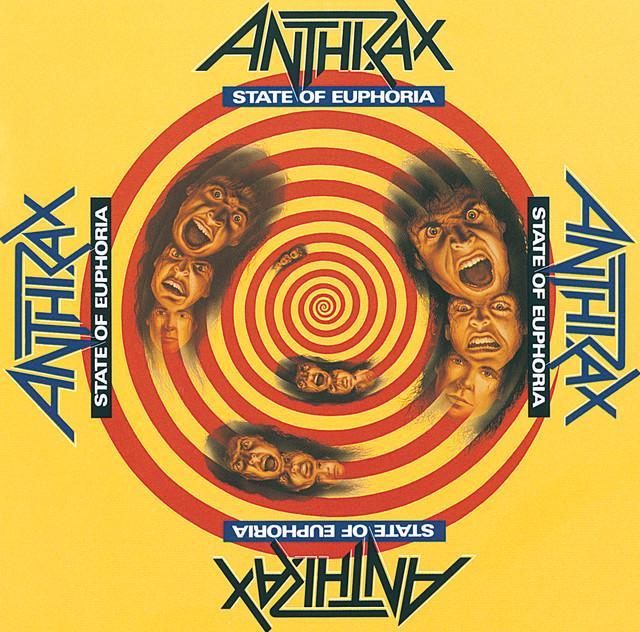
Anthrax’s “Make Me Laugh” is not a broad attack on religion. It is a direct attack on religious hypocrisy, especially the kind that turns belief into business. Released on State of Euphoria in 1988, the song arrived during a period when American televangelists were under heavy public scrutiny, and the band clearly leaned into that moment.
The lyrics frame these preachers as performers who claim access to God while asking for cash, status, and luxury. That is why the hook lands so hard. When the singer spits you’re making me laugh
, the line is not carefree or playful. It is disgust disguised as mockery.
According to Songfacts, drummer Charlie Benante said the band found these TV ministers “ridiculous,” but also deeply harmful because lonely people believed them. That context matters. The song is angry, but its anger is aimed at exploitation.
Watch the official Make Me Laugh
music video
How the Verses Build the Satire
The verses work by piling up outrageous claims and material demands. The repeated phrase God say’s
turns into a device of ridicule. Each new command sounds less spiritual and more selfish, as if divine speech has been reduced to a shopping list.
That is the core joke and the core accusation. The song suggests that corrupt preachers use God’s name to justify anything they want, from money to pleasure to status. One especially sharp phrase, Jesus saves
, is immediately twisted into a comment about payment, making the point that salvation has been commercialized.
Interpretation: Anthrax are not just mocking individual scandals. They are showing how religious language can be used as cover. In the song’s world, holiness becomes branding.
The Late-’80s Scandal Background
The meaning of Make Me Laugh Anthrax becomes clearer when placed in its 1988 setting. State of Euphoria, Anthrax’s fourth studio album, was released on September 19, 1988, and later reached No. 30 on the Billboard 200, according to Wikipedia’s album entry. The same source notes that “Make Me Laugh” specifically targets televangelism and references details associated with the Bakker scandal era, including luxury excesses.
That background explains why the song mentions flashy possessions and absurd comforts. These are not random details. They reflect a cultural moment when some famous ministers were accused of living lavishly while presenting themselves as moral authorities.
Benante told Melody Maker, as quoted by Songfacts, that the sad part was not just the hypocrisy itself, but the way these figures pulled in “the lost and lonely.” That quote helps separate the song’s two emotional layers: ridicule on the surface, concern underneath.
Why the Chorus Hits So Hard
At the center of the song is a repeated dismissal: tell me your killin’ joke
. Anthrax treat the evangelist’s message like a routine, not a revelation. That choice strips away the preacher’s authority.
The song also keeps returning to end your hoax
, which states the accusation plainly. This is no longer just satire. It becomes a demand for exposure.
you’re making me laugh
tell me your killin’ joke
evangelist
end your hoax
This is the article’s only multi-line quote, and even here, the meaning is clear through paraphrase: Anthrax reduce the preacher’s performance to a joke and call for the fraud to stop.
How the Music Carries the Message
Musically, “Make Me Laugh” uses thrash metal’s speed and sharpness to make the satire feel aggressive rather than playful. State of Euphoria was recorded in Miami in 1988, and album credits commonly list Anthrax and Mark Dodson as producers, with Alex Perialas also involved in production and engineering, per Wikipedia.
The arrangement matters. Fast riffing, hard-edged drumming, and Joey Belladonna’s cutting vocal delivery make the song feel like a public accusation. There is no softness in the attack. Even when the lyrics are funny, the band sound furious.
That blend is important to the meaning of Make Me Laugh Anthrax. The music says this is not harmless comedy. It is a protest song wearing a sneer.
A Clash With Moral Policing
There is also a second layer in the song’s message. Benante’s comments suggest the band were frustrated by how heavy metal was often blamed for corrupting youth, while televangelists escaped scrutiny for manipulation and greed. In that light, “Make Me Laugh” becomes a counterattack.
Interpretation: The song is not only about preacher scandals. It is also about who gets called “immoral” in American culture. Anthrax imply that metal bands were treated like villains while actual mind games and money schemes were happening on television.
That tension gives the song extra bite. It is not just punching up at hypocrisy. It is defending metal’s right to speak back.
Final Take on the Meaning
The meaning of Make Me Laugh Anthrax is straightforward but still powerful: they mock televangelists because they see them as frauds who exploit faith for profit. The laughter in the title is not joy. It is a weapon.
What keeps the song relevant is that its target is larger than one scandal or one decade. Any time authority hides behind moral language while chasing money, the song still makes sense.
Disclaimer: This interpretation is based on the song’s lyrics, documented band comments, and historical context. As with all art, listeners may hear additional meanings.







