Why Anthrax’s Sharpest Putdown Still Hits
The meaning of Out of Sight, Out of Mind Anthrax comes through fast: this is a sneering, high-speed takedown of fake authority, image-first success, and people who borrow from others while acting original. Rather than telling a story with characters, they build a verbal attack. The target seems to be anyone who coasts on visibility, steals ideas, and mistakes attention for worth.
"Out of Sight, Out of Mind" - Anthrax
We can't hear you anyway
Your unconscious, wake up
Loading lyrics...
Unable to load lyrics
We're unable to display the lyrics at this time. Please try again later.
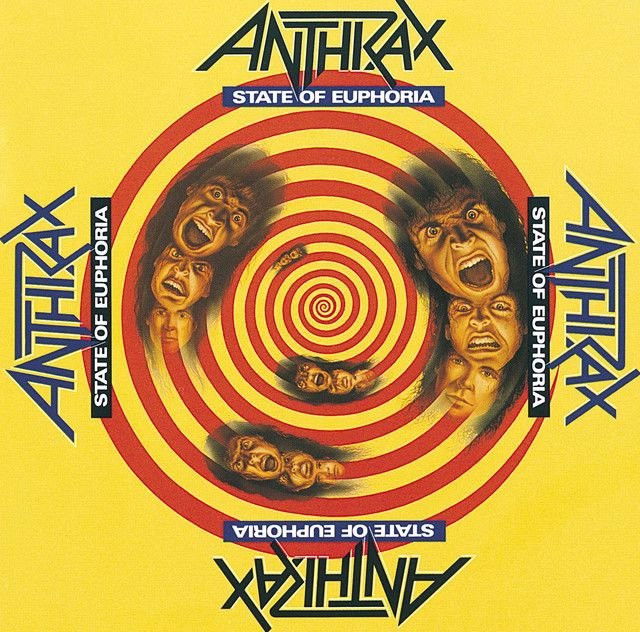
Anthrax placed the song on State of Euphoria, their fourth studio album, released in 1988. That record followed the breakthrough of Among the Living and reached No. 30 on the Billboard 200, later going Gold in the United States, according to the album data summarized by Wikipedia’s entry on State of Euphoria. Even on an album with mixed critical reception, this track stands out for how clearly it channels disgust.
A Thrash Song About Fraud, Not Confusion
At the simplest level, the song attacks a person who has nothing real to offer. Early lines dismiss them as empty and unaware, pushing them to wake up and face reality. When the lyric says smell the coffee
, the idea is not gentle advice. It is a sarcastic shove: stop drifting through life and pretending not to notice what is obvious.
That target is also accused of ignorance. The phrase Ignorance is bliss
appears not as praise, but as a cutting insult. They are being described as someone comfortable with not knowing, perhaps because ignorance helps them keep their position.
Interpretation: the speaker sounds less like a hurt victim and more like a witness to a rigged system. They are not begging to be heard. They are exposing a fraud.
Watch the official Out of Sight, Out of Mind
music video
The Real Sting Hides in the Chorus
The chorus gives the song its main idea. When Anthrax repeat Out of sight, out of mind
, they turn a common saying into a statement about replacement and erasure. If people do not see the original source, they forget it. That makes it easy for a copycat to step in and claim ownership.
The next idea sharpens the attack: Take a riff, take a line
. In plain terms, the song accuses its target of lifting creative material, then rebranding it as their own. This is why the refrain feels bigger than a personal insult. It points to a culture where visibility beats authenticity.
Why “All you need is a face” matters
The most memorable jab may be all you need is a face
. Anthrax reduce the whole scam to appearance. In this worldview, talent, effort, and originality matter less than looking marketable.
That line can apply to the music industry, but also to celebrity culture in general. The song came out in the late 1980s, when image-driven promotion was huge across MTV-era rock and pop. Interpretation: Anthrax seem to be pushing back against a system where presentation can swallow substance.
Verse by Verse, the Song Builds Its Case
The verses move like a list of charges:
- the person is clueless
- the person is arrogant
- the person steals from others
- the person survives through image, not ability
Later, the lyrics ask what gives this person the right to take prior work, rename it, and claim it. That is the moral center of the song. It is not only saying the target is annoying. It is saying they are illegitimate.
Another key line, you’re not blind
, makes the accusation even harsher. The problem is not innocence. The problem is willful denial. They can see what they are doing, but choose not to admit it.
How the Sound Carries the Message
The music helps sell the meaning of Out of Sight, Out of Mind as much as the words do. State of Euphoria is a thrash metal album, with Anthrax and Mark Dodson credited as producers and Alex Perialas involved in engineering and associate production, as listed in the album credits on Wikipedia. That production team gives the song a tight, punchy attack rather than a murky wall of noise.
Fast riffing and blunt rhythmic accents make the accusations feel physical. The chorus lands like a chant, almost like a public calling-out. Joey Belladonna’s vocal delivery adds bite without losing clarity, while the guitars keep the pressure on.
Interpretation: this matters because the song is about exposure. A softer arrangement would weaken the point. Thrash gives the complaint force, speed, and contempt.
Where It Fits on State of Euphoria
Anthrax often mixed humor, social criticism, and pop-culture references. On State of Euphoria, other songs tackled subjects like televangelism and homelessness, according to the album background summarized by Wikipedia. That makes this track feel consistent with the band’s broader interest in hypocrisy and abuse of power.
It also explains why the song is so direct. Anthrax were not writing in a vague poetic haze here. They were using exaggeration, mockery, and confrontation to make their point fast.
One More Layer: Is It Only About Music?
The strongest reading is that the song criticizes people who steal style and succeed through image. But it may not be limited to musicians. The language is broad enough to fit bosses, celebrities, media personalities, or any public figure who rises by repackaging other people’s work.
That is part of why the song still feels relevant. Every era has its version of the same problem: people rewarded for being visible, not for being genuine.
Final Take on the Meaning
The meaning of Out of Sight, Out of Mind Anthrax is a furious rejection of fake people and borrowed identity. Anthrax present a world where image can erase truth, and where the loudest fraud can replace the real creator if no one is paying attention.
Their answer is not subtle. They name the scam, mock it, and hit it with a riff strong enough to leave a bruise.
Disclaimer: This article offers informed interpretation based on the lyrics, the song’s musical style, and available album context. As with most songs, listeners may reasonably hear more than one meaning.








