Red Right Hand by Arctic Monkeys
A cover built around menace
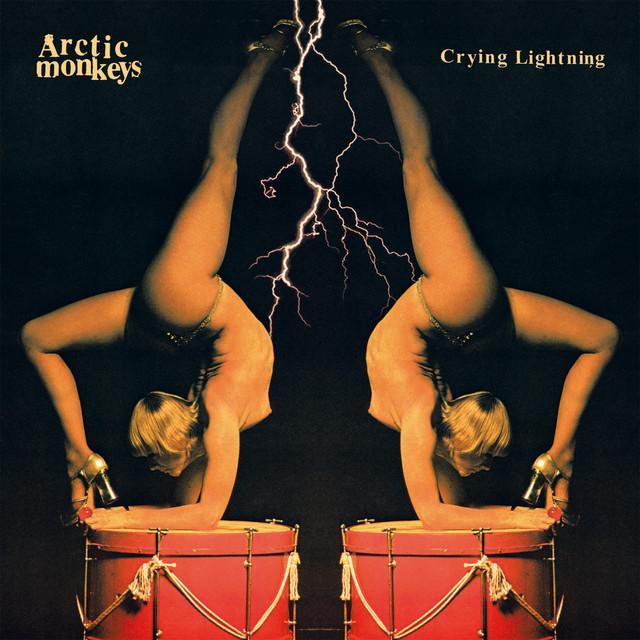
The meaning of Red Right Hand Arctic Monkeys starts with an important fact: this is a cover, not an original Arctic Monkeys song. The track was written by Nick Cave, Mick Harvey, and Thomas Wydler, and first released by Nick Cave and the Bad Seeds in 1994 on Let Love In. Arctic Monkeys later recorded their version as a B-side to “Crying Lightning,” and it also appeared on the Japanese edition of Humbug.
"Red Right Hand" - Arctic Monkeys
Where the viaduct looms like a bird of doom as it shifts and cracks
Where secrets lie in the border fires in the humming wires
Loading lyrics...
Unable to load lyrics
We're unable to display the lyrics at this time. Please try again later.
That context matters because Arctic Monkeys are stepping into a song that already carries a heavy myth. The original is famous from Scream and Peaky Blinders, and its title comes from John Milton’s Paradise Lost, where “red right hand” suggests divine punishment and violent power. So before Arctic Monkeys even play a note, the song arrives with a history of dread, crime, and judgment.
Watch the official Red Right Hand
music video
What the song is really about
At its core, the song describes a powerful figure who seems to offer help, but really represents control. He moves through a damaged town, knows people’s weaknesses, and turns need into dependence. The lyrics present him as both tempting and terrifying.
This is why the song feels bigger than a simple story about one man. He could be a crime boss, a corrupt leader, a false savior, or even a symbol of evil itself. The repeated image of a red right hand
turns him into a force, not just a person.
Interpretation: In the Arctic Monkeys version, that ambiguity stays intact. They do not try to modernize the lyric. Instead, they lean into its timeless warning: beware of the person who promises everything, especially when they seem to know exactly what you lack.
How the lyrics build that threat
The opening creates a map of an industrial edge of town, with tracks, mills, wires, and a looming structure overhead. It feels deserted and broken, like a place where normal rules no longer hold. When the song introduces a tall handsome man
, it does so like a folk tale entering a real neighborhood.
That contrast is key. He is attractive, stylish, and calm, yet everything around him feels rotten. The lyric’s trick is to make danger sound seductive.
Later, the song explains his power through offers. If people are broke, ashamed, or desperate, he can fix it. The point is not generosity. The point is access. He gives people what they want so he can own them.
He’s a god, he’s a man
he’s a ghost, he’s a guru
Those lines matter because they show how impossible he is to pin down. He is political, spiritual, criminal, and supernatural all at once. He can be whatever people need him to be.
A warning hidden inside the hook
The song’s narrator does not sound neutral. They sound like someone issuing a warning. Even when the lyrics describe the figure’s charm, the tone says not to trust it. Phrases like not what he seems
and the warning to turn it off
suggest a manipulator who reaches into media, dreams, and thought itself.
This expands the meaning beyond one street-corner villain. The song becomes a study of influence. The “red right hand” figure can appear in politics, religion, entertainment, or organized crime—anywhere charisma hides exploitation.
Interpretation: One strong reading is that the song is about systems of power, not just a single bad man. The listener is called only a tiny part of a larger plan, which makes the threat feel modern. It is about how easily people get folded into structures that promise rescue while taking freedom.
Why Arctic Monkeys were a smart fit
Arctic Monkeys recorded the song during the Humbug era, when their sound had grown darker, slower, and more desert-rock influenced. That period, shaped in part by work with Josh Homme, moved them away from the quick chatter of their debut and toward something moodier and heavier. Their take on “Red Right Hand” fits that shift almost perfectly.
They were also already good at portraying shady nightlife, swagger, and menace. Even though this song is more mythic than their usual storytelling, Alex Turner’s delivery suits the part. He does not oversing it. He sounds controlled, cool, and slightly detached, which makes the threat creepier.
How the sound carries the meaning
Production is crucial here. Nick Cave’s original uses sparse, eerie arrangement and a stalking groove. Arctic Monkeys keep that sense of space, but their version feels more rock-forward. The guitars are tense rather than flashy, and the rhythm section keeps everything moving like a slow approach.
There is no warm release in the performance. The beat does not celebrate the figure; it tracks him. That makes the listener feel watched rather than entertained.
The vocal approach matters too. Turner delivers the lines with restraint, which avoids turning the song into parody. A more dramatic performance could make the villain seem cartoonish. Instead, Arctic Monkeys make him sound believable, like the kind of operator who never needs to raise his voice.
Why the song still lasts
Part of the reason this cover works is that the song was already culturally durable. According to the song’s Wikipedia entry, “Red Right Hand” became one of Nick Cave and the Bad Seeds’ signature tracks and later gained another life through Peaky Blinders, where Arctic Monkeys’ version was also featured.
But popularity alone does not explain its staying power. The song lasts because its villain is never locked to one era. He can be a mobster, a politician, a cult leader, or any seductive power that thrives on fear and desire.
That is the real meaning of Red Right Hand Arctic Monkeys: they perform a song about the dark appeal of power, and they do it in a way that keeps the danger intimate. Their version does not just describe a monster. It shows how monsters win people over.
Final takeaway
Arctic Monkeys’ “Red Right Hand” is about seduction, control, and the fear of giving yourself over to someone who promises rescue. The lyrics paint a mysterious ruler of a crumbling world, while the band’s shadowy performance keeps that figure human enough to feel real.
In that sense, the song is not only about evil arriving from outside. It is about how easily people can welcome it in.
Disclaimer: This article offers a good-faith interpretation based on the lyrics, recording context, and documented history of the song and cover. Like all song analysis, some meanings remain open to listener interpretation.







