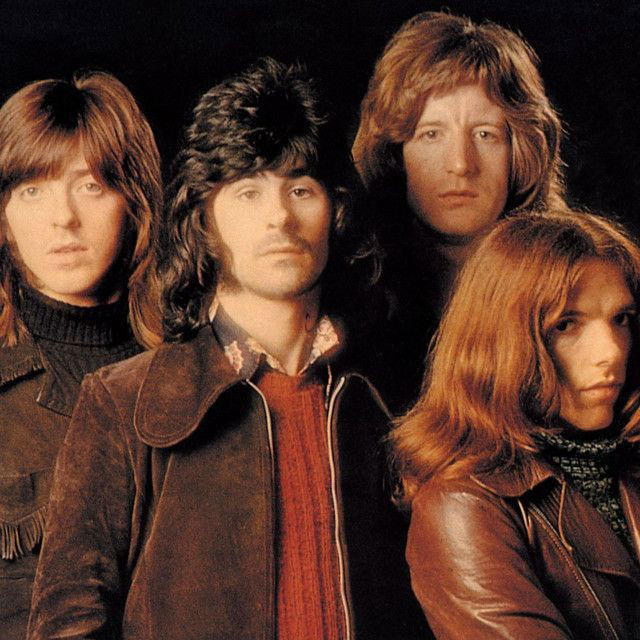
Money by Badfinger
Badfinger’s "Money" is a short, sharp song with a big complaint at its center: money promises freedom, but it often leaves people hurt, bitter, and alone. For anyone searching for the meaning of Money Badfinger, the clearest answer is that the song treats money as a corrosive power. It can break relationships, twist behavior, and wear down a person’s spirit.
"Money" - Badfinger
Fools have a way of making me crazy
Money buy you freedom
Loading lyrics...
Unable to load lyrics
We're unable to display the lyrics at this time. Please try again later.
A Small Song With a Hard Sting
Written by Tom Evans, the track is built from very plain language. That simplicity matters. Instead of hiding behind dense images, the song says its anger out loud. The opening idea, Money stole my lady
, frames money almost like a thief. In plain terms, the singer feels that love has been taken away by greed, status, or the lure of a better deal.
That does not have to mean literal cash changed hands. Interpretation: it can also mean that money changed someone’s values. In that reading, the lost relationship is not only romantic. It is also about trust collapsing when material wants become more important than loyalty.

Watch the official Money
music video
The Real Meaning of "Money" by Badfinger
At the heart of the song is a contradiction. One line says Money buy you freedom
, but the song does not sound convinced. Right after that, the mood turns back toward frustration and emotional wear. The idea is clear: money may offer choices, but it does not guarantee happiness, wisdom, or stability.
That tension is what gives the song its bite. Badfinger were a rock band with deep ties to Apple Records and the Beatles orbit, and they became one of the key acts in early power pop, scoring major hits like "Come and Get It," "No Matter What," and "Day After Day" according to widely cited band histories.[1] Against that larger history, a song called "Money" carries extra weight.
How the Chorus Turns Anger Into Weariness
The chorus is where the song expands from one complaint into a worldview. Instead of staying locked on a single broken romance, it says people grow older and emotionally colder. That shift is important. The song becomes less about one event and more about the repeated damage caused by disappointment.
So we grow a little older
With another tale to tell
So we grow a little colder
With another tale to tell
This is the article’s only extended lyric quote, and it shows the emotional center of the song. The point is not drama for its own sake. It is slow hardening. Every new letdown becomes another tale to tell
, which suggests a cycle: people get burned, tell the story, then carry the scar into the next chapter.
Fools, Rules, and a Trapped Narrator
Two other ideas keep repeating: making me crazy
and the complaint about rules making the speaker lazy. Together, they paint a narrator who feels boxed in from every side. Fools represent bad people, shallow thinking, or reckless choices. Rules represent systems that drain energy instead of helping.
Interpretation: the song may be attacking both personal and social pressure at once. In one sense, it is about a lover lost to money. In another, it is about living in a world where greed and empty authority both make honest life harder.
That double meaning is one reason the song works. It is specific enough to feel personal, but broad enough to fit larger frustrations about adulthood, work, class, and survival.
Why Badfinger’s History Changes the Way It Lands
Context matters here. Tom Evans wrote the song, and Badfinger’s real story was marked by severe financial and management problems. The band signed with Apple in 1968 as its first non-Beatles act, later enjoyed global success, and then suffered from contracts, royalty disputes, and business chaos that have been documented in major histories of the group.[1]
It would be too strong to claim this song is a direct diary entry unless Evans said so himself. But Interpretation: listeners can reasonably hear extra bitterness in a Badfinger song about money because the band’s career was so damaged by financial conflict. That context does not prove one meaning, yet it deepens the song’s emotional truth.
The Sound: Direct Rock, Direct Emotion
Musically, "Money" fits Badfinger’s rock roots. The band are often linked to rock and power pop, styles known for strong hooks and clean emotional delivery.[1] Even from the lyric alone, the structure suggests a compact, repetitive design: a blunt verse, a repeated chorus, and a return to the key complaint that money leaves people unhappy.
That matters because the song does not need ornate production to make its point. A rock setting gives the words force. Repetition works like pressure building in the mind. By the time the line about feeling unhappy returns, it sounds less like a fresh thought and more like a conclusion the narrator cannot escape.
Two Strong Readings of the Song
There are at least two convincing ways to hear the meaning of Money Badfinger:
- Personal breakup song: money has pulled a partner away, and the singer feels replaced by status or security.
- Social critique: money, fools, and rules form a whole system that makes people older, colder, and less hopeful.
The best reading may be a blend of both. The song starts with one wound, then widens into a statement about life under pressure.
Final Take on Badfinger’s "Money"
Badfinger’s "Money" is about more than cash. It is about what greed does to love, what disappointment does to the heart, and how repeated losses can make people feel older than they are. That is why the song still connects: it understands that the real cost of money is often emotional.
This article offers an interpretation based on the lyrics, known band context, and common critical reading. Like most songs, "Money" can support more than one valid meaning.
[1] Badfinger band history and discography summary, Wikipedia, https://en.wikipedia.org/wiki/Badfinger







